


What if the most significant barrier to your next home isn’t the property market itself, but the perceived rigidity of lending rules? It’s natural to feel a sense of trepidation when you’re balancing the sale of your current home with the purchase of a new one. Whether you’re looking for more space or seeking a lifestyle change, GETTING A SECOND MORTGAGE whilst worrying about equity and Central Bank limits can feel overwhelming. You deserve a transition that’s defined by progress rather than administrative friction.
We believe that moving up should be a structured, empowering step toward your long-term goals. This guide provides the professional clarity you need to move forward with confidence, ensuring your financial stability remains the priority. We’ll explore how current Loan-to-Income limits and the 90% Loan-to-Value requirements apply to your situation, and how specific 2026 amendments regarding bridging loans might work in your favour. By the end, you’ll have a clear roadmap for your move, allowing you to focus on the excitement of your new home instead of the complexities of the process.
Key Takeaways
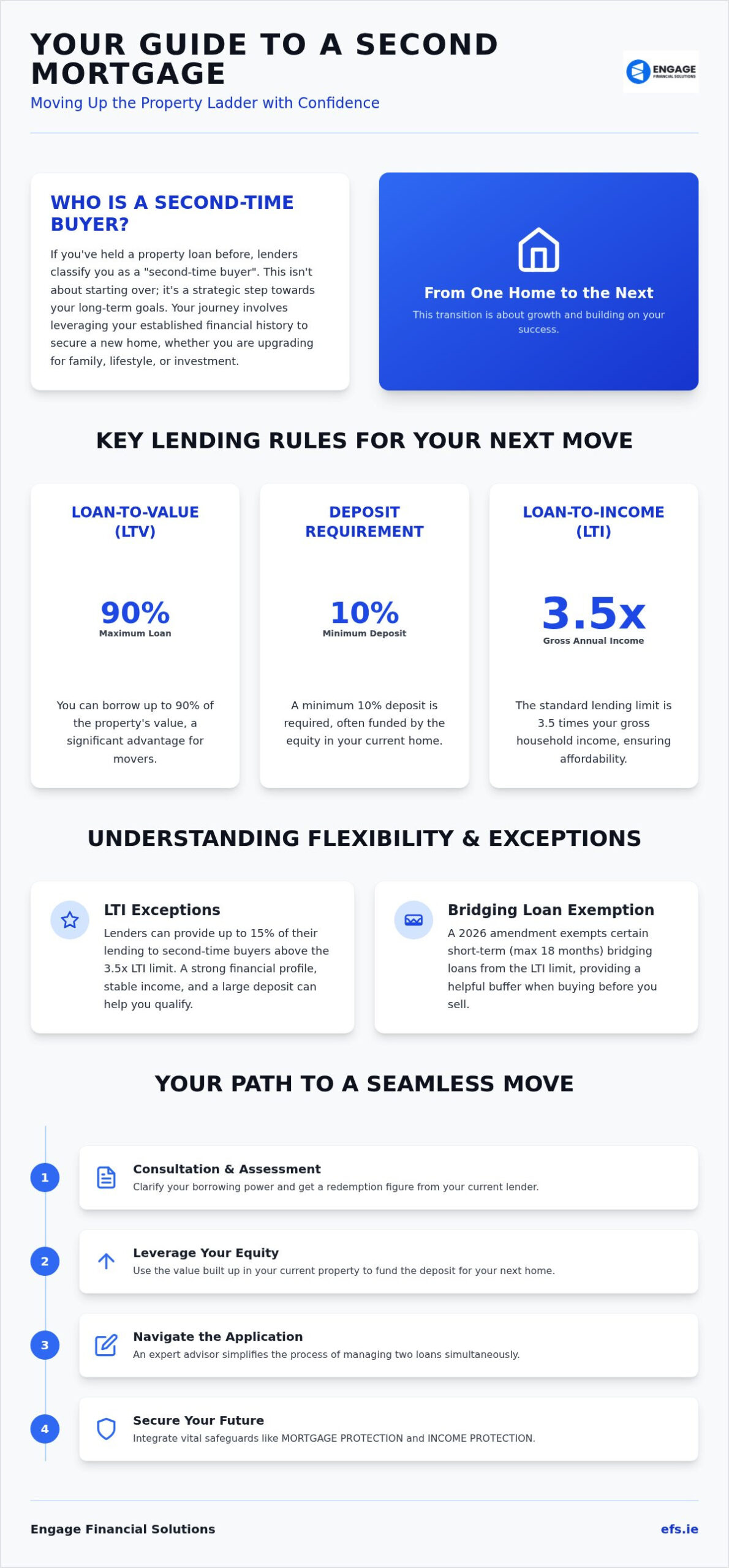
- Understand the 10% deposit requirement and the 3.5 times Loan-to-Income limits that apply to your next PROPERTY PURCHASE.
- Discover how to leverage your existing equity to fund your deposit whilst getting a SECOND MORTGAGE for your move.
- Gain clarity on the application process, from initial consultation to receiving your keys, ensuring a seamless experience.
- Learn how professional guidance can help you navigate Central Bank exceptions and secure the most favourable terms.
- Ensure your long-term security by integrating essential safeguards like MORTGAGE PROTECTION and INCOME PROTECTION into your plan.
Understanding the SECOND MORTGAGE Landscape
A SECOND MORTGAGE is essentially a loan for individuals who have already held a property loan. In the eyes of local lenders, you’re now classified as a “second-time buyer.” This label changes the financial calculations, but it doesn’t have to complicate your personal experience. Whether you’re upgrading to accommodate a growing family or finally securing that long-awaited holiday retreat, the path is well-trodden. While the excitement of your first home was often mixed with the anxiety of the unknown, this second journey is about strategic growth and long-term security. By Understanding the SECOND MORTGAGE Landscape, you can see how your previous experience actually works in your favour as you move up the property ladder. This transition is about leveraging your established financial history to reach a new milestone.
The Distinction Between Moving and Investing
It’s vital to distinguish between a primary residence SECOND MORTGAGE and an investment loan. Residential purchases follow standard lending criteria, but BUY-TO-LET MORTGAGES involve different risk assessments. Holiday homes occupy a unique space; some lenders treat them as secondary residences, whilst others apply stricter criteria amongst their products. The intended use of the property dictates your required deposit and available interest rates, so defining your goal early is essential. Tip: Request a current redemption figure from your existing lender to see exactly where you stand before viewing new homes.
Why the Second Journey Often Feels Different
Moving home carries a unique emotional and administrative weight. You’re often selling a piece of your history whilst coordinating a new purchase. Managing an existing loan alongside a new application requires a steady guide, especially since market conditions and Central Bank regulations have likely changed since your last PROPERTY PURCHASE. Despite these moving parts, GETTING A SECOND MORTGAGE can be a seamless transition when you have clarity on your borrowing capacity. Expert guidance ensures that you stay one step ahead of potential stresses.
Your journey is unique. Your financial plan should reflect that. By partnering with experts who understand the nuances of the local market, you can navigate these complexities with confidence. A tailored approach ensures that every decision, from choosing the right loan type to securing your family’s future, is handled with meticulous care and professional expertise. Working with a dedicated advisor like Engage Financial Solutions provides the buffer you need between your goals and the complexities of the banking system. This partnership allows you to focus on the future whilst we handle the complexities of the present.
Key Lending Rules for Your Next PROPERTY PURCHASE
The framework for your next PROPERTY PURCHASE is built on stability. Local lenders follow a specific set of criteria designed to protect both you and the financial system. Understanding these parameters is the first step toward a successful move. Whilst the rules might seem rigid at first glance, they are designed to ensure your long-term security and prevent over-indebtedness. By preparing early, you can position yourself as a strong candidate for a new loan.
Navigating Income Limits and Exceptions
Loan-to-Income (LTI) limits represent the ratio between your total debt and your gross annual earnings. For those looking at GETTING A SECOND MORTGAGE, the standard limit is 3.5 times your gross annual household income. This ensures that your repayments remain manageable even if market conditions shift or interest rates fluctuate. However, these figures aren’t always set in stone for every borrower.
Lenders have a specific allowance to approve up to 15% of their lending to second and subsequent buyers above these standard limits. If you have a strong financial profile, high and stable income, or a significant deposit, you might qualify for an exception. Additionally, a targeted 2026 amendment to the Central Bank mortgage rules now exempts certain principal home bridging loans from the LTI limit. These short-term loans, lasting a maximum of 18 months, are designed to help you buy a new home before your current one is sold, providing a much-needed buffer during a transition. Proving your repayment capacity is vital; lenders will meticulously review your bank statements to ensure you can comfortably handle the new commitment alongside any existing financial obligations.
The 10% Deposit Rule Explained
One of the most significant changes for second-time buyers is the alignment of deposit requirements. You now only need a minimum deposit of 10% of the property’s value, which allows for a Loan-to-Value (LTV) of 90%. This was a welcome shift from previous years when a 20% deposit was often the standard for anyone who wasn’t a first-time buyer. This change has significantly lowered the barrier for families looking to upgrade to a larger home.
This lower threshold makes moving house far more accessible. It means you don’t have to wait years to build up a massive cash reserve if your current home has seen healthy growth in equity. To strengthen your application, it’s wise to organise your savings and demonstrate consistent financial behaviour. Lenders look for an excellent credit history and no missed payments on current loans or credit cards. Actionable tip: Avoid opening new lines of credit or making large hire-purchase agreements in the six months leading up to your application, as this can impact your affordability assessment. If you’re feeling unsure about your borrowing power, speaking with a steady guide at Engage Financial Solutions can help clarify your options and streamline your path forward.
Managing Equity and Deposits for a Seamless Transition
Equity represents the financial stake you’ve built in your property. It’s the sum remaining after you subtract your outstanding MORTGAGE balance from the current market value of your home. For most people, this built-up value serves as the primary deposit for their next home. If your property has increased in value since you bought it, you might find you have more borrowing power than you initially thought. Getting a second mortgage is a significant milestone, and managing this equity correctly is the foundation of your success.
One of the most effective ways to understand your true financial position is to obtain an up-to-date valuation. Don’t rely on online estimates or what your neighbours’ houses sold for last year. A professional appraisal gives you a solid, verifiable figure to work from. This clarity allows you to plan with precision, ensuring there are no surprises when you’re ready to make an offer on a new property.
Calculating Your Useable Equity
Finding your useable equity involves more than just a quick subtraction. Start with your professional valuation and deduct your remaining loan balance. However, you must also account for the costs associated with selling. These typically include estate agent fees, which are often between 1% and 2% plus VAT, legal fees for conveyancing, and any repairs needed to make your home market-ready. If you find yourself in a “negative equity” situation, where your debt exceeds the property value, the transition is more complex. In these cases, moving requires a highly tailored financial strategy to manage the shortfall and ensure your long-term security.
Bridging Finance and Short-Term Solutions
Sometimes, the perfect property appears before you’ve secured a buyer for your current one. This creates a “chain” problem that can stall your plans. Bridging finance is a short-term financial PRODUCT designed to bridge the gap between buying your new home and selling your old one. While it offers flexibility, it’s a specialised tool with specific risks. These loans often carry higher interest rates than a standard SECOND MORTGAGE and are intended for short durations, typically up to 18 months.
Before committing to a bridging arrangement, it’s vital to seek expert guidance. You need a clear exit strategy to ensure your financial stability isn’t compromised if the sale of your current home takes longer than expected. A steady guide can help you weigh the costs against the benefits, ensuring your transition remains straightforward. Working with a dedicated advisor like Engage Financial Solutions ensures that your equity is managed with meticulous care, providing the peace of mind you need for your next big move.
Navigating the Application Process for a SECOND MORTGAGE
The journey toward your next home is a structured sequence of milestones. It begins with an initial consultation to assess your borrowing power and ends with the moment you receive your new keys. Between these points, a series of essential steps ensure that your transition is both secure and straightforward. A professional broker plays a vital role here, acting as a buffer between you and the lenders whilst managing the process to ensure every requirement is met with meticulous care. They handle the “Need-Solution-Benefit” flow of your application, identifying your specific requirements and presenting a tailored solution that secures your future stability.
The Importance of Approval in Principle
Securing an Approval in Principle (AIP) is a vital first step before you begin your property search. It provides a realistic budget, allowing you to focus on homes that fit your financial profile. From a seller’s perspective, having an AIP makes you a far more attractive buyer. It demonstrates that you’re prepared and that a lender has already conducted a preliminary assessment of your capacity for getting a SECOND MORTGAGE. This document gives you the confidence to make firm offers, knowing your financial foundation is solid.
It’s essential to remember that an AIP isn’t a final loan offer. It’s a statement of intent based on the information provided. However, in a competitive market, estate agents often prioritise viewers who can prove their funding is already in motion. Obtaining this early in the process removes significant stress and sets a clear pace for your move.
Your Documentation Checklist
Lenders require a comprehensive view of your financial behaviour to confirm your repayment capacity. You’ll need to provide several months of records to build a clear picture of your stability. The standard requirements include:
- Six months of current account bank statements.
- Your most recent P60 or Employment Detail Summary.
- At least three consecutive months of payslips.
- Proof of your deposit, whether from equity or savings.
Lenders look for “clean” accounts during this review. They prefer to see evidence of consistent saving and responsible spending, without excessive use of overdrafts or frequent gambling transactions. To speed up your application, organise your digital files into clearly labelled folders. This proactive approach prevents delays and ensures a seamless flow once your application is submitted. If you’re ready to define your borrowing capacity and start your next chapter, contact the team at Engage Financial Solutions for a tailored consultation.
How a Trusted Advisor Simplifies Your Financial Journey
A property move is rarely just about the bricks and mortar; it’s a strategic shift in your life’s trajectory. Engage Financial Solutions acts as a professional buffer between you and the lenders, ensuring that the complexities of getting a SECOND MORTGAGE don’t overshadow the excitement of your new home. By positioning ourselves as your steady guide, we manage the intricate details of the application, from the initial assessment to final approval. Our goal is to provide a lack of friction that allows you to move with absolute confidence whilst we handle the administrative weight. We focus on stewardship, ensuring your transition is handled with the meticulous care it deserves.
Beyond the Loan: Holistic Financial Health
Taking on a larger loan often means your existing safeguards need a meticulous review. It’s essential to update your MORTGAGE PROTECTION to reflect your new debt levels and term length. Without this adjustment, your family’s security could be at risk if the unexpected happens. For a deeper dive into how to safeguard your home, see our Mortgage Protection: The 2026 Homeowner’s Guide.
Similarly, INCOME PROTECTION becomes even more vital when your financial commitments increase. This PRODUCT ensures that your ability to meet repayments is safeguarded if you’re unable to work due to illness or injury. We look at your “full-stack” financial health, ensuring that your new home remains a source of joy rather than a point of vulnerability. This proactive approach neutralises potential stresses before they can impact your lifestyle, providing the peace of mind that comes from long-term security.
The Future-Back Perspective on Property
We believe in a “future-back” perspective, where every decision you make today is measured against your long-term aspirations. A property move is the perfect time to review your PENSION and overall retirement goals. Does this new SECOND MORTGAGE align with your planned retirement age? Are you still on track for the future you’ve envisioned? By integrating your property goals with your retirement planning, we create a methodical roadmap for your lifelong financial health. This holistic view ensures that your current lifestyle doesn’t compromise your future comfort.
Our partnership is built on calm competence and a deep investment in your individual needs. We don’t just secure loans; we tailor solutions that protect your future. Whether you’re upgrading your primary residence or expanding your portfolio, we’re here to ensure the process is straightforward and rewarding. Experience a truly seamless transition by contacting our expert team today to begin your next chapter with clarity and peace of mind.
Your Next Chapter Starts with a Solid Plan
Moving up the property ladder represents a significant milestone in your financial journey. By understanding the current lending landscape and leveraging your existing equity, you can transform a complex transition into a straightforward success. We’ve explored how a minimum 10% deposit and strategic income limits form the foundation of your next purchase, whilst holistic planning ensures your long-term security. Getting a SECOND MORTGAGE should be an empowering step that reflects your progress and provides the space your lifestyle requires.
As a firm Regulated by the Central Bank, we provide the calm competence and personalised financial guidance needed for long-term success. From managing your initial deposit to securing essential MORTGAGE PROTECTION, our team acts as your steady guide through every phase. You don’t have to navigate these complexities alone. Begin your seamless journey to a new home with our expert team and experience the peace of mind that comes from professional stewardship. Your future home is within reach, and we’re here to ensure the path is clear and rewarding.
Frequently Asked Questions
Can I get a SECOND MORTGAGE whilst keeping my first home as a rental?
Yes, you can keep your current home as a rental property whilst purchasing a new primary residence. This is often called a let-to-buy arrangement. Lenders will assess the potential rental income of your first property, but they’ll also apply a stress test to ensure you can cover both sets of repayments if the property is vacant. You’ll need sufficient income and equity to satisfy the lender’s criteria for this type of SECOND MORTGAGE.
How much deposit do I really need for a SECOND MORTGAGE in the current market?
You generally need a minimum deposit of 10% of the property’s value in the current market. This requirement aligns with the 90% Loan-to-Value limit set for second-time buyers. This change has made moving up the ladder more accessible than in previous years, when a 20% deposit was often the standard. Having a clear record of savings and a stable income will help you secure these terms for your next PROPERTY PURCHASE.
What are the income limits for second-time buyers locally?
The standard Loan-to-Income limit for second-time buyers is 3.5 times your gross annual household income. This baseline is essential when getting a SECOND MORTGAGE whilst maintaining financial stability. However, lenders have the flexibility to offer exceptions for up to 15% of their total lending to second-time buyers. If you have a strong financial profile or a significant deposit, you may be able to borrow a higher multiple of your earnings for your new home.
Can I use the equity in my current home as a deposit for the next one?
Yes, using the equity in your current home is the most frequent way to fund a deposit for a new purchase. Equity is the difference between your home’s market value and your remaining loan balance. Once your sale completes and the original loan is cleared, the remaining funds can be put toward your next home. If you intend to buy before selling, you might consider specific short-term products, though these require careful professional management.
Is it harder to get a SECOND MORTGAGE than it was for my first home?
It isn’t necessarily more difficult, but getting a SECOND MORTGAGE involves a more detailed application because you’re managing multiple financial transitions. Lenders will meticulously review your current repayment history and overall financial behaviour to ensure you can handle a larger commitment. While first-time buyers start with a blank slate, you have the advantage of a proven track record. This experience can actually work in your favour if your accounts have been managed with care.
Do I need to update my MORTGAGE PROTECTION when I move house?
Yes, updating your MORTGAGE PROTECTION is a legal requirement when you take out a new loan. Your existing policy is tied to your old property and loan amount, so it won’t satisfy the requirements for a new SECOND MORTGAGE. This move is also a proactive time to review your broader security, such as INCOME PROTECTION. Ensuring your cover matches your new financial responsibilities provides the peace of mind that your family is fully protected.
What happens if I sell my home for less than the remaining loan amount?
Selling for less than the remaining loan amount results in negative equity, which requires a tailored financial strategy. You’ll generally need to pay off the shortfall from your own savings before the sale can be finalised and a new loan approved. While this scenario is challenging, some lenders offer specific products for those trading up from negative equity. It’s vital to seek professional guidance early to understand your options and ensure your long-term stability.
How long does the application process for a SECOND MORTGAGE typically take?
The process usually takes between three and six months from your first consultation to receiving your keys. This timeframe includes obtaining an Approval in Principle, searching for a home, and the final legal stages. Coordinating a sale and a purchase simultaneously can add complexity, so staying organised with your documentation is essential. Working with a steady guide ensures a seamless flow and helps you navigate any potential delays with confidence.
Disclaimer
Engage Financial Services LTD T/A Engage Financial Solutions is regulated by the Central Bank of Ireland CRO 764570. Suite 2 First Floor, 14 -18 Main street, Blackrock, Co Dublin. A94 W0Y3