


Imagine the profound sense of relief that comes from knowing your home and lifestyle are fully protected, even if an unexpected illness or injury prevents you from working. It’s a common worry for many professionals who wonder how they would manage the mortgage or daily expenses if their regular salary vanished overnight. You aren’t alone in feeling confused by complex jargon or wondering exactly how much is income protection when compared to the long-term security it provides for your family’s future.
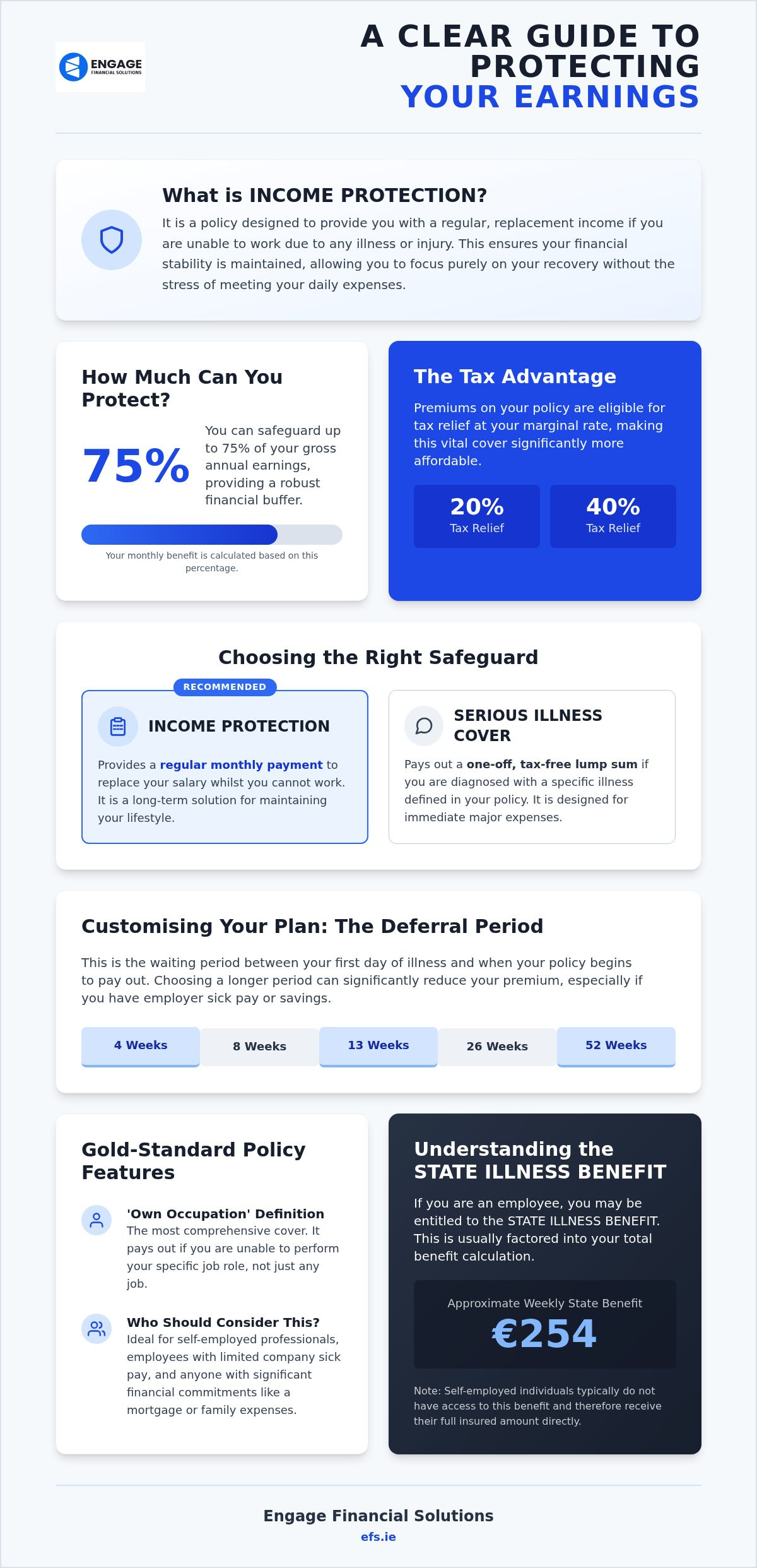
This guide is designed to be your steady guide, helping you navigate the process of securing your earnings with a plan tailored to your unique circumstances. You’ll discover how you can safeguard up to 75% of your gross income whilst benefiting from significant tax relief at your marginal rate of 20% or 40%. We will break down everything from benefit amounts to the gold-standard “Own Occupation” definition, giving you the clarity and confidence needed to speak with a consultant. Your financial stability should be seamless, and your future deserves that certainty.
Key Takeaways
- Learn how INCOME PROTECTION provides a regular monthly benefit of up to 75% of your gross earnings if illness or injury prevents you from working.
- Discover how much is income protection when you factor in tax relief at your marginal rate of 20% or 40%, making essential cover significantly more affordable.
- Distinguish between the long-term security of monthly salary replacement and the one-off lump sum provided by SERIOUS ILLNESS COVER.
- Understand the role of the state illness benefit and how a tailored plan ensures your financial stability remains seamless during recovery.
- See how a professional consultant simplifies the process by navigating a panel of domestic providers to find the right fit for your lifestyle.
Defining INCOME PROTECTION and Its Role in Financial Stability
At its most fundamental level, INCOME PROTECTION is a policy designed to pay a regular monthly benefit if you’re unable to work due to any illness or injury. Often referred to by experts as Income Protection Insurance or Permanent Health Insurance, it acts as a long-term safeguard for your career and your family’s lifestyle. It isn’t just a safety net for those in high-risk occupations or individuals with substantial salaries. Instead, it’s a practical solution for anyone who relies on their monthly earnings to maintain their standard of living. By replacing a significant portion of your salary, this cover ensures that your recovery remains your only priority, rather than the mounting pressure of unpaid bills. When people ask how much is income protection worth, the answer lies in the total security it provides for your future.
The Core Purpose of Salary Safeguarding
Think of this policy as a buffer between you and the financial friction that often follows a health setback. The logic follows a simple arc: there’s a clear need for continuous income to meet daily life, the insurance provides the solution, and the ultimate benefit is your peace of mind. Knowing that your mortgage, groceries, and utility bills are covered allows you to focus on getting better without the anxiety of losing your home. It’s about maintaining stability when life feels anything but stable. Many people mistakenly believe they don’t need this if they have some savings, but personal funds can vanish quickly; a tailored plan ensures a seamless transition from earned income to protected benefits.
Who Should Consider This Type of Coverage?
This protection is relevant for almost every working adult, regardless of their specific role or industry. Whether you’re a self-employed professional without access to employer sick pay, or an employee who wants to top up limited company benefits, the value of a guaranteed monthly payout is clear. It’s particularly vital for those with families or significant financial commitments like car loans or school fees. If you rely on your monthly salary to keep your household running, exploring your options is a proactive step toward long-term security. Securing cover now removes the stress of future uncertainty, allowing you to move forward with a sense of calm competence. It ensures that your financial plan is as resilient as you are, providing a straightforward path to maintaining your lifestyle during difficult times.
Understanding the Mechanism: How Benefits are Calculated and Paid
Calculating your potential benefit involves a straightforward formula that prioritises your financial stability. You can generally insure up to 75% of your gross annual earnings, a cap that provides a robust safety net whilst you focus on your recovery. For many professionals, the initial query is how much is income protection likely to provide; the answer typically depends on your employment status and existing benefits. If you’re an employee, any STATE ILLNESS BENEFIT you’re entitled to, which is approximately €254 per week, is usually deducted from the total payout. Self-employed individuals, who often do not have access to these state payments, receive the full insured amount directly. This CCPC guide to income protection offers further impartial context on how these mechanisms work in practice.
The Significance of the Deferral Period
The deferral period is the waiting time between your first day of illness and when your policy begins to pay out. You can choose a timeframe that aligns with your personal needs, typically 4, 8, 13, 26, or 52 weeks. This choice is a vital part of your financial plan. If you have substantial sick pay from your employer or emergency savings, a longer deferral period might be the best fit. Selecting a longer wait will significantly reduce your monthly premium, making the cover more flexible for your budget. It’s about finding a balance that ensures a seamless transition without overpaying for immediate cover you might not need.
Benefit Duration and Claim Requirements
Once a claim is active, payments continue until you are fit to return to work or you reach your chosen retirement age. To ensure your purchasing power remains stable over the years, you should consider an “Escalation in Claim” feature. This allows your monthly benefit to increase annually, helping it keep pace with inflation. For professionals, the “Own Occupation” definition is the most comprehensive choice. It means the policy pays out if you’re unable to perform the specific duties of your own job, rather than any job. Providing medical evidence is a professional process managed with care by your provider. If you’re unsure which timeframe or definition suits your career, you can speak with a specialist to tailor a plan to your specific goals.
INCOME PROTECTION vs SERIOUS ILLNESS COVER: Choosing the Right Safeguard
When building a resilient financial plan, it’s vital to distinguish between policies that provide a continuous monthly income and those that offer a one-off lump sum payment. Both serve essential roles, but they address very different financial pressures. INCOME PROTECTION is designed to act as your salary substitute, ensuring that your day-to-day lifestyle remains seamless even if you’re unable to work for an extended period. In contrast, SERIOUS ILLNESS COVER provides a single cash injection upon the diagnosis of a specific condition. While this lump sum is invaluable for immediate, high-cost requirements, it isn’t designed to replace your long-term earnings over several years. Understanding the nuances of these options is a core part of the Competition and Consumer Protection Commission guide, which highlights how different protections work together to secure your future.
Lump Sum vs. Continuous Monthly Support
Deciding between a large sum and a steady income depends on your specific goals and existing commitments. A lump sum from SERIOUS ILLNESS COVER offers incredible flexibility for one-time expenses, such as clearing a significant debt, adapting your home, or accessing specialised medical equipment. However, once that sum is spent, the financial support ends. This is why many professionals prioritise INCOME PROTECTION for their ongoing living costs. It provides a predictable, monthly benefit that covers your groceries, utility bills, and family activities until you’re fit to return to work or reach retirement. When you evaluate how much is INCOME PROTECTION worth to your household, you’re essentially measuring the value of knowing your standard of living won’t drop during a long-term recovery.
Tailoring Your Protection Portfolio
A truly robust strategy involves integrating these policies with your existing LIFE INSURANCE or pension plans to ensure no gaps exist amongst your covers. For homeowners, it’s also worth considering how MORTGAGE PROTECTION fits into this framework, as it’s specifically designed to pay off your home loan if you pass away. We recommend a “future-back” perspective: start by defining the secure end-state you want for your family and then work backward to choose the right mix of products. This holistic approach removes the friction of managing multiple unrelated policies and ensures every decision supports your long-term aspirations. By speaking with a consultant, you can navigate these complexities with calm competence, ensuring your plan is as unique as your career and as stable as your future needs demand.
Exploring the Tax Advantages and Cost Efficiency of Coverage
One of the most compelling reasons to secure INCOME PROTECTION is the significant government-backed incentive available through tax relief. Unlike many other insurance products, the premiums you pay for this cover qualify for relief at your marginal rate of tax, which is either 20% or 40%. This means that the actual cost to you is much lower than the gross premium quoted by a provider. This tax efficiency is designed to encourage professionals to take proactive steps toward their own financial security, ensuring that safeguarding your future is as affordable as it is essential. By leveraging these advantages, you can maintain a high level of protection without placing undue strain on your monthly budget.
Calculating the Real Cost of Your Policy
To understand the true value of this incentive, it’s helpful to look at the net cost rather than the sticker price. For example, if a gross monthly premium for your INCOME PROTECTION is €100 and you pay tax at the 40% rate, the actual cost coming out of your pocket is only €60. This 40% saving makes the policy significantly more accessible for high earners who want to protect a larger portion of their salary. When you are evaluating how much is income protection worth to your family, this net calculation provides a much clearer picture of the investment required. The team at Engage Financial Solutions can help calculate these specific net figures based on your current earnings and tax bracket, ensuring your plan is both robust and cost-effective.
Self-Employed vs. Employee Tax Treatments
The method for claiming this relief depends on your employment status, but the process is designed to be straightforward and professional in either case. If you’re a PAYE employee, your employer can often organise the tax relief through the payroll system, meaning you receive the benefit immediately in your take-home pay. For the self-employed, relief is typically claimed through your annual tax return. Business owners often find even greater efficiency by having their company pay the premiums as a business expense, which can be a highly effective way to manage protection costs. Choosing a tax-efficient structure early on leads to substantial long-term savings and a more seamless experience overall. If you’re ready to see how these savings apply to your situation, you can request a tailored net-cost breakdown from a consultant today.
How a Professional Consultancy Streamlines Your Path to Security
The complexity of financial markets can often feel overwhelming, making the role of a Trusted Advisor and Steady Guide invaluable. When you choose to work with a professional consultancy, you gain access to a wide panel of domestic providers rather than being limited to the products of a single institution. This breadth of choice is essential for finding the most competitive rates and ensuring your plan is truly cost-effective. A consultant brings meticulous attention to detail to every case, tailoring a policy that reflects your specific career trajectory and lifestyle aspirations. By navigating the market on your behalf, they transform a potentially stressful task into a seamless, straightforward journey toward security.
The Value of Independent Financial Guidance
Removing the friction of comparing complex terms and conditions is one of the primary benefits of professional advice. Many people find themselves confused by the fine print, but an expert can clearly explain how different clauses might impact your future. This guidance is vital for avoiding common pitfalls during the application process, such as unintentional non-disclosure or choosing an unsuitable deferral period. A modern, personalised approach ensures that your financial health is managed proactively, giving you the peace of mind that comes from knowing you’re looked after by specialists. Instead of wondering how much is income protection likely to cost in your specific situation, you can receive a clear, accurate assessment based on the current market.
Taking the First Step Toward Long-Term Stability
Beginning your journey toward financial stability is a straightforward process that starts with an initial consultation to assess your unique needs. During this session, we take a “future-back” perspective, identifying your desired end-state of security and working backward to build a plan that fits. For those who wish to explore the fundamental concepts further, reading our sibling article on Safeguarding Your Earnings: The Comprehensive Guide to Income Protection can provide deeper context. Our goal is to ensure your transition to a protected lifestyle is as frictionless as possible, allowing you to focus on your career with total confidence. You can take the first step toward securing your future today with Engage Financial Solutions, where our expertise is dedicated to your long-term success.
Safeguarding Your Lifestyle and Long-Term Earnings
Your financial stability is the foundation upon which your future is built. By securing a tailored INCOME PROTECTION plan, you’re doing more than just buying insurance; you’re creating a strategic lifestyle blueprint that ensures your monthly earnings remain constant, regardless of health challenges. You now understand that you can safeguard up to 75% of your salary whilst benefiting from significant tax relief at your marginal rate of 20% or 40%. This efficiency ensures that the question of how much is income protection becomes a conversation about value and long-term security rather than just cost.
Navigating this process should be seamless and stress-free. As a firm regulated by the Central Bank, we provide personalised guidance and access to a comprehensive panel of domestic providers to ensure your cover is as unique as your career. Our focus is on removing friction and providing the calm competence you need to make informed decisions for your family.
Book a consultation with our expert team to secure your earnings today and take the first step toward a future defined by stability and optimism. You’ve worked hard for your lifestyle; let’s ensure it stays protected.
Frequently Asked Questions
How does INCOME PROTECTION differ from the State Illness Benefit?
INCOME PROTECTION is a private policy that pays a regular monthly benefit, whereas the State Illness Benefit is a social welfare payment of approximately €254 per week. While the state payment offers a basic safety net, a private policy allows you to safeguard up to 75% of your gross earnings. This ensures your lifestyle remains seamless, as the state benefit alone often leaves a significant monthly income gap that can cause unnecessary stress for your family.
Can I claim tax relief on my premiums for this policy?
Yes, you can claim tax relief on your INCOME PROTECTION premiums at your marginal rate, which is either 20% or 40%. This government incentive makes the cover significantly more affordable than the gross premium suggests. For many professionals, this efficiency is a key factor when researching how much is income protection Ireland compared to the net cost. You can organise this relief through the Revenue MyAccount portal or your payroll system for a straightforward experience.
What exactly is a Deferral Period and how do I choose one?
A deferral period is the waiting time between when you stop working and when your policy payments commence. Common options include 4, 8, 13, 26, or 52 weeks. You should choose a period that aligns with your employer’s sick pay scheme or your personal savings. Selecting a longer deferral period typically reduces your monthly premium, providing a flexible way to manage the cost of your long-term security whilst maintaining a professional financial plan.
Is INCOME PROTECTION the same thing as MORTGAGE PROTECTION?
No, these are two distinct safeguards with different purposes. MORTGAGE PROTECTION is specifically designed to pay off your outstanding home loan if you pass away. In contrast, INCOME PROTECTION replaces your monthly salary if you’re unable to work due to illness or injury. Whilst both contribute to your financial stability, they cover different risks. A holistic plan often includes both to ensure your home and lifestyle are fully protected against the unexpected, giving you total peace of mind.
How much of my monthly salary can I actually cover with a policy?
You can typically cover up to 75% of your gross annual income, minus any State Illness Benefit you’re entitled to receive. This cap ensures you have a robust financial buffer while you recover from illness or injury. When calculating how much is income protection Ireland for your specific needs, it’s essential to account for your current earnings and any existing employer benefits to ensure your plan is tailored to your lifestyle requirements and goals.
What happens if I am self-employed and need to claim?
Self-employed professionals often face greater financial friction because they don’t have access to employer sick pay or the State Illness Benefit. If you need to claim, your policy will pay out your insured monthly benefit directly after your chosen deferral period. This provides vital stability for business owners. You can also claim tax relief on your premiums through your annual tax return, making the protection highly cost-efficient and straightforward for your business to manage over the long term.
Does the policy cover mental health issues or just physical injuries?
Most modern policies provide comprehensive cover for both physical injuries and mental health conditions that prevent you from performing your job duties. This inclusive approach reflects the complex nature of modern health challenges. Whether you’re dealing with a physical setback or a stress-related illness, the policy acts as a steady guide during your recovery. Always check your specific terms to ensure the definition of disability meets your professional needs and provides the security you expect for your future.
Can I keep my cover if I change jobs or move to a different company?
Yes, your INCOME PROTECTION policy is personal to you and typically remains in force even if you change employers. This portability is a significant advantage, as it ensures your long-term security isn’t tied to a single company. You don’t need to re-apply or undergo new medical checks when moving jobs, provided your premiums remain up to date. This makes it a flexible and reliable component of your lifelong financial plan, allowing you to move forward with confidence.
Disclaimer
Engage Financial Services LTD T/A Engage Financial Solutions is regulated by the Central Bank of Ireland CRO 764570. Director David Moore. Suite 2 First Floor, 14 -18 Main street, Blackrock, Co Dublin A94 W0Y3