


What if the ceiling on your home-buying dreams is set long before you ever step foot in a bank? For many, the 4x income limit feels like a rigid barrier that stands between them and their ideal property. It’s completely natural to feel a sense of unease when you’re trying to figure out exactly how much a lender will let you borrow. You might worry about being declined or feel confused by how the rules change if you’re a first-time buyer versus someone looking at switching your MORTGAGE. Gaining a clear perspective on understanding loan to income LTI limits is the first step towards taking control of your financial future.
This guide will give you a clear advantage by helping you see these limits as a framework for stability rather than just a hurdle. You’ll discover how to navigate the current lending environment with confidence and learn exactly what it takes to qualify for an allowance. We’ll break down the 4x income rule, explain the exceptions available for different buyer types, and provide a practical plan to strengthen your MORTGAGE application for long-term security.
Key Takeaways
- Learn how the 4x gross annual income rule sets the baseline for your MORTGAGE borrowing capacity and what it means for your home-buying goals.
- Discover how lenders evaluate variable income, such as bonuses and overtime, to provide a more comprehensive view of your total financial strength.
- Master the nuances of understanding loan to income LTI allowances, which can offer increased flexibility for those who meet specific lending criteria.
- Understand the importance of organising your documentation and securing MORTGAGE PROTECTION to ensure a seamless and secure application journey.
- See how a professional advisor acts as a steady guide, providing the tailored support needed to navigate complex criteria and safeguard your financial future.
What is a Loan to Income Ratio in the Current Market?
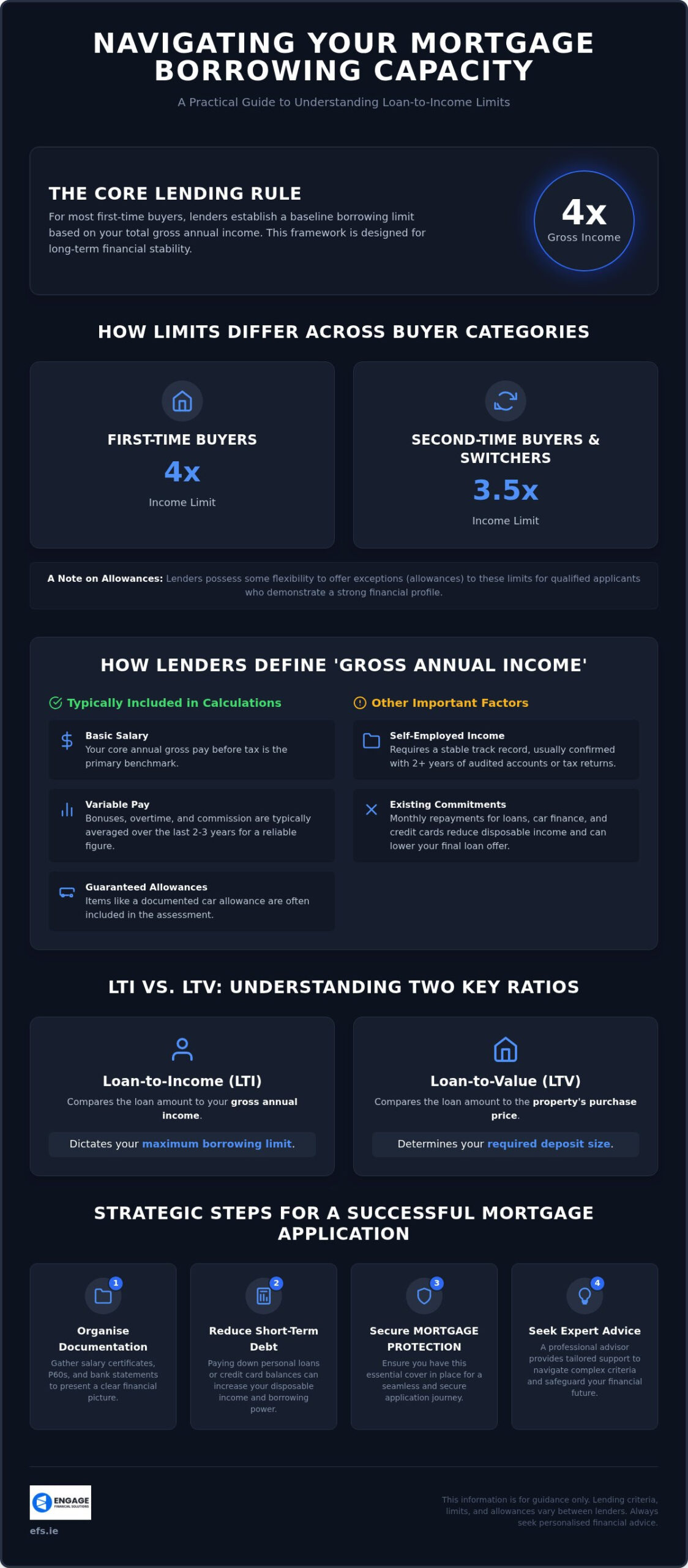
When you start the process of buying a home, one of the most significant figures you’ll encounter is your borrowing limit. This is defined by the Loan to Income (LTI) ratio, which is the calculation lenders use to compare the total amount of your MORTGAGE against your gross annual income. For those entering the market for the first time, the current standard limit is generally set at 4 times your gross income. Gaining a clear perspective on understanding loan to income LTI is the first step in determining your true borrowing power and planning your future with confidence.
These limits aren’t meant to be restrictive for the sake of it; they’re designed to ensure that you can comfortably manage your repayments. By capping the loan amount based on what you earn, lenders help you maintain your standard of living after you’ve moved in. It’s also vital to distinguish this from the Loan to Value (LTV) ratio. Whilst LTI focuses on your income, LTV looks at the value of the property itself. For example, a 90% LTV means you are borrowing 90% of the purchase price. Both figures are essential, but LTI is typically the primary factor that dictates the maximum loan available to you.
The Core Purpose of Lending Limits
Lending limits act as a protective framework for both individuals and the wider economy. By preventing borrowers from taking on unsustainable debt levels, these rules safeguard the national financial system from instability. On a personal level, they act as a buffer against potential financial stress, ensuring your home remains a source of security rather than a burden. This methodical approach promotes a healthier, more predictable property market for everyone involved.
How Ratios Differ Across Buyer Categories
The rules for borrowing often depend on your specific circumstances and life stage. Whilst those seeking FIRST-TIME BUYER MORTGAGES currently have access to a 4x income limit, individuals who are Second-Time Buyers or are interested in SWITCHING MORTGAGES are usually subject to a 3.5x limit. These thresholds exist to balance market accessibility with long-term financial prudence. However, lenders do have the flexibility to grant allowances in specific cases, which can provide additional borrowing capacity for qualified applicants. Identifying which category you fall into allows you to tailor your application for the best possible outcome.
How Lenders Calculate Your Maximum Borrowing Capacity
Determining your maximum borrowing capacity is a methodical process that goes beyond a simple multiplication. Lenders perform a deep dive into your financial life to ensure that your future home remains a secure asset rather than a source of stress. Gaining a deeper perspective on understanding loan to income LTI requirements helps you present your finances in the best possible light and move forward with clarity.
The first step involves identifying your basic gross annual salary before tax. This figure provides the primary benchmark for the 4x income rule. Next, lenders assess variable income. If your role includes bonuses, overtime, or commission, they will usually look at your salary certificates or P60s from the last few years to find a reliable average. This ensures that your loan isn’t based on an exceptional one-off year that might be difficult to replicate in the future.
For those who work for themselves, the calculation involves reviewing audited accounts or tax returns. Lenders typically want to see a two-year track record of stable or growing earnings to confirm your business is on a steady path. They may also factor in guaranteed allowances, such as a car allowance, or rental income from existing properties if it’s documented correctly. This holistic view helps them tailor a solution that fits your unique lifestyle and long-term goals.
Defining ‘Gross Annual Income’ for Lending
Not every Euro you earn is treated equally by a lender’s credit team. They prioritise basic pay and consistent, trackable bonuses because these offer the most stability for a long-term MORTGAGE. Irregular freelance work or one-off windfalls are often excluded to protect you from over-extending yourself. By averaging variable pay over a multi-year period, lenders create a realistic expectation of what you can comfortably afford each month without friction.
The Impact of Existing Financial Commitments
Your borrowing power is also influenced by your current debt levels. Monthly repayments for personal loans, car finance, or credit card balances are all scrutinised during the application process. These commitments reduce your net disposable income, which can lower the final amount a bank is willing to lend. A clean credit history and a proactive plan to reduce short-term debt can significantly improve your chances of reaching your maximum limit. If you want a tailored view of your capacity, getting professional financial planning advice can help you organise your documents effectively and prepare for a successful outcome.
Navigating Exceptions and Macroprudential Allowances
Whilst the 4x income rule serves as a standard benchmark, it isn’t always the final word on your borrowing capacity. The Central Bank allows lenders to exercise discretion for a specific percentage of their annual lending, known as macroprudential allowances or exceptions. These allowances enable you to borrow more than the standard limit if your financial profile demonstrates exceptional strength. Gaining a firm grasp on understanding loan to income LTI Ireland market regulations is essential when you’re looking for this kind of flexibility.
Lenders manage these exceptions as a finite resource. They don’t grant them to every applicant; instead, they allocate them to borrowers who represent the lowest risk and the highest stability. This system ensures the financial market remains predictable whilst providing a path for those with unique circumstances to secure the home they want. Because banks have a limited “pot” of these exceptions to give out each year, your application needs to be meticulously prepared to stand out.
Who Qualifies for an Exception?
Lenders typically reserve exceptions for applicants with a proven track record of financial discipline. High-income earners or those in stable, professional career paths are often viewed favourably. However, your income is only one part of the story. Having a larger deposit, which results in a lower Loan to Value (LTV) ratio, significantly improves your chances of securing an LTI exception. Banks also look for clear evidence of repayment capacity; your current monthly savings or rent payments must comfortably align with the proposed new MORTGAGE repayment to prove the debt is sustainable.
Strategic Timing for Your Application
The time of year you choose to apply can be just as influential as your salary. Most lenders see their exception quotas reset at the start of the calendar year. This often makes the first quarter an ideal time to submit an application, as banks have their full allowance capacity available. By mid-year or towards the autumn, some lenders may have already exhausted their quota, leading to much stricter ratio scrutiny for new applicants. Consulting a broker allows you to identify which lenders still have the flexibility to accommodate a higher ratio, ensuring your application journey remains straightforward and successful.
Strategic Preparation for a Successful MORTGAGE Application
A successful application is built on a foundation of clarity and preparation. Ideally, you should begin a comprehensive financial health check at least six months before you plan to approach a lender. This proactive window allows you to identify any potential friction points in your spending habits or debt levels. By refining your finances early, you ensure that your application reflects the calm competence that lenders look for when approving loans. Gaining a thorough perspective on understanding loan to income LTI Ireland rules ensures you aren’t just meeting the numbers, but proving your long-term reliability.
Documentation and Evidence of Income
Lenders require a meticulous paper trail to verify every Euro of your income. You’ll need to gather your recent payslips, P60s (your annual summary of pay and tax), and at least six months of bank statements well in advance. If you rely on variable income, such as bonuses or commission, ensure these are clearly documented and traceable through your salary certificates. This follows a simple Need-Solution-Benefit logic: you have a need for a prompt approval, the solution lies in your meticulous organisation, and the benefit is a frictionless path to your new front door. A seamless document trail removes the stress of last-minute requests and helps you move forward with confidence.
Protecting Your Borrowing Power
Securing a MORTGAGE is just the first step; safeguarding your ability to maintain it is equally vital. Lenders typically require LIFE INSURANCE or MORTGAGE PROTECTION as a mandatory condition of the loan. These products ensure that your debt is cleared if the unthinkable happens, providing peace of mind for your loved ones. Additionally, INCOME PROTECTION acts as a vital safety net for your borrowing power. It guarantees that a portion of your salary continues if you’re unable to work due to illness or injury, protecting your financial stability from being undermined by unforeseen life events.
Looking at your home through a future-back lens means considering how this debt fits into your life-long goals. It’s often helpful to integrate your MORTGAGE into a wider RETIREMENT PLANNING strategy to ensure your property remains an asset rather than a burden in later years. Taking a holistic view of your finances ensures you’re building a secure future. If you’re ready to start your journey, you can speak with a professional advisor to create a tailored plan for your application.
How Expert Advice Simplifies the Borrowing Process
The journey toward owning a home is often filled with complex questions and technical requirements that can feel overwhelming. While the previous sections have detailed the mechanics of lending limits, applying that knowledge to your specific life stage requires a steady guide. A professional advisor acts as the essential buffer between you and the bank, ensuring that your application is presented with the meticulous detail and clarity required for success. Gaining a deep perspective on understanding loan to income LTI is much more straightforward when you have a partner who understands every nuance of the local lending landscape and can anticipate the needs of credit underwriters before they even ask.
Personalised Guidance for Unique Scenarios
Lenders often rely on automated systems to make initial decisions, which can feel impersonal and frustratingly rigid for those with non-standard income structures. An experienced consultant looks beyond the basic numbers to see the person and the potential behind the application. Whether you are a first-time applicant starting your journey or you’re currently SWITCHING MORTGAGES to find better value and long-term security, tailored guidance ensures your solution fits your specific goals. This personalised approach helps you avoid the stress of generic decisions and allows you to present a compelling case for an allowance if your financial stability and repayment history warrant one. By focusing on your long-term peace of mind, an advisor helps you navigate the criteria with calm competence and professional integrity.
A Seamless Path to Homeownership
The ultimate goal of any application is to reach the end-state: a secure home, a manageable debt, and lasting financial stability. Engage Financial Solutions provides the authoritative expertise needed to remove friction from this process, allowing you to focus on the excitement of your new property rather than the weight of the paperwork. By managing all lender communications and proactively neutralising potential hurdles, we ensure your transition is as seamless as possible. Taking the first step toward a successful FIRST TIME BUYER MORTGAGE starts with a conversation about your future aspirations. With a proactive partner by your side, you can move forward with the optimism that comes from knowing your life-long financial health is being managed with care and precision.
Secure Your Future with Confidence
Achieving your homeownership goals requires more than just meeting a set of numbers; it involves building a stable foundation for your entire financial life. By gaining a clear perspective on understanding loan to income LTI Ireland rules, you’ll move forward with the peace of mind that your borrowing capacity is both sustainable and secure. Whether you are preparing your first application or looking to optimise your current situation by SWITCHING MORTGAGES, the right preparation ensures a straightforward path to success.
Organising your documentation early and securing MORTGAGE PROTECTION are essential steps in safeguarding your future. At Engage Financial Solutions, we act as your steady guide, providing the professional guidance tailored to your needs. As a consultancy regulated by the Central Bank, we focus on seamless application management to remove the stress from your transition. This meticulous approach ensures you aren’t just getting a MORTGAGE, but are securing a home that fits your lifestyle perfectly.
Book a consultation with our expert team at Engage Financial Solutions today to start your journey. You deserve a partner who is deeply invested in your long-term security and success.
Frequently Asked Questions
What is the standard LTI limit for a First-Time Buyer?
The standard limit for a First-Time Buyer is currently set at 4 times your gross annual income. This means if you earn €50,000 per year, your maximum borrowing capacity is typically €200,000. These macroprudential rules ensure your repayments remain sustainable over the long term. Gaining a clear perspective on understanding loan to income LTI Ireland requirements helps you plan your property search with realistic expectations for your future home and financial security.
Can I borrow more than 4 times my income for a home?
Yes, it’s possible to borrow more than the standard 4x limit by securing a lender exception. Banks have a specific annual quota that allows them to lend at higher ratios to qualified applicants. These allowances are typically reserved for those with high earnings, stable professional backgrounds, or substantial deposits. Because these exceptions are limited, presenting a meticulously prepared application is essential to demonstrate that you can comfortably manage the increased debt level without any financial friction.
What counts as ‘income’ for an LTI calculation?
Lenders primarily look at your basic gross annual salary, but they also consider regular variable pay. This includes consistent bonuses, overtime, and commission, provided you can prove they’re regular through salary certificates or P60s. For self-employed individuals, income is verified through audited accounts or tax returns over a two-year period. Certain state benefits or guaranteed car allowances might also be included, providing a holistic view of your true financial strength and borrowing power.
How do personal loans affect my loan to income ratio?
Personal loans don’t technically change the LTI ratio calculation, but they significantly impact your overall borrowing capacity. Lenders scrutinise your monthly debt repayments to ensure you have enough net disposable income to cover a new MORTGAGE. If your current loan repayments are high, a bank might offer you less than the maximum 4x limit to protect your standard of living. Clearing short-term debts before applying can often lead to a more successful and straightforward outcome.
Do LTI rules apply when I am SWITCHING MORTGAGES?
LTI rules generally apply when you are SWITCHING MORTGAGES, though the standard limit for second-time buyers and switchers is often 3.5 times income. However, if you aren’t increasing the loan amount, some lenders may have more flexibility regarding these limits. It’s important to check current criteria, as switching is an excellent way to find better value and long-term security. A professional advisor can help you identify which lenders offer the most seamless path for your needs.
What happens if I do not qualify for an LTI exception?
If you don’t qualify for an exception, your borrowing will be capped at the standard limit of 4 times (for First-Time Buyers) or 3.5 times your income. This doesn’t mean your application is declined; it simply means you’ll need to adjust your property budget or increase your deposit to bridge the gap. Focusing on a future-back perspective helps you see this limit as a safeguard that ensures your long-term financial stability and protects your lifestyle.
Why is MORTGAGE PROTECTION required alongside my loan?
MORTGAGE PROTECTION is a mandatory form of LIFE INSURANCE that ensures your loan is fully repaid if you pass away during the term. It’s a requirement for most homeowners because it protects both the lender’s asset and your family’s security. By having this safety net in place, you ensure that your home remains a stable asset for your loved ones, removing the stress of potential debt and providing the peace of mind you deserve.
How often do the LTI lending rules change?
The Central Bank reviews macroprudential lending rules annually to ensure they remain effective and relevant to market conditions. Whilst the core framework is stable, significant updates do occur, such as the 2023 adjustment that increased the limit for First-Time Buyers to 4 times their income. Staying informed about these changes is vital. A professional partner can provide the proactive guidance needed to help you navigate any updates and maintain a successful path to homeownership.
Disclaimer
Engage Financial Services LTD T/A Engage Financial Solutions is regulated by the Central Bank of Ireland CRO 764570. Suite 2 First Floor, 14 -18 Main street, Blackrock, Co Dublin. A94 W0Y3