


What if the most significant financial hurdle in your property journey isn’t the deposit, but the expenses you haven’t even seen yet? Whether you are stepping onto the ladder with FIRST-TIME BUYER MORTGAGES or you are an experienced homeowner, the fear of running out of cash just before you get the keys is a heavy burden to carry. It’s completely natural to feel confused by complex legal terminology or stressed by the sudden mention of valuation fees and statutory taxes. You want to feel secure in your decision, knowing that every Euro is accounted for and your move will be entirely seamless.
In this guide, we provide the clarity you need by identifying the hidden costs of buying a house, from STAMP DUTY to professional outlays. We promise to help you build a comprehensive budget that covers every administrative charge and professional fee required for a successful closing. By looking at your purchase from a “future-back” perspective, we will explore how to organise your finances, why MORTGAGE PROTECTION is essential for your stability, and how to navigate the process with total confidence. You will finish this article with a clear, itemised checklist, ensuring your transition into your new home is straightforward and stress-free.
Key Takeaways
- Learn how to calculate the total investment required beyond your deposit to ensure you have a sufficient financial buffer for a seamless move.
- Understand the breakdown of professional fees, including conveyancing, to help you budget for the legal transfer of your new home.
- Discover how to accurately calculate STAMP DUTY and other hidden costs of buying a house to maintain your financial stability throughout the process.
- Identify why MORTGAGE PROTECTION and insurance cover are essential requirements for your lender and how they provide long-term peace of mind.
- Explore how a professional MORTGAGE BROKER acts as a steady guide, managing complex financial details to ensure a straightforward path to closing.
Understanding the Total Investment Beyond Your Deposit
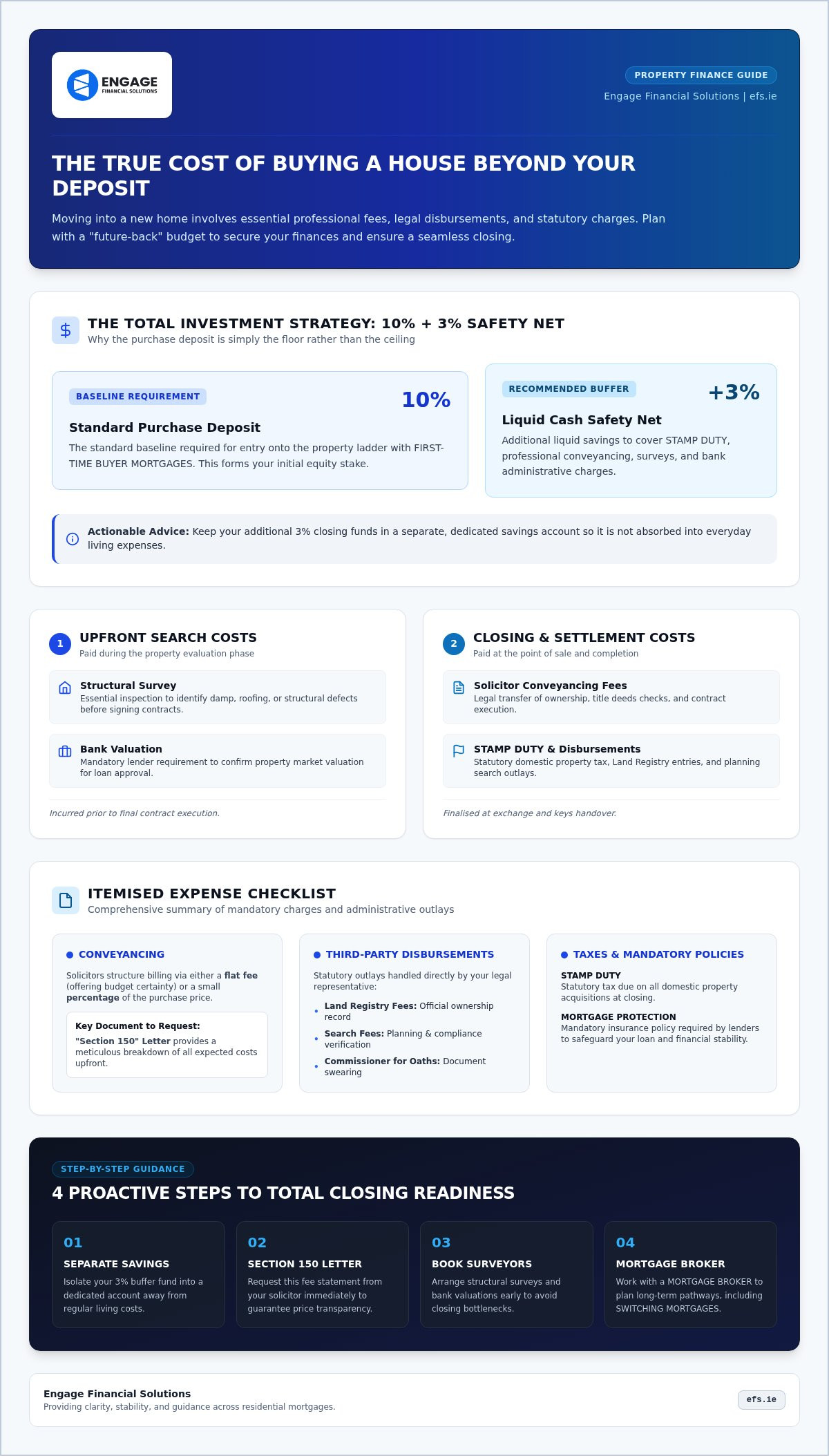
Securing a property is a momentous achievement, but the journey involves more than just reaching your deposit goal. There is often a significant gap between the agreed purchase price and the final amount required to actually move in. This gap represents the hidden costs of buying a house, a collection of professional fees, taxes, and administrative charges that can surprise even the most diligent savers. By adopting a “future-back” perspective, you can prepare for these outlays well in advance, ensuring your transition into your new home is as seamless as possible.
Acting as a steady guide, a MORTGAGE BROKER provides the necessary buffer between you and these financial complexities. They help you look past the initial excitement of an accepted offer to the practical realities of the closing process. Being organised doesn’t just protect your bank balance; it offers the emotional benefit of peace of mind. When you know exactly where every Euro is going, the inherent stress of a property transaction transforms into a sense of calm competence and control.
The Distinction Between Upfront and Closing Costs
It helps to categorise your expenses into two distinct phases. Upfront costs are those you encounter during the property search, such as valuation fees and structural surveys. Closing costs, on the other hand, are the larger sums paid at the point of sale, including solicitor fees and Stamp Duty. We recommend keeping these funds in a separate, accessible savings account to prevent them from being absorbed into your daily spending. For those utilising FIRST-TIME BUYER MORTGAGES, managing this initial cash flow is vital to ensure you don’t run short as the completion date approaches.
Why a 10% Deposit is Only the Beginning
While a 10% deposit is the standard entry point, it is wise to view this as the floor rather than the ceiling of your budget. A helpful rule of thumb is to aim for an additional 3% of the house price in liquid cash. This safety net covers the various professional outlays that arise before you get the keys. Saving this extra amount whilst paying rent can feel like a daunting task, yet it is a proactive step toward long-term security. Remember that your first loan isn’t your last; options like SWITCHING MORTGAGES in the future can often help you recoup some of these early expenses by securing better rates as your equity grows.
Budgeting for Professional Fees and Legal Requirements
The legal transfer of property, known as conveyancing, is the foundation of a secure purchase. This process requires the expertise of a qualified solicitor who manages the transition of ownership and ensures the title is free from any encumbrances. When you are calculating the hidden costs of buying a house, it’s helpful to understand how these legal professionals structure their billing. Most firms will offer either a flat fee, which provides excellent budget certainty, or a fee based on a small percentage of the property price. This professional guidance acts as a vital safeguard for your investment, providing the stability you need as you approach the final stages of the transaction.
Solicitor Fees and Disbursements
Beyond the professional fee for their time and expertise, your solicitor will handle various outlays known as disbursements. These are third-party charges required to complete the legal work. They include Land Registry fees to register your new ownership, search fees to verify planning compliance, and Commissioner for Oaths fees. To ensure full price transparency, we recommend requesting a “Section 150” letter at the very start of your partnership. This document gives you a meticulous breakdown of every expected cost, preventing any financial surprises. Choosing a solicitor who specialises in the domestic property market is a proactive way to ensure they are familiar with local regulations and stamp duty rates on domestic property purchases.
Surveyors and Valuation Experts
While your solicitor manages the legalities, a professional surveyor protects the physical integrity of your future home. A structural survey is a non-negotiable expense that identifies potential issues like damp, roofing problems, or structural defects before you sign the contract. This report provides the peace of mind that your new home is a sound investment. You will also need to budget for a Bank Valuation. This is a mandatory requirement for all residential loans, as the lender needs to confirm the property is worth the amount you intend to borrow.
Whilst you pay for the valuation, the report is technically for the bank’s benefit. To maintain a seamless closing process, it is wise to organise your structural survey as soon as your offer is accepted. This allows you to address any concerns early and keeps the timeline on track. If you are feeling overwhelmed by these moving parts, a professional MORTGAGE BROKER can act as your steady guide, helping you manage these requirements with calm competence. Being prepared for the hidden costs of buying a house ensures you can focus on the excitement of your move rather than administrative stress.
Statutory Taxes and Mandatory PROTECTION Policies
Navigating the final stages of a property purchase requires a clear understanding of the statutory obligations set by the Central Bank and Revenue. These are not optional extras; they are mandatory requirements designed to safeguard both the lender and your own financial future. When calculating the hidden costs of buying a house Ireland, many buyers overlook the ongoing premiums of protection policies or the immediate impact of tax liabilities. By addressing these early, you ensure a seamless transition into your new home with your long-term security firmly in place.
The Central Bank regulates these requirements to maintain stability within the domestic lending market. Whilst these rules might seem like additional hurdles, they act as a vital safety net. For a full breakdown of home buying costs in Ireland, it is essential to look at how these statutory elements fit into your overall move-in budget. Beyond the immediate requirements, we often advise clients to consider building a wider safety net through LIFE INSURANCE and serious illness cover to protect their family’s lifestyle and long-term aspirations.
Calculating Your STAMP DUTY Liability
STAMP DUTY is typically the most substantial additional cost you will face. For residential properties, the rate is set at 1% for the first €1 million of the purchase price. This tax must be paid to your solicitor before the deed is stamped, as they manage the transfer of funds to Revenue on your behalf. We recommend having this specific amount ready in your account at least two weeks before the scheduled closing date. This proactive approach prevents administrative delays and ensures your ownership is registered without friction.
Securing Mandatory MORTGAGE PROTECTION
Unless you fall into a very specific exemption category, having a MORTGAGE PROTECTION policy is a legal requirement before a lender will release funds. This type of insurance is designed to clear the remaining debt on your mortgage if a policyholder passes away, ensuring your dependents can remain in the home. You can choose a standard decreasing term policy or enhance your security by adding CRITICAL ILLNESS INSURANCE to the plan. This additional cover provides a lump sum if you are diagnosed with a specified serious illness, offering a layer of financial stability during a difficult transition.
To learn more about tailoring a policy to your needs, you can explore our MORTGAGE PROTECTION guide. It is wise to start your application as soon as you receive your loan offer. Disclosing your medical history accurately and early ensures that any further enquiries from the insurer don’t delay your mortgage draw-down. This meticulous preparation allows you to focus on the joy of your new home, knowing your family’s future is protected.
Pre-Closing Expenses and Immediate Post-Purchase Outlays
As you approach the finish line, the focus shifts from legal paperwork to the physical transition of moving. These final steps involve specific hidden costs of buying a house Ireland that often slip through the cracks during the initial budgeting phase. Beyond the major outlays already discussed, you should plan for a “First-Night” fund. This safety net covers immediate essentials like changing the locks for security, professional deep cleaning, and the initial costs of setting up utility accounts. There is also the Local Property Tax (LPT) to consider. This tax is usually paid by the seller for the full year, so you will likely need to reimburse them for the remaining months at the point of closing through a process called apportionment.
Snagging and Final Inspections
For new-build properties, a professional snag list is an essential investment. A surveyor will meticulously inspect the property to identify minor cosmetic issues or functional defects that the builder must rectify before you take possession. This ensures your move is as seamless as possible. Even if you are buying an older home on the secondary market, we recommend a final pre-closing walk-through. This allows you to verify that the property is in the same condition as when you made the offer and that all agreed fixtures remain. If the findings reveal significant new issues, your solicitor can help you negotiate repairs or a price adjustment before the final funds are released.
Mandatory HOME INSURANCE
Lenders require proof of HOME INSURANCE before they will release mortgage funds. It is important to understand the concept of “Reinstatement Value” versus market value. The Reinstatement Value is the cost to completely rebuild the property from scratch, including site clearance and professional fees, which is often different from the price you paid. Your lender will specify this value based on the valuation report. You must provide them with a letter of indemnity from your insurer, which confirms the bank’s interest is noted on the policy. Shopping around amongst various providers helps you find the most flexible cover that suits your long-term security.
Preparing for these hidden costs of buying a house Ireland allows you to focus on the joy of your new home rather than financial friction. To ensure every detail is managed with calm competence, you can speak with a MORTGAGE BROKER who will guide you through these final hurdles with ease.
Securing Your Future with a Professional MORTGAGE BROKER
Securing a property involves managing a series of interconnected financial decisions. A professional MORTGAGE BROKER acts as a buffer between you and this complexity, ensuring that every detail is managed with precision. You don’t have to navigate the market alone; instead, you benefit from a partner who manages multiple lenders on your behalf. This approach provides access to a broader range of options, allowing for a tailored plan that fits your specific life stage and long-term aspirations. By taking the stress out of the paperwork, they ensure your experience is straightforward and efficient.
A broker’s role extends beyond the loan itself, offering “full-stack” guidance that integrates your mortgage into your wider financial health. They help you safeguard your future by arranging essential cover such as INCOME PROTECTION and MORTGAGE PROTECTION. By identifying the hidden costs of buying a house Ireland early in the process, they remove the friction that often accompanies the closing stages. Banks often provide a generic service that may not account for your unique circumstances. In contrast, a broker offers a bespoke experience, tailoring their advice to your overall lifestyle and ensuring your financial stability remains intact.
The Value of Expert Financial Stewardship
Brokers are generally compensated through commissions from lenders or via transparent professional fees. This structure provides significant value, as you gain an advocate who understands the nuances of domestic lending limits and the various exemptions available. They meticulously review your financial profile to position your application in the best possible light, which is especially helpful if your situation is complex. If you are at the beginning of your journey, our First-Time Buyer guide offers a detailed roadmap to help you prepare effectively and understand the requirements of the domestic market.
Next Steps to a Seamless Home Purchase
To achieve a truly seamless experience, we encourage you to book a personal consultation to develop a tailored financial plan. Our goal is to provide the calm competence you need to navigate the property market with ease. We recommend contacting a consultant as soon as you begin saving for your deposit. This early intervention allows us to help you organise your budget, account for every professional fee, and ensure your path to homeownership is as straightforward as possible. By starting with the end in mind, you can look forward to your move-in day with total peace of mind, knowing your long-term security is our priority.
Your Straightforward Path to Homeownership
Moving into a new home is one of life’s most rewarding milestones, yet the journey is often paved with complex administrative and financial details. By identifying the hidden costs of buying a house Ireland early, you have already taken a proactive step toward long-term security. Whether you are navigating the requirements for Stamp Duty or organising your mandatory MORTGAGE PROTECTION, being prepared ensures that your move is defined by stability rather than stress.
Our team provides the authoritative guidance you need to manage these transitions with calm competence. As a firm regulated by the Central Bank, we offer comprehensive MORTGAGE BROKERAGE and PROTECTION services tailored to your unique aspirations. We are here to act as your steady guide, ensuring every fee and administrative charge is handled seamlessly.
Begin your seamless home-buying journey with Engage Financial Solutions today and experience the peace of mind that comes from expert financial stewardship. Your future home is within reach, and we are ready to help you arrive there with confidence.
Frequently Asked Questions
How much should I budget for solicitor fees when buying a home?
Professional fees for conveyancing vary, so it is wise to budget for either a flat fee or a small percentage of the property price. You must also account for disbursements, which are third-party costs like Land Registry fees and search fees. Requesting a “Section 150” letter early ensures full price transparency. This proactive step helps you organise your budget and ensures the legal transfer of your home is a seamless and straightforward experience.
Is Stamp Duty the same for first-time buyers and those moving home?
The rate for residential property is 1% on the first €1 million of the purchase price. This applies equally to first-time buyers and those moving to a new home. It is one of the most significant hidden costs of buying a house Ireland, and your solicitor must receive these funds before the deed is stamped. Having this amount ready two weeks before closing protects your financial stability and prevents any unnecessary delays in the process.
Do I really need a structural survey for a new-build house?
Whilst not a legal requirement, a structural survey or snag list is essential for your peace of mind. For a new-build, this report identifies cosmetic or functional defects that the builder must fix before you take possession. It acts as a safeguard for your investment and ensures your move-in day is as seamless as possible. Budgeting for this professional check is a meticulous way to protect your future and avoid unexpected repair bills.
What happens if I do not have MORTGAGE PROTECTION in place by closing?
If you don’t have a MORTGAGE PROTECTION policy in place, your lender will generally refuse to release the funds for your loan. This is a statutory requirement designed to clear the debt if a policyholder passes away. To ensure a straightforward draw-down, you should start your application early. This allows time for medical underwriting and ensures that your long-term security is established well before the scheduled closing date of your property purchase.
Can I include the hidden costs in my mortgage loan?
Generally, you cannot include these additional expenses in your mortgage loan. Lenders typically provide finance based on the lower of the purchase price or the valuation, meaning you must pay for professional fees and taxes from your own cash savings. Identifying these hidden costs of buying a house early allows you to build a sufficient financial buffer. This ensures you have enough liquidity to cover every administrative charge without impacting your deposit or financial stability.
Who pays the Local Property Tax in the year the house is sold?
The seller is responsible for paying the Local Property Tax for the entire year on the liability date. However, the cost is usually apportioned at the point of sale. This means you will reimburse the seller for the months you will own the property. Your solicitor manages this calculation during the closing process. Being prepared for this small but necessary outlay ensures your transition is straightforward and all statutory obligations are met with calm competence.
How much does a bank valuation report typically cost?
A bank valuation report typically costs between €150 and €250, depending on the lender and the property type. This is a mandatory fee paid by the buyer to ensure the property is worth the loan amount. Whilst the report is for the bank’s benefit, it provides an essential check in the lending process. Organising this early helps maintain a seamless timeline and gives you confidence that your investment aligns with the market value.
Is LIFE INSURANCE different from MORTGAGE PROTECTION?
Yes, they serve different purposes within your financial plan. MORTGAGE PROTECTION is specifically designed to pay off your mortgage debt, whereas LIFE INSURANCE provides a lump sum to your dependents to maintain their lifestyle. You might also consider adding CRITICAL ILLNESS INSURANCE for a more comprehensive safety net. A professional MORTGAGE BROKER can help you tailor these policies to your unique needs, ensuring your family’s future and financial stability are fully protected.
Disclaimer
Engage Financial Services LTD T/A Engage Financial Solutions is regulated by the Central Bank of Ireland CRO 764570. Suite 2 First Floor, 14 -18 Main street, Blackrock, Co Dublin. A94 W0Y3