


How much Critical Illness Cover could help protect your finances if a serious illness stopped you working? The chances of claiming on Critical Illness Cover depend on whether your diagnosis meets the policy’s definition of a covered condition, along with its exclusions and claim requirements. A diagnosis alone does not guarantee a payout.
It’s understandable to focus first on the amount of cover, but the policy terms matter just as much. A successful claim generally pays a lump sum that can help with financial commitments and expenses while you recover.
This guide explains how to assess a suitable level of cover, how lump-sum payouts work and what can affect a claim. It also explains why accurate medical information and a clear understanding of policy definitions matter when weighing your options.
Key Takeaways
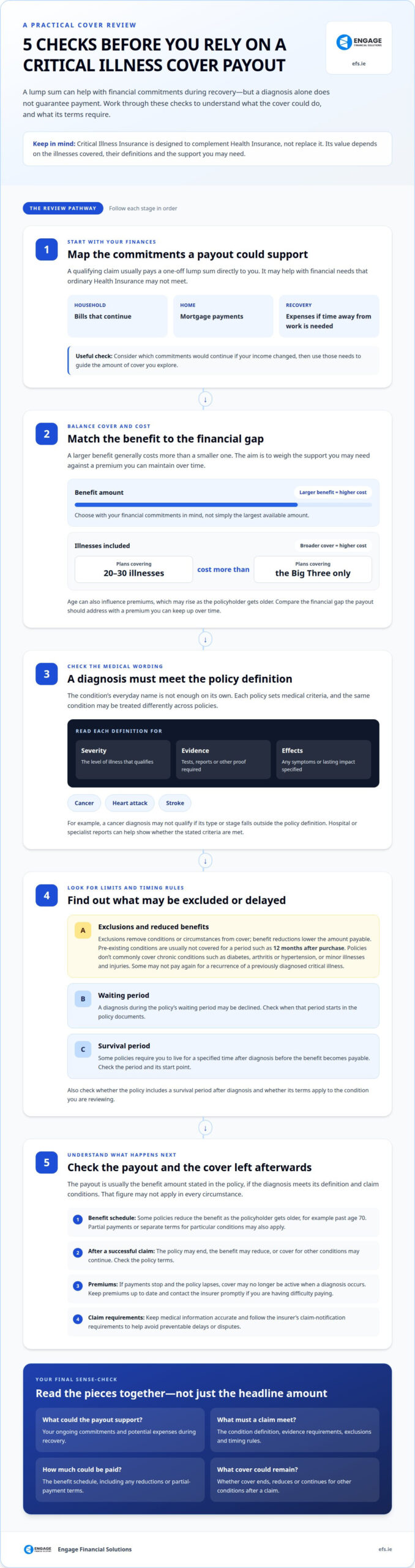
- Estimate cover by considering the financial commitments and income needs you’d want a payout to help with during recovery.
- Understand how a lump-sum benefit could support your finances, and whether a successful claim affects the rest of your policy.
- Read the policy’s definitions for cancer, heart attack and stroke, as a diagnosis must meet the stated criteria to qualify.
- Keep medical details accurate and follow the insurer’s claim-notification requirements to help avoid preventable delays or disputes.
- Pay close attention to exclusions, waiting periods and pre-existing condition terms when assessing whether a claim may be payable.
Critical illness cover and lump-sum benefits
Critical Illness Insurance can pay a lump sum if you’re diagnosed with a condition covered by your policy. The protection it provides depends on which illnesses are included, how they’re defined and the financial support you may need.
It’s designed to complement health insurance, not replace it. Consider how its benefit could work alongside your existing cover and household finances.
Using a lump-sum benefit
A lump-sum benefit is a one-off payment made directly to you after a qualifying diagnosis. Unlike cover limited to specific treatment bills, you can use the payment for financial needs that ordinary health insurance may not meet.
For example, you might use it towards household bills, mortgage payments or costs during recovery. It could also help with expenses if you need extended time away from work. Consider which commitments would continue if your income changed, then use those needs to guide the amount of cover you explore.
Exclusions and benefit reductions
Exclusions remove particular conditions or circumstances from cover, while benefit reductions lower the amount payable. Both matter: a diagnosis alone does not establish that a claim qualifies or that the full benefit will be paid.
Pre-existing conditions are usually not covered for a period such as 12 months after purchase. Policies also don’t commonly cover chronic conditions such as diabetes, arthritis or hypertension, or minor illnesses and injuries. Some policies don’t pay again for a recurrence of a previously diagnosed critical illness. Read each condition’s definition and exclusions, including any survival period after diagnosis that must be met before payment.
Benefit size and premiums
The amount payable for a qualifying claim can vary between policies. A larger benefit generally costs more than a smaller one, while plans covering 20-30 illnesses cost more than plans covering only the Big Three.
Age can influence premiums, which may rise as the policyholder gets older. When comparing options, consider the financial gap a payout should address rather than automatically choosing the largest available amount. Balance the cover you need against a premium you can maintain over time.
Critical illness cover focuses on conditions that can involve high treatment costs, a serious financial burden or an extended recovery. Some policies include organ failure or the need for a transplant; others may cover paralysis, major burns or loss of limbs. Cover varies, so a condition included in one policy may not be covered by another.
Some policies also offer benefits for preventive care, diagnostic testing or treatment of less severe conditions. The policy wording determines what qualifies. Compare the covered illnesses, definitions, exclusions and benefit amount together to assess how the cover could support your finances if a serious illness affects your plans.
Payout amount and policy termination after a successful claim
The payout is usually the benefit amount stated in the policy, provided the diagnosis meets its definition and claim conditions. Before relying on that figure, check whether a successful claim ends the policy, reduces the remaining benefit or leaves other cover in place.
Critical Illness Insurance uses medical criteria to define each covered condition. A diagnosis must match those criteria, not simply share the condition’s everyday name. For example, a cancer diagnosis may not qualify if its type or stage falls outside the policy definition. Hospital or specialist reports can help show whether the criteria are met.
Check each condition separately, as definitions may distinguish between severity, symptoms and the evidence required for a claim. A policy may require a particular test result or lasting effect, rather than a diagnosis alone. Some policies cover advanced Alzheimer’s disease, while others define qualifying illnesses differently. Read the wording for each condition you’re concerned about and note any specific evidence required.
The listed benefit isn’t always the amount payable in every circumstance. Some policies reduce the benefit as the policyholder gets older, for example past age 70. A policy may also include partial payments or separate terms for particular conditions. These details affect how much financial support remains after a claim. Review the benefit schedule alongside the illness definitions, rather than relying on the headline cover amount alone.
A claim may affect what cover remains under the policy. The policy terms explain whether cover ends, the benefit reduces or protection continues for other conditions. Check this before choosing a benefit amount, especially if you expect to rely on the policy for more than one potential claim. Premium arrears matter too: if payments stop and the policy lapses, cover may no longer be active when a diagnosis occurs. Keep premiums up to date and contact the insurer promptly if you’re having difficulty paying.
Waiting periods and survival periods affect claims in different ways. A diagnosis during the policy’s waiting period may be declined, while a survival period requires you to live for the specified time after diagnosis before a benefit becomes payable. Check both clauses and their start dates in the policy documents.
For a clearer view of how the benefit amount, qualifying definitions and ongoing cover fit together, review your Critical Illness Insurance options in the context of your financial needs.
Cancer, heart attack and stroke limitations
Cancer, heart attack and stroke are commonly covered conditions, but a diagnosis does not automatically lead to a payout. Each policy sets medical criteria, so details in your diagnosis and test results can affect whether it qualifies. The same condition may be treated differently across policies. Read the definitions for each illness rather than assuming a general label describes the cover.
For cancer, a policy may distinguish between invasive disease and early-stage, non-invasive growths. Some policies exclude early-stage, non-invasive cancers. This can matter when a diagnosis is medically serious but does not meet the policy’s threshold. Check which cancer types and stages qualify and whether specific evidence is required. The word “cancer” alone doesn’t explain the scope of cover or show whether a particular diagnosis meets the criteria.
Heart attack definitions may depend on clinical evidence. A policy may require specified enzyme levels in laboratory results alongside the diagnosis. Some policies cover coronary artery bypass surgery, but it is a distinct event from a heart attack and may have separate terms. When reviewing cover, read the wording on heart attack and bypass surgery separately to see which medical events the policy recognises.
For stroke, a policy may require imaging to confirm permanent neurological damage. A stroke diagnosis without the required imaging evidence may not meet the definition. The policy may also specify lasting effects or medical records needed to support a claim. The diagnosis, scans and follow-up evidence all matter. A hospital record can describe a stroke, but the policy’s criteria determine whether that evidence supports a qualifying claim.
Lifetime cancer risk and claim eligibility are different questions. The possibility of developing cancer over a lifetime cannot show whether a policy covers a particular cancer, stage or treatment. One diagnosis may meet the policy definition, while an early-stage, non-invasive cancer may fall within an exclusion. Focus on the conditions and criteria in the policy wording rather than treating general cancer risk as a prediction of your chances of receiving a payout.
Before relying on cover for cancer, heart attack or stroke, note the exact definition and evidence required for each condition. Pay particular attention to:
- Whether early-stage, non-invasive cancers are excluded.
- Which laboratory results support a heart attack claim.
- What imaging or lasting effects are required for stroke.
- Whether bypass surgery has its own qualifying criteria.
These distinctions explain why two diagnoses with similar names can lead to different claim outcomes. Matching medical evidence to the policy wording is central to understanding how cover applies.
Claim notification and medical disclosure
A claim depends on more than a diagnosis: the insurer needs notification and medical evidence that relate to the policy’s criteria. Follow the insurer’s notification timeline, as delays can lead to a claim being declined. Keep your policy details to hand and note when you first report the diagnosis, who you speak to and which documents they request.
Accurate medical disclosure matters both when applying and when claiming. Incomplete or inaccurate information about your medical history can be grounds for declining a claim. Give clear details about diagnoses, investigations and treatments, including dates where you know them. If a condition was diagnosed previously and you’re diagnosed again, explain its history rather than presenting it as a new illness.
Medical records help connect a diagnosis to the policy definition. A claim may require a doctor’s or hospital report showing the diagnosis or treatment for the covered condition. Keep copies of relevant reports, appointment letters, test results and insurer communications. Dated records can help explain the sequence from initial symptoms to diagnosis and treatment, particularly when a claim involves several appointments.
Follow the treatment plan agreed with your medical team, and keep notes if it changes. For example, record when a hospital appointment is moved or treatment is adjusted, along with the reason given. If a form asks about treatment, answer accurately and include the relevant details. This creates a clear account of your care without confusing an accident, an investigation or a diagnosis with the condition that qualifies under the policy.
A lump-sum payout can help with expenses that health insurance may not cover, such as household bills or mortgage payments while you recover. These costs differ from treatment expenses, so consider both when working out what financial support would be useful. Keep receipts and a simple record of regular commitments. They can help explain the practical effect of illness on your finances, although the policy’s medical criteria determine whether a claim qualifies.
To keep claim information organised, group records by type:
- Medical evidence: diagnosis letters, test results and treatment records from your doctor or hospital.
- Claim correspondence: forms, emails, letters and notes of calls with the insurer.
- Timeline: dates of diagnosis, notification, appointments and any change in treatment.
- Financial records: examples of ongoing expenses, such as mortgage payments and household bills.
Keep these records together throughout the claim period and respond to requests within the insurer’s stated timeframe. A complete, consistent account makes it easier to assess the medical evidence and claim circumstances.
What are the most common reasons Critical Illness Cover claims are declined?
A claim may be declined if the diagnosis or circumstances don’t meet the policy terms. A diagnosis during the policy’s waiting period is one reason a claim may not qualify. Other issues include a condition falling outside the definitions, an exclusion applying or missing information affecting the assessment. Start with the policy wording to understand each decision. Your chances of claiming on Critical Illness Cover depend on how the terms apply to your diagnosis and evidence.
Medical definitions can be narrower than everyday descriptions. For example, a cancer diagnosis may not qualify if its type or stage falls outside the policy criteria. A heart attack may require specified laboratory results, while a stroke definition may require imaging that confirms permanent neurological damage. Match the medical evidence to the wording for the relevant condition rather than relying on its name alone.
Policy exclusions can also affect a claim. A condition may be excluded because it was pre-existing or because the policy excludes that particular illness or circumstance. Some policies don’t cover a recurrence of an illness diagnosed previously. Read the exclusion alongside the condition definition, and consider the diagnosis history, relevant treatment and any stated waiting period together.
Incomplete or inaccurate medical disclosure is another potential obstacle. Information about previous symptoms, investigations or diagnoses can matter when applying for cover. For example, leaving out a past consultation that led to tests may raise questions about whether the application gave a complete account. Keep copies of application answers and medical correspondence so you can explain the timeline accurately if a claim is assessed.
Notification and supporting documents matter too. Insurers set claim-notification timelines, and delays can lead to a claim being declined. They may request a doctor’s or hospital report, along with test results or treatment records. Keep a dated record of when you notified the insurer, which documents you sent and any follow-up requests. This helps keep the claim file clear and consistent.
A lapsed policy can leave a diagnosis without active cover. If premiums stop, the policy may lapse, so keep payments up to date and address missed payments promptly. Before making a claim, organise your policy, medical reports and insurer correspondence together. This makes it easier to identify the relevant term and whether the evidence addresses it. Understanding these factors gives you a clearer basis for assessing your chances of claiming on Critical Illness Cover.
If a claim is declined, read the insurer’s explanation against the relevant policy clause and medical evidence. Identify whether the decision concerns the definition, an exclusion, timing or information provided. This gives you a clear basis for responding to the stated reason. For support understanding how cover terms relate to your financial protection, discuss your cover arrangements.
Engage Financial Solutions: Critical Illness Insurance
Engage Financial Solutions offers Critical Illness Insurance for people considering financial support if a serious illness affects their plans. It may be worth exploring cover when weighing potential financial commitments against the policy’s qualifying conditions, exclusions and benefit amount.
As you consider your options, think about how a lump-sum benefit could fit with your income, mortgage and other responsibilities. Considering these needs alongside the policy terms can help you make a more informed decision about the protection you want.
For guidance on Critical Illness Insurance and how it may fit your financial plans, contact Engage Financial Solutions.
Make your next protection decision with confidence
Your chances of claiming on Critical Illness Cover depend on how well the policy fits your needs and circumstances, so consider it as part of your wider financial plan. Think about how protection would sit alongside commitments such as a home loan, household costs and income plans. If your circumstances change, revisit whether the cover still aligns with the future you’re working towards.
Engage Financial Solutions also offers Switching Mortgages, First-time Buyer Mortgages and Buy-to-let Mortgages. These options may be relevant when your housing plans change, while Critical Illness Insurance can form part of a broader approach to financial security. Considering these decisions together can help you prioritise what matters most without making them in isolation.
If you’d like to explore how Critical Illness Insurance could fit your plans, contact Engage Financial Solutions. A considered next step can help you move forward with greater clarity and confidence.
Frequently Asked Questions
Are early-stage or less severe conditions covered?
Some policies cover less severe conditions, but the terms determine what qualifies. For example, a policy may include benefits for diagnostic testing or certain treatments, while another excludes early-stage, non-invasive cancers. Look for the condition’s definition and any separate partial-benefit wording. This helps distinguish cover for an early diagnosis from cover that requires a more advanced illness or lasting impact.
Can a claim be denied even with a confirmed diagnosis?
Yes. A confirmed diagnosis may not meet the policy’s medical definition, or an exclusion or waiting period may apply. For example, the policy may require imaging evidence of permanent neurological damage for a stroke claim. Incomplete medical disclosure or delayed notification can also affect a claim. Compare the insurer’s stated reason with the relevant policy clause and supporting records.
What happens after the payout?
After a successful claim, the policy terms determine whether cover ends, reduces or continues for other conditions. The payout is generally a lump sum paid to you, rather than reimbursement for individual bills. You can use it as you choose, for example to meet regular household commitments or adjust your finances during recovery. Review the policy schedule to understand what cover, if any, remains after payment.
What percentage of Critical Illness Insurance claims are accepted?
There isn’t one acceptance percentage that applies across all Critical Illness Insurance policies. Claim outcomes depend on the policy’s definitions, exclusions, medical evidence, disclosure and whether the policy was active when the diagnosis occurred. A percentage without the insurer, period and claim criteria could be misleading. For your own cover, focus on the exact conditions and evidence requirements in the policy documents.
Which illnesses and medical conditions can Critical Illness Insurance cover?
Policies commonly include cancer, heart attack and stroke. Some also cover conditions such as organ failure, transplant needs, paralysis, major burns or loss of limbs. The covered list varies by policy, and each illness has its own qualifying definition. Check whether the specific diagnosis and severity qualify rather than relying on a broad condition name. Chronic conditions and minor illnesses are not commonly covered.
What medical evidence and policy definitions are needed to claim?
The evidence must support the policy’s definition of the diagnosed condition. Depending on the claim, this could include a doctor’s or hospital report, laboratory results, imaging or treatment records. For instance, a heart attack definition may require specified enzyme levels. Keep relevant reports and claim correspondence together, then match the documents to the insurer’s requested criteria to present a clear medical timeline.
Can pre-existing conditions or earlier symptoms affect a claim?
Yes, they can. Pre-existing conditions are usually not covered for a period such as 12 months after purchase, and incomplete or inaccurate medical disclosure can also affect a claim. Earlier symptoms may be relevant if they led to consultations, tests or a diagnosis before the policy began. Keep application details and medical records accurate, and disclose the history requested when arranging cover.
How much does Critical Illness Insurance pay, and is the payout tax-free?
The payout is based on the benefit amount in your policy and the terms that apply to the qualifying condition. Some policies reduce benefits as the policyholder gets older, so check the benefit schedule for age-related changes. The information here doesn’t establish the tax treatment of every payout. Don’t assume it is tax-free; consider your personal tax position before relying on the full amount.
Disclaimer
Engage Financial Services LTD T/A Engage Financial Solutions is regulated by the Central Bank of Ireland CRO 764570. Suite 2 First Floor, 14 -18 Main street, Blackrock, Co Dublin. A94 W0Y3