


Most buyers think the house hunt starts on a property portal, but it actually begins with a folder of paperwork and a conversation with your lender. In a competitive market, walking into a viewing without a mortgage approval in principle within the domestic market is like trying to buy a car without knowing your budget; you’re simply not in the race yet. It’s understandable if you feel a bit of anxiety about credit history checks or the 2026 Central Bank lending limits that now allow first-time buyers to borrow up to four times their gross annual income.
We’re here to help you navigate these complexities with professional support and steady guidance. Whether you’re a first-time buyer or looking to move to a larger home, this guide will show you exactly how to master the process of becoming a mortgage-ready buyer by securing an approval within the local market. You’ll learn how to organise your financial life to meet current requirements, understand your true borrowing capacity, and gain the confidence to speak with estate agents as a serious contender. We’ll walk through the specific steps to gather your documentation and clear the path toward your new home.
Key Takeaways
- Discover why an AIP is the vital document that signals your readiness to estate agents and secures your place at the front of the queue in the local property market.
- Learn how to curate a flawless six-month financial history to satisfy lenders when applying for a mortgage approval in principle Ireland within the domestic market.
- Gain clarity on the current Central Bank lending limits, including how the 2026 4x income rule affects your specific borrowing capacity and deposit requirements.
- Follow our methodical roadmap to organise your document pack, ensuring a seamless transition from your initial assessment to a formal conditional offer.
- Understand the value of a holistic approach that combines your mortgage application with tailored mortgage protection to ensure long-term stability for your future home.
Understanding Approval in Principle and Why it Matters for Your Home Search
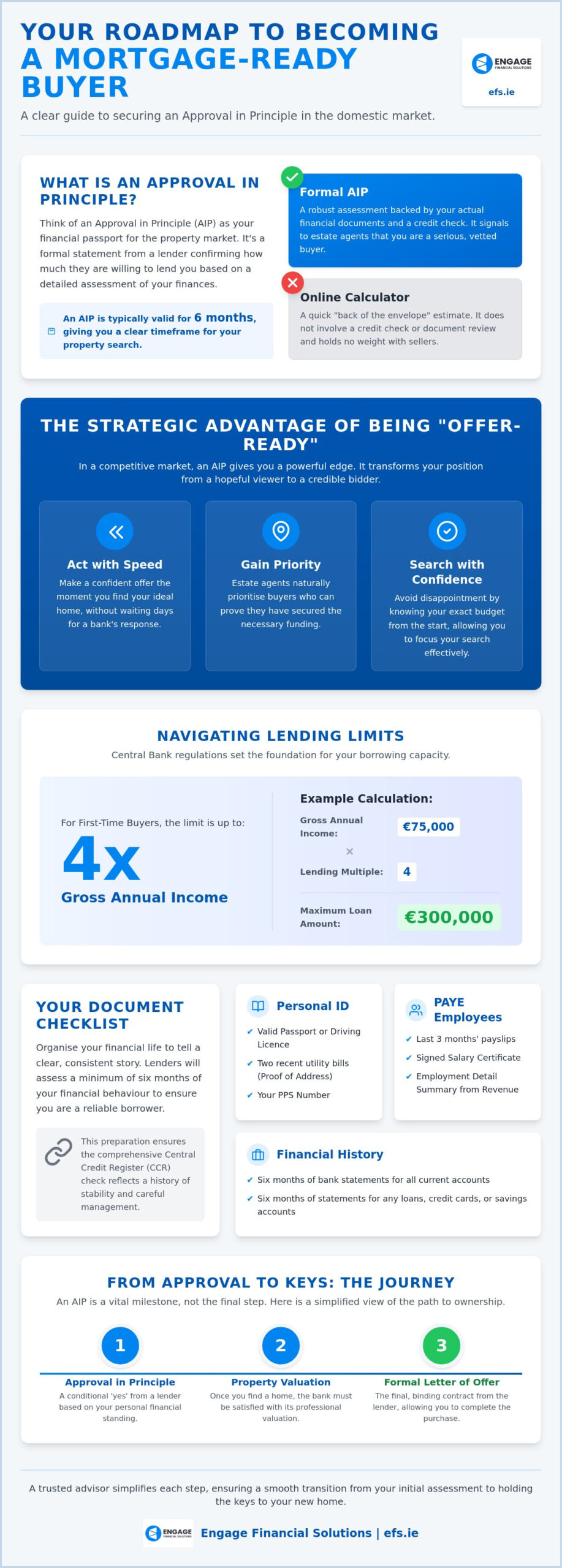
Think of an Approval in Principle (AIP) as your financial passport for the domestic property market. It’s a conditional statement from a lender that confirms, in writing, how much they’re willing to lend you based on your current financial standing. Before you spend hours researching what is a mortgage or scrolling through listings, you need this document in your hand. It transforms you from a casual browser into a serious buyer who can act quickly when the right opportunity arises.
Don’t confuse a formal AIP with those quick online calculators you find on bank websites. Those tools are helpful for a “back of the envelope” estimate, but they don’t involve a credit check or a review of your personal documents. A mortgage approval in principle is far more robust; it’s backed by a lender’s preliminary assessment of your actual bank statements and salary certificates. Most of these approvals stay valid for six months. If your search takes a little longer, refreshing your status is usually a straightforward process of submitting your most recent payslips to prove your circumstances haven’t changed.
The Strategic Advantage of Being “Offer-Ready”
In a fast-moving market, timing is everything. Estate agents often manage dozens of enquiries for a single property, and they naturally prioritise buyers who can prove they have the funds ready to go. Having your AIP ready means you can make an offer the moment you find “the one,” rather than waiting days for a bank to respond. This preparation also protects you from the heartbreak of falling in love with a home that sits just outside your realistic budget. Knowing your exact limit gives you a psychological edge; you can walk into viewings with a sense of calm competence, knowing exactly what you can afford to bid.
AIP vs. Letter of Offer: Knowing the Difference
It’s vital to remember that an AIP is the first milestone, not the finish line. Whilst it’s a very strong indicator that the bank will support you, it isn’t a 100% guarantee. The final “Letter of Offer” is the actual contract that follows once you’ve found a specific property and the bank is satisfied with its value. Your AIP will usually come with a few “subject to” conditions, such as a satisfactory valuation of the home you intend to buy and a final check of your financial behaviour right before drawdown. By working with a trusted advisor, you can ensure these conditions are met smoothly, moving you from a conditional “yes” to holding the keys in your hand.
Essential Documentation: Organising Your Financial Life for Success
Preparing for a mortgage application is similar to a financial audit; you need to present a clear, consistent story that proves you are a reliable borrower. Securing a mortgage approval in principle within the domestic market requires a meticulous paper trail that spans at least six months. This timeframe is the standard window lenders use to evaluate your financial behaviour and ensure you have the stability to handle long-term debt. Before you begin, ensure you have your basic identity documents ready: a valid passport or driving licence, two recent utility bills as proof of address, and your PPS number.
A key part of this process involves the Central Credit Register (CCR). This is a national database that records almost all loans of €500 or more, including credit cards and personal loans. Whilst many online guides focus on “soft” enquiries versus “hard” enquiries, it is vital to understand that in the local market, a formal application for an approval usually triggers a comprehensive CCR check. This leaves a footprint on your credit record. By keeping your finances “clean” for the six months leading up to your application, you ensure that this check reflects a history of stability and careful management.
Income Proof for Different Employment Types
Your employment status determines the specific documents you need to provide. If you are a PAYE employee, you will typically need your last three months’ payslips and a salary certificate signed by your employer. Lenders will also review your Employment Detail Summary from Revenue to verify your income history. If your income includes bonuses or overtime, local lenders often take a cautious approach, sometimes only counting a portion of this variable pay toward your borrowing limit. For the self-employed, the requirements are more extensive; you will usually need at least two years of audited accounts and a Tax Clearance Certificate to prove your business is performing consistently.
Bank Statements and Savings Evidence
Your bank statements act as a window into your daily lifestyle. Lenders look for “proven repayment capacity,” which means showing you can already afford the monthly mortgage cost. This is often demonstrated through “rent-matching” (regular, traceable rent payments) or a steady savings habit. Avoid “red flag” behaviours such as gambling transactions, missed direct debits, or a reliance on overdrafts. If you are using a gift for your deposit, you must provide a signed gift letter confirming the funds do not need to be repaid. If you find the documentation phase stressful, seeking professional mortgage advice can help you organise your file to meet every lender requirement seamlessly.
The Step-by-Step Journey to Securing Your AIP
The path to homeownership is a methodical process that rewards careful preparation. It begins with an initial consultation to assess your affordability. We don’t just look at what a bank might lend; we look at what you can comfortably repay whilst maintaining your lifestyle and long-term security. Once we have a clear target, we help you organise your document pack to ensure your profile is presented in the best possible light. This preparation ensures that when we reach Step 3, which is the submission to a panel of lenders, your application is robust and ready for scrutiny. We then manage any lender queries in Step 4, providing the extra detail or clarification banks often require. Finally, in Step 5, you receive your formal mortgage approval in principle, which serves as your green light to start viewing properties in earnest.
Why a Multi-Lender Approach Wins
Different lenders have different “appetites” for risk and specific types of borrowers. Some institutions might be more welcoming to self-employed applicants, whilst others offer more favourable terms for first-time buyers or those looking at switching mortgages. By taking a multi-lender approach, we can compare options across the entire domestic market without you having to undergo multiple hard credit checks. A trusted advisor acts as your shield, protecting your credit score whilst navigating the technical jargon of various bank offers to find the right fit for your unique situation. This proactive strategy ensures you aren’t limited to the criteria of a single bank, giving you a much higher chance of a smooth approval.
Expected Timelines in the 2026 Market
In the current market, timelines for approval can vary based on the complexity of your application and the lender’s current volume. You might receive an approval in as little as 48 hours, but it can take up to two weeks if additional information is required. Common bottlenecks often include waiting for employer signatures on salary certificates or identifying small gaps in bank statement histories. To keep things moving, it’s helpful to keep digital copies of every document on your phone or computer. This allows you to respond to lender queries instantly, ensuring a seamless and efficient journey toward your new home. By staying one step ahead of the paperwork, you can transition from applicant to approved buyer with minimal friction.
Navigating Lending Limits and Central Bank Regulations
Understanding the rules set by the Central Bank is essential for a successful application. As of 2026, first-time buyers can typically borrow up to four times their gross annual income. If you are a second-time buyer, this limit is usually three and a half times your income. These regulations are designed to protect both you and the lender, ensuring that your mortgage approval in principle Ireland remains sustainable over the long term. Alongside these income limits, you must also consider the Loan-to-Value (LTV) requirement, which currently mandates a minimum deposit of 10% for most primary residences.
Lenders don’t just look at the headline figures; they also conduct a rigorous stress test on your finances. This means they assess whether you could still afford your monthly repayments if interest rates were to rise by a specific percentage, often 2% above the current offer. Existing financial commitments, such as car loans or credit card balances, will directly reduce your borrowing power. Banks deduct these monthly repayments from your disposable income, which can significantly lower the total amount they are willing to lend you. It’s often a wise move to clear small debts before starting the process to maximise your potential budget.
Understanding Mortgage Exceptions and Exemptions
Whilst the standard rules are firm, lenders have a limited number of “exceptions” they can grant each year. These allow them to lend above the standard income or deposit limits for about 15% of their new mortgage customers. Securing an exception typically requires a very strong profile, such as a high-earning career path or a significant savings history. Because lenders have strict annual quotas for these, applying early in the calendar year is often more effective, as their allowance is refreshed every January. If you feel your situation warrants an exception, you can contact us today to discuss your eligibility and start your application.
What to Do if Your Application is Refused
Receiving a refusal can feel disheartening, but it’s rarely the end of the road. Most declines happen for practical reasons that can be fixed with time, such as an undisclosed debt appearing on a credit check or an inconsistent savings pattern. If this happens, we recommend a three-to-six-month “fix-it” plan. This involves pausing any non-essential spending, clearing existing short-term loans, and ensuring your bank statements show a perfect record of financial behaviour. This proactive approach allows you to return to the market with a much stronger profile and the confidence that your next application will be successful.
From Approval to Keys: How a Trusted Advisor Simplifies the Process
Once you hold that document, your status in the property market changes instantly. You’re no longer just a viewer; you’re a qualified buyer. In a competitive bidding war, having a mortgage approval in principle within the local market is your strongest leverage. Estate agents want a deal that closes without friction. When they see you have your financial backing secured, they know your offer is credible. This can often be the deciding factor that pushes your bid to the top of the pile, even if it isn’t the highest on the table.
A trusted advisor does more than just secure a letter; they manage the entire ecosystem of your application. This “one-stop” approach means you don’t have to juggle multiple conversations with banks, solicitors, and insurers. We handle the back-and-forth, resolving lender queries before they become stressors. Part of this holistic service includes ensuring your mortgage protection is in place early. Since this insurance is a legal requirement for most domestic loans, having it organised alongside your mortgage prevents any last-minute delays at the closing stage.
Tailoring Your Financial Security
True financial health isn’t just about the day you get your keys; it’s about the decades that follow. Whilst the focus today is on your new home, it is a perfect time to see how this purchase fits into your wider life goals. For instance, understanding how pension advice integrates with your home purchase ensures you aren’t overextending today at the expense of your future. We look at everything from income protection to long-term savings, creating a stable foundation that grows with you. This managed process provides a level of peace of mind that simply isn’t available when dealing with a single bank’s limited perspective.
Next Steps: Starting Your Journey Today
The journey from browser to homeowner is straightforward when you have a steady guide. Start today by gathering your initial documents: your payslips, bank statements, and proof of identity. Having these organised early is the best way to ensure a seamless experience. If the process feels overwhelming, remember that expert guidance is just a conversation away. We invite you to reach out for a personalised consultation. We can help you navigate the nuances of the domestic market, find the most favourable terms amongst a panel of lenders, and move you one step closer to the front door of your new home.
Secure Your Future with Calm Competence
Becoming mortgage-ready is about more than just gathering paperwork; it’s about creating a stable foundation for your life. By organising your six-month financial history and understanding how the 2026 lending limits apply to your income, you’ve already cleared the most significant hurdles. Remember that a mortgage approval in principle Ireland is your most powerful asset when entering a bidding process. It signals to estate agents that you’re a serious contender with the financial backing to follow through on your offer, giving you a distinct advantage in a competitive market.
At Engage Financial Solutions, we’re regulated by the Central Bank and offer access to a wide panel of domestic lenders. We specialise in helping first-time buyers and those in the switcher market find tailored solutions that provide long-term security. Begin your seamless mortgage journey with Engage Financial Solutions today to receive the professional guidance you deserve. Taking that first step now ensures a smoother transition to the keys of your new home. We look forward to helping you navigate the market with optimism and peace of mind.
Frequently Asked Questions
How long does a mortgage approval in principle last?
Most approvals are valid for a period of six months from the date they are issued. If you don’t find a property within this timeframe, you don’t necessarily have to start the entire application again. You can usually refresh your status by submitting your most recent payslips and bank statements to prove your financial circumstances remain stable. This simple update ensures your borrowing capacity stays current whilst you continue your search.
Can I get an approval in principle with a low credit score?
It is certainly possible, though it requires a more detailed look at your financial history. Lenders will review your record on the Central Credit Register to see the context behind your score. If you can demonstrate six months of perfect financial behaviour leading up to your application, it helps build a strong case for your current reliability. We can help you present your profile in the best possible light to potential lenders.
Does an approval in principle guarantee that I will get the mortgage?
An approval is a conditional statement of intent rather than a final binding contract. The lender still needs to perform a professional valuation on the specific property you choose to ensure it meets their criteria. They will also conduct a final check of your bank statements just before the funds are released. It is a very strong indicator of your borrowing power, but the final Letter of Offer is the only 100% guarantee.
How much does it cost to get an approval in principle?
Obtaining this document typically costs nothing in terms of bank fees or application charges. Whilst the document itself is free, the real investment is the time you spend organising your paperwork and financial history. Securing a mortgage approval in principle within the domestic market through a broker can also save you money in the long run by helping you identify the most competitive interest rates available for your specific profile.
Can I change lenders after I have received an approval in principle?
You are never locked into a single bank just because they provided your initial approval. You’re free to compare offers from different lenders on our panel to ensure you’re getting the best possible terms for your situation. In fact, many buyers switch to a different lender if a more attractive rate or a better cashback offer becomes available during their property search. We can manage this transition for you seamlessly.
What is the 4x income rule and does it apply to everyone?
The 4x income rule means that first-time buyers can generally borrow up to four times their gross annual salary. This is a standard regulation within the local market, whilst second-time buyers are typically limited to three and a half times their income. Lenders do have a small number of exceptions available each year for those with higher earnings or larger deposits, but these are granted on a case-by-case basis.
Do I need to have my full deposit saved before applying for an AIP?
You don’t need the entire 10% deposit sitting in your account the moment you apply. However, you must be able to show a clear “paper trail” that proves the funds will be ready by the time you sign a contract. This could include a combination of regular savings, a gift from family, or a tax refund from government support schemes. Lenders simply need to see that your deposit goal is realistic and achievable.
What happens if my circumstances change after I get approved?
You must notify your advisor or lender immediately if your financial situation changes, such as moving to a new job or taking out a car loan. Significant changes can affect your borrowing capacity and may require the bank to re-evaluate your approval. To keep your application on track, it’s usually best to avoid making any large purchases or taking on new debts until your mortgage has been fully drawn down and you have your keys.
Disclaimer
Engage Financial Services LTD T/A Engage Financial Solutions is regulated by the Central Bank of Ireland CRO 764570. Director David Moore. Suite 2 First Floor, 14 -18 Main street, Blackrock, Co Dublin A94 W0Y3