


What if the distance between your current rental and your first permanent home wasn’t measured in years of saving, but in a single, well-organised folder of paperwork? Whether you are stepping onto the property ladder for the first time or looking to switch for a better rate, the process often feels like a daunting hurdle. You’ve likely spent hours searching for how to get a mortgage in the local market, only to feel overwhelmed by conflicting advice on interest rates and loan-to-income (LTI) ratios. It’s natural to feel anxious about proving your financial stability amidst strict lending limits and the volume of documentation required.
We understand that this journey is about more than just a loan; it’s about securing your long-term future and finding peace of mind. This guide provides a methodical roadmap to help you move forward with confidence. You’ll discover how to calculate your true borrowing power under the current four times income limit for first-time buyers and learn how to leverage schemes like Help to Buy. We will walk you through the entire process, from cleaning up your bank statements to finally receiving your keys, ensuring you feel looked after every step of the way.
Key Takeaways
- Understand how the latest lending limits, including Loan-to-Income and Loan-to-Value ratios, define your maximum budget and deposit requirements in the current market.
- Implement a six-month preparation strategy to organise your bank accounts and demonstrate the consistent repayment behaviour that lenders prioritise.
- Discover the methodical steps of how to get a mortgage in Ireland, from securing your initial Approval in Principle to navigating the “sale agreed” phase with confidence.
- Evaluate the benefits of partnering with a broker to access a wider panel of lenders and ensure you are positioned to receive the most competitive interest rates.
- Learn why safeguarding your journey with mortgage protection is a vital step in ensuring your family’s long-term financial security and peace of mind.
Understanding the Foundations of the Local Lending Landscape
A mortgage is essentially a structured partnership between you and a lender, designed to turn the dream of homeownership into a manageable financial reality. In our current market, these loans are governed by clear, protective frameworks that ensure stability for both you and the banking system. These regulations were heavily influenced by the historical Irish economic landscape, which saw significant shifts in property values over the last two decades. Understanding these “rules of the road” is the first step in learning how to get a mortgage in Ireland with confidence, as they define exactly how much you can borrow and what you’ll need to provide upfront.
The Loan-to-Income (LTI) Framework Explained
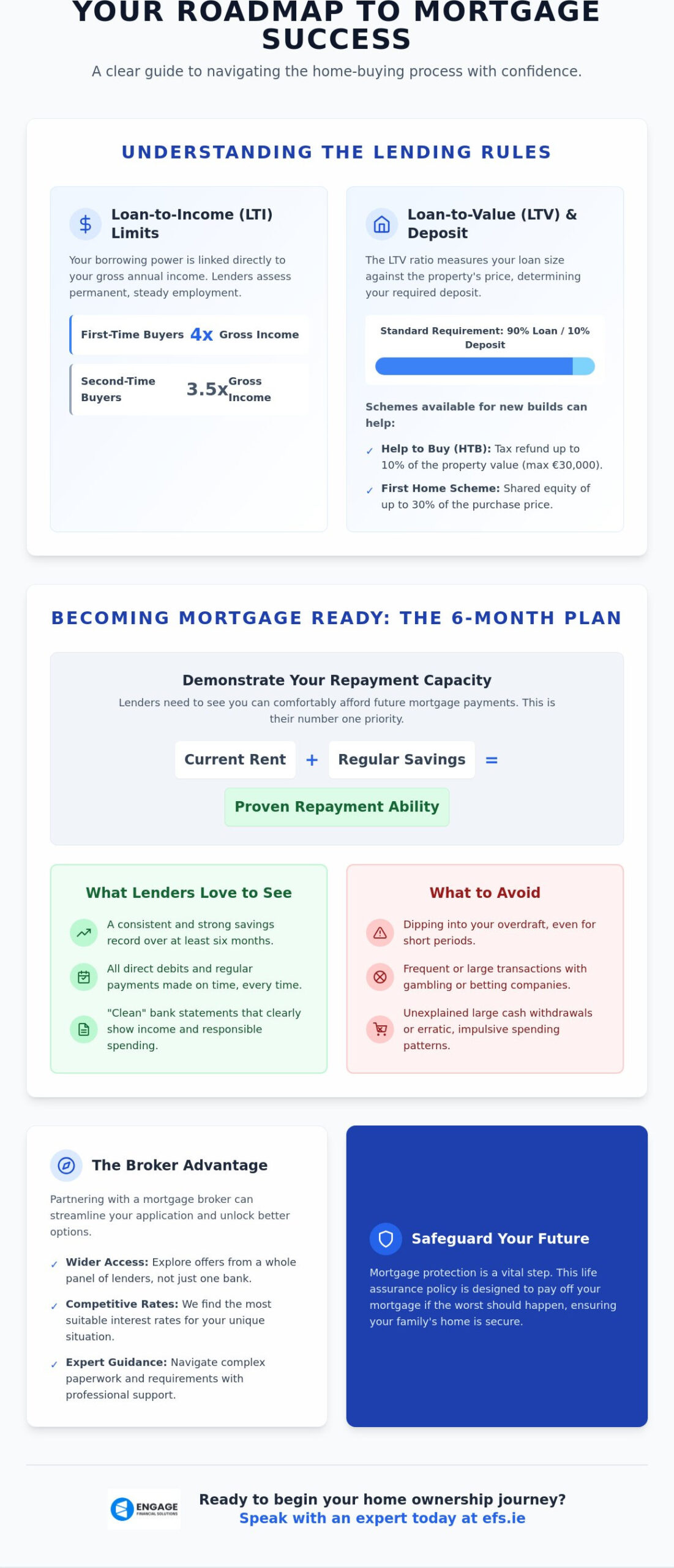
Your borrowing capacity is primarily dictated by your gross annual income. For first-time buyers, the limit is generally four times your combined gross salary. If you’ve owned a home before, this limit typically tightens to 3.5 times your income. Lenders don’t just look at the final number; they prioritise “quality” income. They want to see permanent contracts, steady employment history, and a reliable track record. While these limits might feel restrictive, they act as a vital safeguard. They ensure your future repayments remain manageable even if your personal circumstances change or interest rates fluctuate.
Loan-to-Value (LTV) and Your Deposit
The Loan-to-Value ratio measures the size of your loan against the property’s market price. For most residential purchases, a minimum 10% deposit is required, resulting in an LTV of 90%. If you are considering a new-build property, several supports can help you reach this threshold more easily:
- Help to Buy (HTB) Scheme: This provides a tax refund of up to 10% of the property’s value, capped at €30,000, for homes priced under €500,000.
- First Home Scheme: This is a shared equity initiative where the government can provide up to 30% of the purchase price in exchange for a stake in the property.
These schemes are designed to bridge the gap between your savings and the required deposit, making the entry into the property market much more straightforward for those starting out.
The Role of Lending Exemptions
Lenders do have a small amount of flexibility to move beyond these standard limits through “exemptions.” Currently, around 15% of the total value of new mortgages can exceed the standard LTI or LTV rules. These are not handed out lightly; they are typically reserved for applicants with high earnings, excellent credit histories, or significant potential for salary growth. We view these exemptions as a way to tailor a solution to your specific needs when the standard rules don’t quite fit your unique financial profile. This flexibility ensures the system remains robust whilst still being responsive to individual success stories.
Becoming Mortgage Ready: The Six-Month Preparation Strategy
Preparing for a home purchase is more of a marathon than a sprint. While the initial excitement of browsing property portals is natural, the real work happens in the six months leading up to your application. During this window, lenders aren’t just looking at a snapshot of your current balance; they’re reviewing the “movie” of your financial life to ensure you’re a reliable partner for the next thirty years. Understanding how to get a mortgage in Ireland often starts with perfecting these daily habits long before you ever step foot in a bank.
Demonstrating Repayment Capacity
Lenders prioritise one specific metric: your proven ability to meet monthly repayments. This is known as “repayment capacity,” and it’s calculated by combining your current rent with your regular savings. If your future mortgage is expected to cost €1,800 a month, but you only pay €1,200 in rent, you must show a consistent monthly saving of at least €600 to bridge that gap. This demonstrates that your lifestyle already accommodates the future loan. These habits are essential for meeting the Central Bank mortgage measures, as they prove you can handle the financial commitment even if interest rates rise.
Keep your account history “clean” during this period. Avoid dipping into your overdraft, ensure every direct debit is paid on time, and be mindful of impulsive spending or frequent gambling transactions. Even small, recurring habits can suggest a lack of financial discipline to a strict underwriter. If you’re currently balancing existing debts, such as a car loan or credit card balance, try to clear or significantly reduce them. These obligations reduce your “disposable income” in the eyes of the lender, which directly lowers the total amount they are willing to lend you.
The Essential Paperwork Checklist
Organising your documentation early removes a significant amount of friction from the process. You’ll need to gather a comprehensive trail of your financial identity. For PAYE employees, this typically includes:
- Six months of consecutive bank statements for all accounts (including savings and Revolut).
- Your most recent Employment Detail Summary (formerly the P60) from Revenue.
- Three to six months of recent payslips.
- A signed salary certificate from your employer.
If you’re self-employed, the requirements are more rigorous. You’ll generally need two years of audited accounts and your Chapter 4 tax certificates to prove a stable income history. Remember that employment stability is key; if you’ve recently started a new role, most lenders will require you to finish your probationary period before they’ll issue a full offer. If you are already on the property ladder and planning your next move, it’s often worth reviewing your current mortgage to see how your existing equity can be leveraged for a seamless transition.
A broker acts as your steady guide, offering a clear view across the entire domestic lending market. They don’t just look at one set of rates; they scan a wide panel of providers to find the specific fit for your lifestyle. This is a crucial part of learning how to get a mortgage in Ireland, as different lenders often have varying views on things like overtime, bonuses, or self-employed income. Because brokers are typically remunerated via a commission from the lender, you gain an expert advocate who works to find you the most competitive terms without an additional layer of stress or high-pressure sales tactics.
The Benefits of a Multi-Lender Perspective
Market conditions shift frequently, and keeping track of every rate change is a full-time job. One lender might currently favour long-term fixed rates for those seeking absolute stability, whilst another offers flexible variable options that allow for penalty-free overpayments. A broker manages these comparisons for you. Instead of managing five different applications yourself, you provide your documentation once. Your advisor then identifies which institutions are most likely to offer a positive outcome based on your unique financial profile. This proactive approach saves you time and protects your credit history from the impact of multiple separate bank inquiries.
Achieving a Seamless Application Experience
The real value of a dedicated advisor lies in removing the friction from the application process. They know exactly how to “package” your financial history to highlight your strengths, such as your consistent repayment capacity and clean account behaviour. This professional presentation reduces the exhaustive back-and-forth queries that often cause weeks of delays in the underwriting process. For those seeking professional mortgage advice, this partnership ensures that the journey from initial inquiry to final approval is as straightforward as possible. By acting as the buffer between you and the bank’s requirements, your advisor handles the complex negotiations so you can focus on the excitement of the property search.
The Step-by-Step Path from Application to Keys
Moving from financial preparation to active house hunting is an exhilarating shift. Once you’ve organised your documents and demonstrated your repayment capacity, the first major milestone is securing your Approval in Principle (AIP). This document transitions your search from theoretical browsing to a practical mission. It’s the moment you stop asking how to get a mortgage in Ireland and start actively bidding on your future home with the backing of a lender’s commitment. This stage is about turning your preparation into a tangible result, ensuring you can navigate the market with a sense of “calm competence.”
Approval in Principle: Your Hunting Licence
An AIP is a statement from a lender indicating the maximum amount they are willing to lend you based on an initial review of your finances. It typically remains valid for six months, providing a generous window to explore the local property market. In a competitive environment where the national median residential property price is approximately €390,000, having an AIP is essential. Estate agents often prioritise buyers who can prove they have the funds ready to go. It transforms you into a “serious buyer,” allowing you to move quickly when the right property appears. Once you find a home and go “sale agreed,” your AIP is upgraded to a formal Letter of Offer after the lender completes a final check of the specific property.
Finalising the Deal: Valuation and Contracts
After your offer is accepted, the focus shifts to the property itself. The lender will appoint a professional valuer to ensure the house is worth the price you’ve agreed to pay. This protects you as much as the bank, ensuring your investment is sound. Whilst the bank focuses on value, we highly recommend you also commission a structural survey to identify any potential maintenance issues before you sign the contracts. This proactive step prevents unexpected stresses later in the journey.
The final legal stage involves your solicitor reviewing the title deeds and contracts. This is often the most intense period of the process, but with a steady guide by your side, the “closing” phase remains manageable. Once the paperwork is signed and all conditions are met, the bank draws down the funds, and the keys are finally yours. Remember that your financial health is an ongoing journey; once you’ve settled in, it’s worth periodically switching your mortgage to ensure you’re always benefiting from the most competitive rates available locally. If you are ready to take that first step toward your new front door, you can secure your mortgage approval with our expert team today.
Beyond the Keys: Safeguarding Your Future Success
Receiving the keys to your new home is a triumphant milestone, but it’s also the beginning of a fresh chapter in your financial stewardship. Whilst you’ve successfully navigated the complexities of how to get a mortgage in Ireland, the real long-term success lies in how you manage and protect that commitment over the coming decades. A home is rarely just a place to live; it’s the anchor of your family’s stability and a primary pillar of your overall wealth. Taking a proactive approach to your finances now ensures that your home remains a source of security rather than a point of stress.
Protecting Your Most Valuable Asset
In the local market, mortgage protection is a legal requirement for most residential loans. This specific type of life insurance is designed to pay off your remaining mortgage balance if you pass away, ensuring your family can stay in their home without the burden of debt. However, a truly robust plan looks beyond the bare minimum. While mortgage protection covers the loan itself, you might also consider income protection to safeguard your earnings if you’re unable to work due to illness or injury. For a deeper look at how these safeguards work together, our mortgage protection guide offers a detailed breakdown of the options available to homeowners today.
Maintaining a “clean” financial record shouldn’t stop once you’ve moved in. By continuing the disciplined habits you developed during your application phase, you stay in a strong position to review your mortgage regularly. Interest rates and lender offers shift frequently; what was the best rate in 2026 might not be the most competitive option three years later. Periodically checking if you can switch to a better deal can save you thousands of euros over the life of the loan, effectively accelerating your journey toward full ownership.
The Holistic Financial Perspective
Your mortgage doesn’t exist in a vacuum. It should be seamlessly integrated into your wider goals, particularly when it comes to retirement planning. The ultimate aim for many is to reach retirement with a fully cleared mortgage, significantly reducing your cost of living when you transition away from full-time work. By viewing your home loan as a component of your long-term security, you can make informed decisions about overpayments or term adjustments that align with your future lifestyle aspirations.
Achieving this level of “calm competence” is much easier with a trusted advisor by your side. A long-term partnership with a financial consultant allows you to adjust your strategy as your life evolves, whether you’re growing your family or planning for your later years. This future-back perspective transforms a simple loan into a powerful tool for lifelong success, giving you the peace of mind that your home, and your future, are in safe hands.
Your Roadmap to a Seamless Home Purchase
Finding your way through the local property market doesn’t have to be a source of friction or stress. By focusing on a six-month preparation strategy and understanding the current lending limits, you’ve already taken the most important steps toward homeownership. You now know that the secret of how to get a mortgage in Ireland lies in a combination of disciplined financial behaviour and the support of a steady guide who can navigate the multi-lender landscape on your behalf.
Remember that securing your keys is just the first milestone in a lifelong journey of financial health. Whether you’re a first-time buyer or a seasoned mover, integrating your loan into a wider plan for protection and retirement ensures your family’s security for years to come. As a firm regulated by the Central Bank, we pride ourselves on delivering the expert guidance and tailored financial plans you need for long-term peace of mind. Begin your seamless mortgage journey with Engage Financial Solutions today and move forward with the confidence that you’re looked after every step of the way.
Common Questions About Your Path to Homeownership
How much can I borrow for a mortgage in the current market?
You can generally borrow up to four times your gross annual income if you are a first-time buyer. If you have owned a home before, this limit is typically set at 3.5 times your income. Lenders use these figures as a baseline, but they also perform a deep dive into your net disposable income to ensure you can comfortably manage repayments alongside your existing lifestyle costs.
Do I need a permanent job to get a mortgage approval?
You usually need to be out of your probationary period and in a stable role to secure a full mortgage offer. While a permanent contract is the standard preference for local lenders, those on fixed-term contracts or who are self-employed can still qualify. The key is demonstrating a reliable history of earnings, typically over at least two years, to prove your financial stability.
Can I get a mortgage if I have a car loan or other debts?
You can certainly qualify for a mortgage whilst holding other debts, but they will reduce the total amount you can borrow. Lenders subtract your monthly debt repayments from your disposable income during their assessment. If you’re paying €300 a month for a car loan, the bank views that as €300 less available for your mortgage, so clearing small loans early can often boost your budget.
How long does it typically take to get a mortgage approval?
The journey from your initial inquiry to receiving your keys typically takes between four and nine months. Securing an Approval in Principle can happen in just a few days if your paperwork is perfectly organised. However, the subsequent phases of house hunting, property valuations, and the legal conveyancing process usually take several months to complete in the current competitive market.
What is the difference between Approval in Principle and a full Letter of Offer?
An Approval in Principle (AIP) is an initial indication of what you can borrow, whilst a Letter of Offer is a formal, binding contract for a specific property. Think of the AIP as your “hunting licence” that shows estate agents you are a serious buyer. The formal Letter of Offer only arrives after you’ve gone “sale agreed” and the lender has successfully valued the home.
Is it better to go to a bank or use a mortgage broker?
Using a mortgage broker often provides a more seamless experience because they can access a wide panel of different lenders. A bank can only offer you their own specific products and rates. This is a vital part of learning how to get a mortgage in Ireland effectively, as a broker can compare the entire market to find the most competitive fit for your unique profile.
What happens if my mortgage application is refused by a lender?
If a lender refuses your application, you should ask for the specific reason so you can address the issue directly. Common hurdles include a lack of proven repayment capacity or issues with your credit history. A refusal from one institution doesn’t mean others will say no; an expert advisor can often help you identify a different lender whose criteria are a better match for you.
Do I have to buy my mortgage protection from the same bank as my loan?
You are under no legal obligation to purchase mortgage protection from the same lender providing your loan. Lenders often suggest their own insurance products, but you are free to shop around for more competitive premiums or better coverage. Choosing a tailored policy that fits your long-term security needs, rather than just accepting the bank’s default option, can lead to significant savings over time.
Disclaimer
Engage Financial Services LTD T/A Engage Financial Solutions is regulated by the Central Bank of Ireland CRO 764570. Director David Moore. Suite 2 First Floor, 14 -18 Main street, Blackrock, Co Dublin A94 W0Y3