


You have finally found the perfect three-bed semi-detached, but as you reach for your paperwork, a cold shiver sets in: has your mortgage offer already expired? It is a common fear for house-hunters in the local market, where the gap between getting an initial green light and signing the contracts can often take longer than expected. Understanding exactly how long mortgage approval lasts is essential for keeping your home-buying journey on track and avoiding the stress of starting your application from scratch whilst property prices continue to climb.
Whether you are a first-time buyer searching for your first apartment or a mover looking for more space, watching the calendar whilst interest rates fluctuate feels like a high-stakes race. Following the 0.25 per cent increase in June 2026, the need for certainty has never been higher. You deserve a straightforward path to your new front door without the worry of conflicting timelines or expiring documents. This guide will show you exactly how long your home loan approval remains valid and how to navigate the renewal process without the stress. We will break down the differences between an Approval in Principle and a formal Letter of Offer, providing the clarity you need to hunt with total confidence.
Key Takeaways
- Gain a clear understanding of the multi-stage approval process to help you plan your move with stability and optimism.
- Discover exactly how long mortgage approval lasts within the local market, typically ranging from six to twelve months for house-hunters.
- Recognise the specific factors, such as changing jobs or taking on new debt, that can impact the validity of your loan offer.
- Learn the proactive steps needed to extend your approval status seamlessly, ensuring you are ready when the right property appears.
Defining the Lifecycle of a Property Loan Approval
Securing a mortgage loan is rarely a one-and-done event. Instead, it’s a multi-stage lifecycle that evolves alongside your property search. Many buyers start with a sense of excitement that quickly turns to worry when they wonder how long does mortgage approval last Ireland whilst browsing the local property portals. The process typically begins with an Approval in Principle (AIP), which serves as a preliminary green light based on your high-level financial data. This initial stage is designed to give you the confidence to bid on a home, but it’s vital to remember that this is just the beginning of the journey.
Why Do These Approvals Have Expiry Dates?
Lenders require the most current financial data to ensure your circumstances haven’t shifted. Your credit history, savings patterns, and income levels can fluctuate significantly over just a few months. In the context of 2026, where the European Central Bank increased key interest rates by 0.25 per cent in June, lenders must limit their exposure to market volatility. By setting an expiry date, they safeguard both their interests and yours, ensuring the loan remains affordable under the latest economic conditions. This proactive approach helps maintain stability for your future financial health.
The Difference Between AIP and a Formal Offer
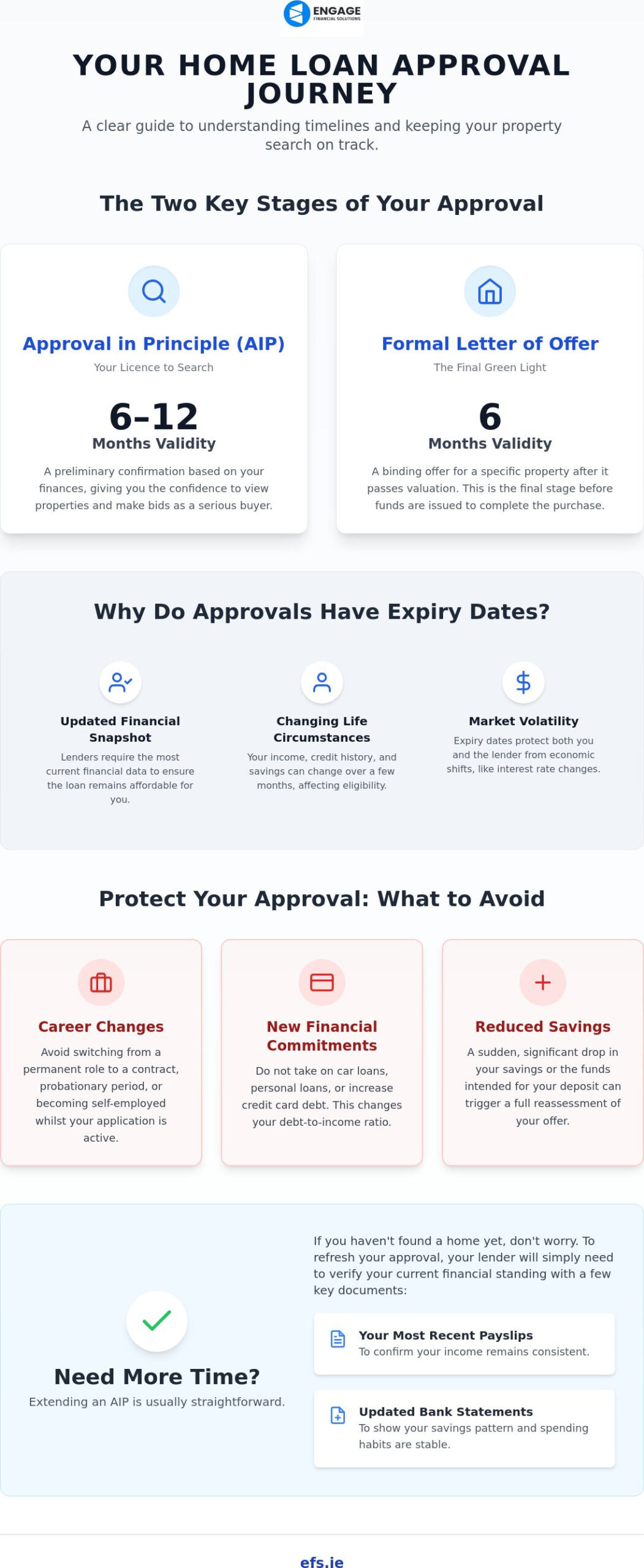
An AIP is essentially a statement of intent. It tells estate agents you’re a serious buyer, but it’s not a binding contract. The clock for this stage usually runs for six to twelve months depending on the lender. Once you find a specific property and it passes a valuation, you move to the formal Letter of Offer. This is the final stage before the funds are issued. The pace changes here; whilst an AIP gives you room to roam, a Letter of Offer usually has a much tighter window. In this jurisdiction, a formal offer typically lasts for six months, requiring a more focused approach to closing the sale.
Keeping your financial behaviour consistent is the most important thing you can do during this lifecycle. Whether you’re waiting for a valuation or just browsing listings, avoid making major life changes like switching jobs or taking out new credit. Lenders want to see the same stable profile they originally approved. By maintaining this steady course, you ensure a seamless transition from your initial application to the day you collect your keys. If you are ready to begin this process, you can start your journey with a team that prioritises your long-term security.
How Long Does Approval in Principle Typically Last?
Once you have cleared the initial hurdle of gathering your documents, the focus shifts to the clock. In the current local market, an Approval in Principle (AIP) typically remains valid for a period of six to twelve months. This window provides you with the breathing space needed to attend viewings and place bids without the constant pressure of expiring paperwork. However, it is vital to remember that this ‘validity’ isn’t an absolute guarantee. Every approval comes with a ‘no change in circumstances’ clause. This means your offer stays live only as long as your financial behaviour remains consistent with the day you applied. Common changes that might trigger a reassessment include:
- Career shifts: Moving from a permanent role to a probationary period or starting a self-employed venture.
- New liabilities: Taking out a car loan, personal loan, or increasing credit card debt.
- Reduced liquidity: A sudden drop in your savings or the funds intended for your deposit.
The Standard 6-Month Window
Most lenders prefer a six-month review cycle for their initial approvals. This timeframe aligns with the standard lifespan of a credit report, ensuring that the bank is working with fresh data that reflects your current habits. If you haven’t found your dream home by the six-month mark, don’t panic. Extending an AIP is usually a straightforward and flexible process that involves a quick review of your most recent payslips and bank statements. It is a seamless way for the lender to verify that you are still in a strong position to manage a mortgage application process without the friction of a full re-application. Staying organised with your digital documents can make this refresh feel like a minor administrative task rather than a major hurdle.
Exceptions and 12-Month Approvals
Certain major high-street pillars provide a full year of validity, which is particularly helpful if you are looking in highly competitive areas where the right property might take months to appear. This extended period offers significant peace of mind, though it does come with specific caveats. Whilst you have longer to search, you may still be asked to ‘refresh’ your documentation after six months to ensure no new debts have been taken on. A longer approval can be a double-edged sword; whilst it gives you time, it doesn’t always lock in an interest rate for the full year. Always check the fine print in your specific documentation to see if your rate is protected or subject to market changes. This proactive attention to detail ensures your long-term security isn’t compromised by unexpected shifts in the economy.
Understanding how long does mortgage approval last in the local market helps you plan your search with a sense of calm competence. If you are unsure which lender offers the most flexible window for your specific needs, you can explore your options with a guide who understands the nuances of the industry and prioritises your peace of mind.
The Lifespan of a Formal Letter of Offer
Finding your dream home and having your bid accepted is a major milestone, but it also triggers a shift in your mortgage timeline. Once the property is valued and the lender is satisfied with the details, you move from a general approval to receiving a formal Letter of Offer. This is the legally binding document that specifies the exact terms of your loan. Unlike the broader window of an Approval in Principle, the clock on a formal offer often moves at a much faster pace. In the local market, a Letter of Offer typically remains valid for a period between three and six months, though the pressure to complete the sale within this window can be intense.
This stage of the journey is no longer just between you and your lender. It now involves your solicitor and the lender’s legal team, who must work together to ensure all titles and contracts are in order. Many house-hunters find themselves asking how long does mortgage approval last Ireland when they realise the legal work is taking longer than expected. If the transaction isn’t finalised by the “completion deadline” stated in your documents, the offer may expire, potentially requiring a full re-evaluation of your financial status. Keeping a close eye on these dates ensures you maintain the peace of mind you’ve worked so hard to achieve.
The Pressure of the 3-Month Offer
Whilst some lenders offer up to six months, many formal offers carry a tighter three-month window for completion. The formal offer window is shorter than the initial AIP because the lender is committing to a specific interest rate and loan amount for a specific asset in a shifting economy. Conveyancing delays are the most common reason for stress at this stage. Issues with property titles or slow communication between legal parties can quickly consume your remaining time. To manage this, stay in constant contact with your solicitor. Ask for weekly updates and ensure you’ve signed and returned all paperwork immediately. Proactive coordination is the best way to ensure you meet the deadline without unnecessary friction.
What Happens if the Offer Expires Before Closing?
If your offer expires just days before you’re due to close, don’t panic. Lenders can sometimes offer a short “bridge” extension if the delay is purely administrative and your circumstances haven’t changed. However, if the delay is significant, you might have to re-apply for the loan entirely. This carries a risk, especially if interest rates have risen since your original offer was issued. A re-evaluation means the lender will look at your bank statements and payslips again to ensure your affordability remains strong. According to the Citizens Information Board, how long mortgage approval lasts can vary between different stages, so keeping your financial profile stable during this final sprint is essential for your long-term security.
Factors That Can Shorten or Void Your Approval Status
One of the biggest misconceptions in the local property market is that a mortgage approval is a guaranteed bag of money sitting in a vault. In reality, it is a conditional offer based on a specific snapshot of your life. If that snapshot changes, the approval can vanish overnight. This is why asking how long does mortgage approval last Ireland is only half the battle; you also need to know what actions could shorten that window or void it entirely. Stability is what lenders crave most during this period.
Your financial profile must remain identical to the one that was originally approved. Taking out new debt is the most common way to accidentally kill an application. Whether it is a new car loan, a personal loan for furniture, or simply increasing your credit card limit, these actions change your debt-to-income ratio. Lenders often perform a final credit check just before the funds are released. If they see new liabilities, they may withdraw the offer. Similarly, employment changes are a major red flag. Moving from a secure permanent role to a contract position or starting a new job with a probationary period can cause a lender to pause or cancel your approval.
The property itself can also be a deal-breaker. Even if your personal finances are perfect, the approval depends on a successful valuation. If a surveyor decides the house is worth significantly less than the price you have agreed to pay, the loan-to-value ratio no longer fits the lender’s criteria. In such cases, the approval for that specific property fails, and you may need to find a larger deposit or walk away from the sale.
Financial Behaviour During the House Hunt
Lenders monitor your bank statements for consistency. Avoid making large, unusual transfers or receiving unexplained lump sums, as these can trigger fresh questions about the source of your funds. Most importantly, never “dip into” your deposit fund for other expenses, even if you plan to pay it back. Your deposit must remain liquid and visible. A simple, actionable rule is to keep your financial profile “frozen” until the keys are in your hand. Treat your bank account as a static exhibit for the lender to admire.
Macro-Economic Shifts and Rate Hikes
The wider economy can also impact your status. Following the European Central Bank’s decision to increase key interest rates by 0.25 per cent in June 2026, many lenders have become more cautious. It is vital to distinguish between a “valid approval” and a “guaranteed interest rate.” Whilst your approval might still be live, the specific product or rate you were offered could be withdrawn if the market shifts rapidly. Staying in close contact with your advisor ensures you aren’t caught off guard by these external changes. If you are worried about how market shifts might affect your current standing, you should speak with a trusted advisor to safeguard your home-buying journey.
How to Manage and Extend Your Approval Status Seamlessly
Managing your timeline effectively is the difference between making a confident bid and a frantic scramble to update paperwork. Whilst many house-hunters ask how long does mortgage approval last Ireland, the most successful buyers focus on how to keep that approval active throughout their entire search. To ensure a seamless transition, we recommend following the “30-Day Rule.” This involves starting your renewal process at least one month before your current approval is set to expire. By acting early, you prevent any gaps in your status that could lead to missing out on a property you’ve fallen in love with during the closing stages.
Renewing an approval is usually much simpler than the initial application, provided your financial habits have remained steady. Lenders will typically require a “refresh” of your documents to confirm your affordability hasn’t changed. This is a straightforward way for them to verify that your income and spending patterns still align with the original loan criteria. If your current lender becomes less competitive or refuses to extend your terms, don’t feel locked in. You have the flexibility to switch your focus to a different provider who might offer better terms for your specific situation, ensuring your future-back perspective remains focused on the best possible outcome.
This level of flexibility is particularly important for those with unique financial requirements; for instance, specialised teams like The Richard Woodward Team Nexa Mortgage demonstrate how niche residential lending solutions can be tailored to support buyers through significant life transitions like divorce or retirement.
The Renewal Checklist
- Step 1: Contact your advisor to confirm the exact expiry date of your current Approval in Principle or Letter of Offer.
- Step 2: Gather your most recent three months of financial records, including payslips and bank statements, to show continued savings behaviour.
- Step 3: Confirm there have been no significant changes in your employment status or new debts, such as car finance or personal loans, since your last review.
Why a Broker is Your Best Ally for Timelines
A dedicated broker acts as your steady guide through the complexities of the mortgage market. We monitor your expiry dates proactively so you don’t have to worry about the calendar whilst you are attending viewings or waiting on solicitors. Because we work with multiple lenders across the local market, we have the unique ability to pivot your application to a new provider if your current one won’t extend or if their interest rates become uncompetitive. This stewardship ensures your long-term security and keeps your home-buying journey moving forward without friction. To ensure your home-buying journey is seamless, contact our expert team today and let us handle the technicalities whilst you focus on finding your new front door.
Taking the Next Step Towards Your New Home
Understanding the lifecycle of your property loan is the key to a stress-free purchase. You now know that an Approval in Principle typically offers a six to twelve-month window, whilst a formal Letter of Offer requires a swifter completion, usually within six months. By maintaining a stable financial profile and avoiding new debts, you safeguard your progress and keep your home-buying goals within reach.
Knowing exactly how long does mortgage approval last Ireland allows you to bid with authority and plan your move with optimism. Our experienced team is regulated by the Central Bank and specialises in providing personalised guidance across the country. We pride ourselves on creating seamless mortgage transitions, ensuring you feel looked after from your first application to the day you receive your keys.
Secure your financial future with expert guidance from Engage Financial Solutions. Your path to homeownership should be straightforward and rewarding; we are here to ensure it stays that way.
Frequently Asked Questions
Can I extend my mortgage approval if I haven’t found a home yet?
Yes, you can typically extend your approval if your property search takes longer than expected. Most local lenders are happy to refresh an Approval in Principle for a further six months, provided your financial behaviour remains stable. You will usually just need to provide your most recent payslips and bank statements to show that your income and savings are still on track.
What is the difference between Approval in Principle and a Letter of Offer?
The primary difference lies in the level of commitment and the specific property involved. An Approval in Principle is an initial indication of what you can borrow based on your income, whilst a Letter of Offer is a formal legal contract issued once a specific property has passed its valuation. Understanding the distinction helps clarify how long does mortgage approval last Ireland at each stage of the journey.
Will my credit score be checked again when I renew my approval?
Lenders will almost always perform a fresh credit check when you apply for an extension or move to a formal offer. They do this to ensure that no new liabilities, such as car finance or significant credit card debt, have been taken on since your first application. Keeping your credit profile clean during the house hunt is vital for a seamless renewal.
Does a mortgage approval guarantee a specific interest rate?
An Approval in Principle does not usually guarantee a specific interest rate. Your rate is typically only locked in once a formal Letter of Offer is issued, and even then, it is only for the duration of that offer’s validity. In a fluctuating market, staying in close contact with your advisor ensures you are aware of how market shifts might impact your final repayments.
What should I do if my circumstances change while I have an active approval?
You should inform your mortgage advisor as soon as any significant change occurs in your financial or employment status. Whether it is a new job, a move to contract work, or taking out a new loan, being proactive allows your advisor to re-evaluate your position. This transparency helps prevent stressful surprises just as you are about to close the sale.
How long does it take to get a renewal once the original expires?
A renewal typically takes between five and ten working days once you have submitted your updated documents. Because the lender already has your core information on file, the process is much faster than the initial application. It is essentially a focused review to ensure your current circumstances still meet the lending criteria.
Can a lender withdraw a formal offer after it has been issued?
Yes, a lender can withdraw a formal offer if your circumstances change or if the property fails to meet their standards. Common reasons include a drop in income, new debts, or a survey that reveals structural issues with the home. This highlights why asking how long does mortgage approval last Ireland involves monitoring both your personal finances and the property’s condition.
Is it possible to switch lenders if my current approval is about to expire?
It is entirely possible to switch lenders if your current approval is nearing its end and you find a better deal elsewhere. A broker can help you compare the latest rates and pivot your application to a more competitive provider. This flexibility ensures you aren’t stuck with an uncompetitive product just because your search took longer than anticipated.
Disclaimer
Engage Financial Services LTD T/A Engage Financial Solutions is regulated by the Central Bank of Ireland CRO 764570. Director David Moore. Suite 2 First Floor, 14 -18 Main street, Blackrock, Co Dublin A94 W0Y3