


Did you know that securing a property investment often requires a minimum deposit of 30%? This significant upfront commitment is just one of the many buy to let mortgage requirements investors must navigate to build a successful portfolio. Whether you’re looking to purchase your first rental property or you’re an experienced landlord seeking to expand, the landscape of lending can feel overwhelming. It’s common to feel the weight of complex criteria and the stress of managing multiple financial products simultaneously. We believe that property investment should be a path to peace of mind, not a source of constant worry.
You deserve a strategy that transforms these hurdles into a clear roadmap for your future. This guide will show you how to secure a competitive rate and ensure your BUY TO LET MORTGAGE aligns perfectly with your retirement goals. We’ll explore the current market conditions, where interest rates typically range from 5.15% to 8.10%, and provide practical steps for a seamless application process. By the end of this article, you’ll have the insights needed to safeguard your investments and achieve the long-term stability you’ve been working towards through professional FINANCIAL PLANNING.
Key Takeaways
- Understand the fundamental differences between residential and investment lending, including the 30% deposit and 70% LTV cap standard in the current market.
- Discover how to meet the specific BUY TO LET MORTGAGE requirements by organising your documentation early for a straightforward and stress-free application process.
- Compare fixed and variable interest rates to find a repayment structure that offers both flexibility and financial security for your property portfolio.
- Learn why integrating your property strategy with MORTGAGE PROTECTION and RETIREMENT PLANNING is essential for achieving long-term financial health.
- Gain clarity on the entire journey from initial consultation to drawdown, ensuring your investment aligns with your broader PENSIONS and wealth goals.
Understanding the BUY TO LET MORTGAGE Landscape
A BUY TO LET MORTGAGE is a strategic tool designed specifically for individuals or businesses looking to purchase property as an investment rather than a primary residence. Unlike a standard residential loan, which focuses on your personal ability to repay, an investment loan prioritises the property’s potential to generate income. This shift in focus means the criteria for approval are distinct. By Understanding Buy-to-Let, you can see how this financial product acts as a pillar for long-term wealth creation. It isn’t just about buying a building; it’s about securing a future income stream that supports your lifestyle and long-term aspirations.
The landscape for these loans is often more complex than the residential market. Lenders typically view investment properties as higher risk, which is why the buy to let mortgage requirements often include a larger deposit, usually starting at 30%. This ensures you have significant equity from the outset, providing a buffer against market fluctuations. Professional stewardship is vital here. Having an expert to guide you through these shifts ensures your portfolio remains resilient and aligned with your broader financial goals. Property serves as a tangible component of a diversified portfolio, offering a balance to more volatile assets whilst providing the potential for capital appreciation.
Who is an Investment Property Loan For?
This type of lending is designed for anyone aiming to build a portfolio that generates passive income. You might be a professional looking to supplement your current earnings, or perhaps you’re planning for the future by adding tangible assets to your RETIREMENT PLANNING strategy. Typical investors range from individuals buying their first rental unit to established companies managing multiple properties. The core requirement is that you don’t intend to live in the property yourself. Instead, you’re focused on the rental yield and long-term growth that a well-chosen property can provide. Whether you’re starting with a single unit or scaling an existing portfolio, this product offers the structure needed for sustainable growth.
The Role of a Professional Broker
A professional broker acts as a vital buffer between you and the complexity of various lenders. They don’t just find a loan; they help you navigate the myriad of options to find a solution that’s tailored to your specific needs. By accessing a wide panel of lenders, a broker provides you with more choice and flexibility than you’d find by approaching a single bank. This variety is crucial for securing competitive rates and favourable terms. A broker serves as a Steady Guide throughout the application, ensuring a seamless transition from your initial enquiry to the final drawdown. Their expertise allows you to focus on your investment strategy whilst they handle the intricate details of the lending process, ensuring a positive outcome for your growing portfolio.
Key Lending Criteria and Deposit Requirements
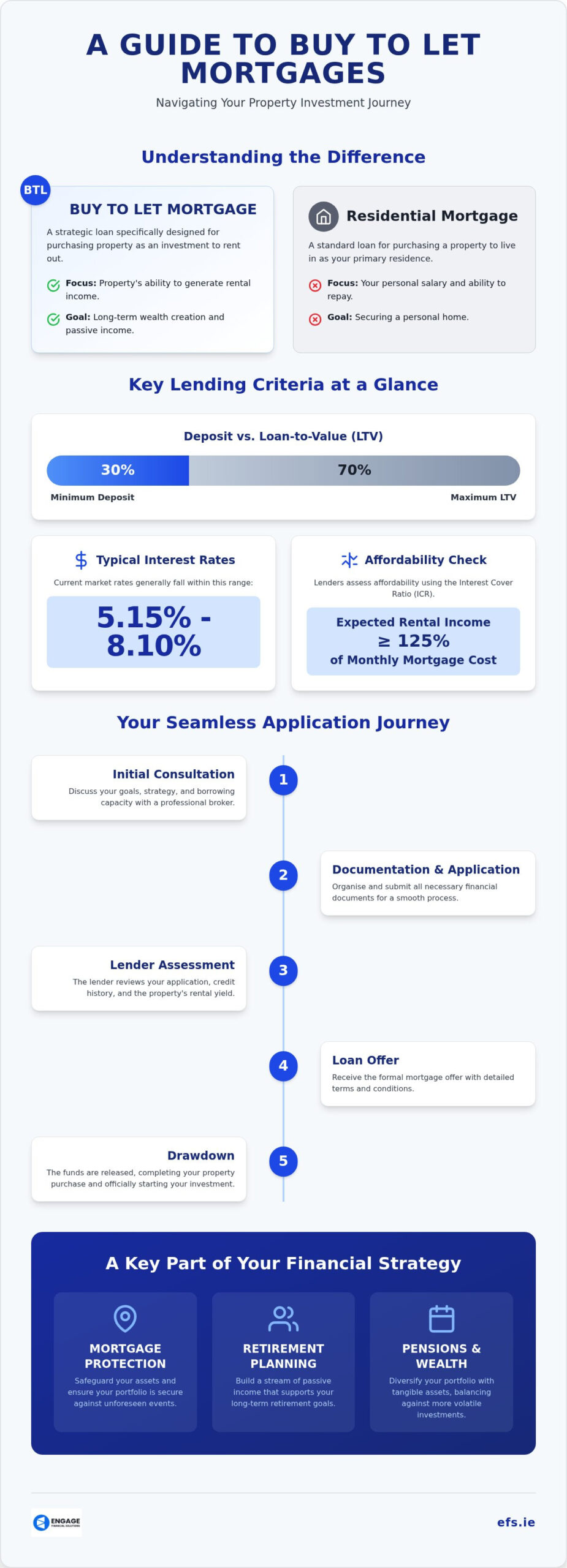
Securing an investment property requires a different level of financial readiness compared to buying a home to live in. One of the most significant buy to let mortgage requirements is the deposit size. In the current local market, you’ll typically need a minimum deposit of 30% of the property’s purchase price. This high entry point ensures that investors have substantial equity, which lenders view as a safeguard against potential market volatility. Consequently, the maximum Loan to Value (LTV) is usually capped at 70%, reflecting the Central Bank mortgage rules designed to maintain financial stability and protect both lenders and borrowers.
Affordability assessments for investment properties differ significantly from residential ones. Lenders don’t just look at your personal salary; they place heavy emphasis on the projected rental yield of the property you intend to buy. This means the property itself must demonstrate its own ability to service the debt. Alongside this, a clean credit history is non-negotiable. Any previous missed payments or defaults can quickly derail an application, as lenders seek partners who demonstrate consistent financial reliability and a track record of responsible money management over the long term.
Calculating Your Borrowing Capacity
Lenders typically use an Interest Cover Ratio (ICR) to determine your borrowing capacity. This calculation evaluates whether the expected rental income can comfortably cover the mortgage repayments, often requiring the rent to be at least 125% of the monthly loan cost. This safety margin is designed to account for tax obligations and potential interest rate rises. It’s also wise to maintain a contingency fund for your portfolio. Setting aside a portion of your monthly income for maintenance or periods when the property is vacant ensures your investment remains a stable asset rather than a financial burden during quieter months.
Deposit Sources and Equity Release
Whilst personal savings are the traditional route, many investors look to the equity in their existing properties to fund their expansion. By SWITCHING MORTGAGES on your primary residence, you may be able to unlock capital to fund your investment deposit. This approach can be a highly efficient way to grow your portfolio without depleting your liquid cash reserves. Remember that the size of your deposit is a critical factor in securing the most competitive rates from lenders. If you’re unsure how much equity you can access, you can review your financial options with a professional advisor to find a path that offers both security and growth.
Analysing Interest Rates and Repayment Structures
When you begin comparing options, you’ll likely notice that interest rates for a BUY TO LET MORTGAGE are typically higher than those for a primary residence. This is often the first hurdle for investors to understand, but it’s based on how lenders assess risk. Because an investment property isn’t your own home, banks perceive a higher likelihood of default during financial downturns. Meeting the local buy to let mortgage requirements involves more than just a deposit; it requires a deep dive into how these rates, which currently range from 5.15% to 8.10%, will affect your long-term yield. By consulting CCPC mortgage information, you can gain an impartial view of how these rates sit within the wider financial landscape.
You also need to choose a repayment structure that suits your cash flow needs. An interest-only mortgage allows you to pay just the interest each month, which keeps your outgoings low and maximises your immediate rental profit. This is a popular choice for those looking to build a large portfolio quickly. Alternatively, a capital and interest repayment plan ensures you’re gradually paying off the loan itself, building full equity in the asset over time. Your decision here should align with your broader FINANCIAL PLANNING goals, whether you’re seeking monthly income or a debt-free asset for the future.
Fixed vs Variable: Finding the Right Fit
Choosing between a fixed or variable rate depends on your need for certainty versus flexibility. Fixed rates are excellent for budgeting because they lock in your repayments for a set term, usually between two and ten years. This protects you from sudden market shifts and ensures your rental income remains sufficient to cover your costs. Variable rates, however, offer more flexibility if you plan to make early repayments or sell the property sooner than expected; in such cases, you can discover Covenant Properties for professional cash sale options. They don’t usually carry the same exit penalties as fixed products, making them a viable option for agile investors. Taking a long-term view on rate selection helps you maintain stability whilst allowing for future growth within your portfolio.
The energy efficiency of a property is now a major factor in determining your interest rate. Properties with a Building Energy Rating (BER) of B3 or higher often qualify for ‘Green’ mortgage rates, which are significantly more competitive than standard investment products. Lenders offer these incentives because energy-efficient homes tend to hold their value better and are more attractive to modern tenants. When you’re selecting a property, it’s wise to prioritise those with high energy ratings to safeguard your profit margins. A ‘Green’ investment property provides long-term value by lowering your monthly interest obligations and enhancing the overall security of your asset. If you’re ready to explore these options, you can review your financial strategy with a professional advisor to find the most efficient path forward.
Navigating the Application Process Seamlessly
Starting your investment journey shouldn’t feel like a bureaucratic marathon. The process of meeting local buy to let mortgage requirements involves several distinct stages, but with the right stewardship, it becomes a logical progression toward your goals. At Engage Financial Solutions, we take a proactive role in managing the heavy lifting, acting as the buffer between you and the lender’s requirements. A typical application can take anywhere from six to twelve weeks from the initial consultation to the final drawdown, depending on the complexity of the property and the speed of legal searches. We aim to remove the friction from this transition, allowing you to focus on the long-term success of your portfolio.
Gathering Your Documentation
Being meticulous and attentive during the document collection phase is the most effective way to speed up your application. Lenders need a clear picture of your financial stability to approve an investment loan, so having your paperwork organised from the start is essential. You’ll generally need to prepare the following:
- Proof of income: This includes recent payslips and your most recent Employment Detail Summary, or audited accounts if you’re self-employed.
- Bank statements: Most lenders require six months of statements for all your personal and business accounts.
- Tax clearance: Evidence that your tax affairs are fully up to date is a mandatory requirement for investment lending.
- Rental valuation: A professional estimate from an estate agent confirming the expected monthly rent for the property.
This valuation is crucial because it confirms the property’s income potential, which is a core part of the borrowing capacity assessment. Our team reviews every page of your submission to ensure everything is perfect before it reaches the lender’s desk, minimising the risk of delays or follow-up queries.
From Approval in Principle to Completion
Obtaining an Approval in Principle (AIP) is your first major milestone. It gives you the confidence to make serious offers, showing sellers that you’re a prepared and reliable buyer with the necessary backing. Once your offer is accepted, the process moves into the valuation and legal stages. A lender-appointed valuer will inspect the property to ensure it’s worth the purchase price, whilst your solicitor handles the title deeds and contracts. We stay one step ahead during this phase, coordinating with all parties to neutralise potential stresses before they occur. This hands-on approach ensures a straightforward path to the keys and a seamless transition into property ownership. If you’re ready to take the first step, you can apply for a BUY TO LET MORTGAGE with our expert team today.
Integrating Property Investment into Your Financial Strategy
A property investment isn’t an isolated financial event; it’s a vital component of your broader lifestyle and future security. Whilst the primary focus is often on meeting the local buy to let mortgage requirements, true success comes from how you integrate this asset into your long-term FINANCIAL PLANNING. Securing the loan is merely the first step. Safeguarding that asset against life’s uncertainties is what ensures lasting peace of mind for you and your family. By viewing your portfolio through a holistic lens, you can ensure that your property works in harmony with your other investments and savings to create a stable financial future.
Safeguarding Your Investment
Lenders almost always require MORTGAGE PROTECTION to ensure the debt is cleared if the worst should happen. This isn’t just a box-ticking exercise for the bank; it’s a vital safety net that protects your estate and your beneficiaries. You might also consider adding CRITICAL ILLNESS INSURANCE to your policy. This provides a lump sum payment if you’re diagnosed with a serious illness, allowing you to maintain mortgage repayments even if you’re unable to manage the property personally. Because our advice is often supported through INSURANCE INTERMEDIARY COMMISSIONS, you can access expert guidance on tailoring your cover without facing significant upfront costs.
Equally, landlords should consider INCOME PROTECTION to secure their personal earnings. If an illness or injury prevents you from working, this cover provides a regular income, ensuring your personal finances remain stable whilst your property portfolio continues to grow. Managing these various financial products can feel complex, but having a partner to coordinate these elements removes the friction from the process, allowing for a seamless transition between different stages of your life.
Property as a Pension Strategy
Many investors choose a BUY TO LET MORTGAGE as a core part of their RETIREMENT PLANNING. Unlike traditional PENSIONS that may rely solely on stock market performance, property offers a tangible asset with the potential for both monthly rental income and long-term capital appreciation. Whether you plan to sell the property to fund your retirement or keep it as a source of steady income, it provides a level of control that many other investment vehicles lack. This tangible nature offers a sense of stability that is particularly comforting when planning for the years ahead.
When you align your property strategy with your broader PENSIONS and SAVINGS ACCOUNTS, you create a diversified income stream that can provide significant stability in later life. At Engage Financial Solutions, we act as your Trusted Advisor, helping you navigate the complexities of lending whilst ensuring every decision supports your ultimate goals. If you’re ready to build a more secure future, you can enquire about your BUY TO LET MORTGAGE options today and take the next step with confidence.
Taking the Next Step Toward Property Success
Building a property portfolio is a significant milestone that offers both immediate income and long-term capital growth. Success in this market depends on a clear understanding of the specific buy to let mortgage requirements, such as the standard 30% deposit and the impact of rental yields on your borrowing capacity. By aligning your property strategy with your broader RETIREMENT PLANNING and PENSIONS, you create a robust financial foundation that provides security for decades to come. It’s about more than just a single transaction; it’s about safeguarding your future through informed, strategic decisions.
Engage Financial Solutions is here to act as your buffer against market complexity. As a firm regulated by the Central Bank, we provide expert advice tailored to your unique financial goals. Our team ensures a seamless process from the first application to the final drawdown, taking a proactive approach to neutralise stress and remove friction. You deserve a partner who is deeply invested in your success. Ready to begin your journey? Book a consultation for your BUY TO LET MORTGAGE today and discover how straightforward property investment can be with the right guide by your side.
Frequently Asked Questions
What is the minimum deposit for a BUY TO LET MORTGAGE?
The minimum deposit for a BUY TO LET MORTGAGE is typically 30% of the property’s purchase price. This requirement is higher than residential loans because lenders view investment properties as carrying a different risk profile. Consequently, the maximum loan-to-value (LTV) is usually capped at 70%. Having this substantial equity from the outset protects both you and the lender whilst ensuring your investment remains stable during different market cycles.
Can I use the rental income to pay the mortgage?
Lenders primarily assess your ability to repay by looking at the projected rental income rather than just your personal salary. They use an Interest Cover Ratio (ICR) to ensure the rent comfortably covers the monthly repayments. Meeting the buy to let mortgage requirements Ireland involves demonstrating that the property can generate enough income to meet a safety margin, typically 125% of the mortgage cost, which helps safeguard your long-term financial stability.
Do I need MORTGAGE PROTECTION for an investment property?
Yes, MORTGAGE PROTECTION is a standard requirement for most lenders when securing an investment property loan. This policy ensures that the outstanding debt is cleared if the policyholder passes away, protecting your estate and family from inheriting the liability. It’s a vital part of your broader FINANCIAL PLANNING, offering peace of mind that your portfolio is secure. You can also explore adding CRITICAL ILLNESS INSURANCE for additional layers of protection.
What is the maximum age for a BUY TO LET MORTGAGE applicant?
Most lenders require the mortgage term to end before the applicant reaches age 70 or 75. Whilst specific limits vary between different providers, your age at the time of application determines the maximum length of the loan. This ensures that the repayment period aligns with your active working life or your overall retirement strategy. Our team can help you navigate these criteria to find a tailored solution that fits your specific timeline.
Can I switch my BUY TO LET MORTGAGE to another lender?
You can certainly move your loan to another provider through the process of SWITCHING MORTGAGES. Many investors choose to switch to access more competitive interest rates or better terms as their equity grows or market conditions change. This is a straightforward way to reduce your monthly outgoings and improve the overall yield of your property. We can guide you through the transition to ensure the entire process is seamless and stress-free.
How does a BER rating affect my investment mortgage rate?
A Building Energy Rating (BER) of B3 or higher can unlock significantly lower interest rates, often referred to as ‘Green’ rates. Lenders offer these incentives because energy-efficient properties are considered more sustainable and tend to hold their value better over time. Selecting a property with a high energy rating is a smart move that reduces your long-term costs and enhances the attractiveness of your investment to potential tenants in a competitive market.
Is it possible to get an interest-only BUY TO LET MORTGAGE?
Interest-only repayment structures are available and are a popular choice for investors looking to maximise their monthly cash flow. With this option, your monthly payments only cover the interest on the loan, whilst the original capital amount remains unchanged. This strategy can be highly effective for building a portfolio quickly, provided it aligns with your long-term FINANCIAL PLANNING and you have a clear plan for the eventual capital repayment at the term end.
What additional costs should I consider when buying to let?
Beyond the deposit and repayments, you should account for several upfront and ongoing costs. These include stamp duty, which is 1% on properties valued up to €1 million, legal conveyancing fees, and professional valuation costs. You should also set aside a contingency fund for letting agent fees, property maintenance, and potential periods where the property is vacant. Planning for these expenses from the start ensures your investment remains a source of security.
Disclaimer
Engage Financial Services LTD T/A Engage Financial Solutions is regulated by the Central Bank of Ireland CRO 764570. Director David Moore. Suite 2 First Floor, 14 -18 Main street, Blackrock, Co Dublin A94 W0Y3