


A financial plan should make your next decision clearer, not more complicated. Financial advice for young professionals in the Irish financial services market can help turn income, spending and savings into a practical roadmap for goals such as buying a home, building a financial cushion or planning for retirement. It brings your priorities together with the risks and opportunities that may affect them.
It’s understandable if pensions, protection and investing feel difficult to weigh up alongside everyday costs and future plans. You don’t need to solve everything at once: start by tracking where your money goes, setting a clear priority and creating a plan that fits your circumstances.
This guide explains how financial advice for young professionals can help you build a strong financial foundation, from managing savings and debt to considering pensions and protection. You’ll also see how regular reviews can keep your plan aligned with changing goals and make each step more manageable.
Key Takeaways
- Build an emergency reserve gradually and keep money for unexpected costs accessible.
- Match savings and investment choices to when you’ll need the money, and remember that investments can fall in value.
- Make a practical borrowing plan by tracking repayments and prioritising high-interest debt.
- Review your workplace pension and understand how contributions and tax relief may support longer-term plans.
- Consider how Income Protection or Mortgage Protection could fit alongside your other financial priorities.
Savings and investments
Give each euro you save a clear purpose: immediate access, a planned purchase or longer-term growth. Separating these goals helps you choose an option that suits the time frame and the level of risk you can accept.
The Irish tax credit system reduces the income tax you owe, rather than adding the credit amount to your wages. Check the credits recorded for you against your payslip, and seek advice if you’re unsure how they affect your take-home pay.
Investing for Long-Term Wealth
For a goal more than five years away, investing may be worth considering, while money needed sooner is generally better kept accessible. Starting earlier gives compound interest more time to build: returns can generate further returns over time. An illustration might compare investing €200 monthly from age 25 until age 65, assuming a 5% return. That example shows how time matters, not a guaranteed outcome.
Set your goals before choosing an account or investment. A holiday is short-term; a wedding or mortgage deposit is medium-term; retirement or children’s education is long-term. Write down the goal, when you expect to need the money and how much you can regularly set aside. This helps you shape a savings plan around your circumstances, rather than choosing based on a product or headline return.
Investment Approaches and Risk
Before investing, consider when you may need access to the money and how you would respond to a fall in value. Investments can lose some or all of the money invested, so avoid risking funds needed for near-term expenses. A balanced approach can spread investments across different assets rather than relying on one holding, but diversification cannot remove risk or guarantee success.
For money you need soon, an instant-access deposit account can make withdrawals straightforward. A common rule of thumb is to keep three to six months of expenses in this type of account for emergencies or short-term needs. Once you’ve set aside that reserve, consider whether regular saving or investing suits your longer-term priorities. Compare access conditions, interest and risk before deciding: a higher potential return may come with greater uncertainty.
Review your plan when your income, expenses or goals change. A new job or a home-buying goal, for example, may alter how much you can save and when you need access to your money. Keep a simple record of contributions and progress, then adjust the amount or destination if your priorities shift. This gives each decision a clear purpose and connects today’s choices with future plans.
Why is financial planning important?
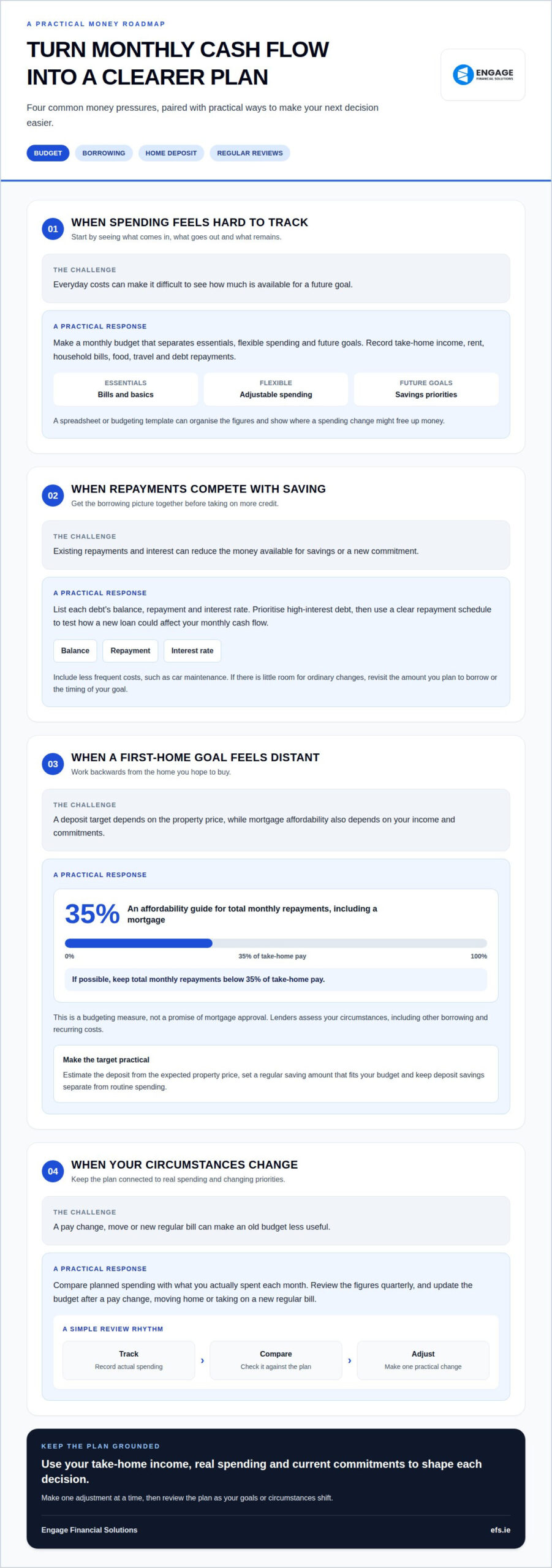
For a first home, the deposit depends on the property price and your mortgage assessment, so one figure won’t suit every buyer. A useful affordability guide is to keep total monthly repayments, including a mortgage, below 35% of take-home pay if possible.
Budgeting for Expenses and Goals
Start with a monthly budget that separates essential expenses, flexible spending and future goals. Record take-home income, rent, household bills, food, travel and debt repayments, then identify what remains. A spreadsheet or budgeting template can organise these figures and show where spending changes could free up money for a home deposit or another priority.
Track your actual spending against your plan each month. If transport costs rise, for example, adjust another flexible category rather than quietly reducing your planned savings. Review the figures quarterly and update them after a pay change, moving home or taking on a new regular bill. This keeps your financial plan grounded in your real circumstances.
Advice on Budgeting and Borrowing
Financial advice can help you weigh borrowing against other commitments, such as rent, savings goals and existing repayments. Before taking on credit, list each balance, repayment and interest rate; prioritise high-interest debt, since it can absorb money otherwise available for saving. A clear repayment schedule makes it easier to assess the effect of a new loan.
Use a budget to test how a repayment fits your monthly cash flow, including less frequent expenses such as car maintenance. If the figures leave little room for ordinary changes, revisit the amount you plan to borrow or the timing of your goal. For a structured view of your priorities, financial planning can connect budgeting decisions with longer-term aims.
First-Home Deposit and Mortgage Rules
Work backwards from the home you hope to buy: estimate the deposit you need based on its expected price, then set a regular saving amount that fits your budget. Keep deposit savings separate from money for routine spending so you can monitor progress. A mortgage assessment also considers whether repayments fit your income and existing commitments.
The 35% guide is a budgeting measure, not a promise of mortgage approval. Lenders assess affordability using your financial circumstances, so include other borrowing and recurring costs when estimating what you can manage. A first-home mortgage adviser can help you understand the steps and consider how a deposit target fits your wider finances.
Make your budget easy to maintain: use a spreadsheet or app, schedule regular reviews and update expense categories when life changes. Compare planned and actual spending, then make one practical adjustment at a time. This routine helps you direct money towards current needs and future goals without losing sight of either.
Emergency funds and financial protection
For employees, income tax, USC and PRSI are separate deductions, and the amounts depend on earnings and applicable tax credits. Check your payslip to see each deduction and your net income, then use your take-home figure when planning protection and savings.
An emergency fund can help meet an unexpected bill without relying immediately on borrowing or disrupting long-term plans. More than 40% of adults have no emergency fund, according to the research figures available for this topic. A practical starting step is setting aside €1,000 for unexpected expenses, then building the reserve gradually as your budget allows.
Keep emergency savings accessible and separate from money set aside for a specific goal. If your car needs an urgent repair, for example, a dedicated reserve can cover it without forcing you to sell an investment at a difficult time. Review the balance after using it and make rebuilding the fund part of your next financial decisions.
Protection planning starts with asking what would happen if illness or injury interrupted your income. List your essential monthly costs, such as rent or mortgage repayments, household bills and food. Then consider how long your current savings could cover them. This gives you a practical basis for assessing the impact of lost earnings on your household and identifying any gap.
Income Protection is designed to provide a financial benefit if illness or injury prevents you from working, subject to the policy terms. Before deciding whether it suits you, consider your employer’s sick-pay arrangements, existing savings and regular commitments. A self-employed professional, for example, may have different income support from an employee with workplace sick pay.
Mortgage Protection and life cover address different needs from Income Protection. Mortgage Protection relates to a mortgage liability, while life cover can provide financial support for dependants after a death. If you share a mortgage or support children, write down who relies on your income and what debts or household costs would remain. This helps clarify the purpose of cover.
Health-related cover also needs careful consideration. Critical Illness Insurance and Income Protection respond to different circumstances, so focus on what each policy covers, its exclusions and how benefits are paid. Don’t assume one policy replaces the other. Compare the wording with your income, family responsibilities and existing workplace benefits before deciding.
For a manageable first review, gather your latest payslip, a list of regular costs and details of any workplace benefits. Set a savings target, identify the financial risk that would affect you most, and revisit these choices after a change in employment, income or family circumstances.
The amounts vary according to earnings and applicable tax credits. Check your payslip to see the income tax, USC and PRSI deducted.
Pensions and retirement planning
A pension helps build income for retirement, alongside any other savings or entitlements. Review your workplace arrangements and personal contributions together to see how each supports your future plans.
Pension Planning and Gaps
Start by listing every pension you have, including current workplace and personal arrangements. Then compare the retirement income you expect with the income you want to support your plans. The difference is your potential pension gap. This estimate can help you decide whether to increase contributions, explore a PRSA or revisit your expected retirement lifestyle.
Include career changes in your review. Moving between employers, for example, can leave you with several separate pension arrangements, making it harder to see your overall position. Gather the available statements and note the scheme, contributions and projected benefits. Revisit your plan when your income or circumstances change, and adjust future contributions around your other priorities.
If you work in the public sector, review information from your pension scheme alongside any personal pension savings. Public-sector arrangements may differ from private workplace plans, so identify what your scheme says about expected benefits and how your service is recorded. A clear record helps you understand what the pension may contribute to your retirement income.
Employer Pension Contributions
Check how your employer’s pension contributions work and whether you’re making full use of the contributions offered. Employer payments form part of your wider retirement planning, so include them when assessing your pension position. Look at your payslip and scheme information to establish what you contribute and what your employer adds.
If your workplace scheme allows additional voluntary contributions, these are extra payments into an occupational pension scheme intended to increase retirement benefits. Consider how an additional contribution fits your budget and other goals. A pay rise, for instance, could be an opportunity to review your pension saving without overlooking current expenses.
Pension Tax Relief for Employees
Pension contributions can qualify for tax relief. The amount of relief depends on your circumstances and the applicable rules, so don’t assume every contribution affects take-home pay in the same way. Check how your pension contributions appear on your payslip and keep scheme records available when reviewing your finances.
Tax relief can affect the effective cost of pension saving, but it doesn’t replace a retirement plan. Consider contributions alongside employer payments, expected benefits and the income you may need later. If you’re unsure how relief applies to your circumstances, get guidance before changing your contribution arrangements.
Make pension education part of your regular financial review. Keep scheme statements together, note questions about contributions or benefits, and update your plan after a job change. These steps can reveal opportunities to strengthen retirement saving while keeping decisions connected to your wider financial future.
Financial advice nationwide
First-time buyers can explore mortgage support and home-purchase schemes alongside a mortgage plan. Check each scheme’s eligibility, property criteria and effect on your deposit before relying on it in your budget.
Financial planning should reflect your circumstances, not just a general rule. A graduate with variable income may need a different approach from an employee with steady pay, existing debt or family responsibilities. Start by listing your goals, income, regular commitments and borrowing, then decide which financial decisions need attention first. Financial advice for young professionals can help organise those priorities around your individual situation.
For impartial guidance, seek advice from a financial adviser regulated by the Central Bank. Regulation is a useful starting point when choosing advice, but your needs still determine the questions to discuss. Someone saving for a home may want to understand mortgage affordability, while another person may need help aligning protection, pension saving and other goals.
Ask for a clear explanation of how recommendations connect to your objectives. A financial plan should set out priorities, show how income and expenses affect them, and identify relevant risks or opportunities. Take notes during the discussion and ask for financial terms to be explained plainly before deciding. This helps you assess recommendations against your circumstances.
For a home purchase, prepare a straightforward summary of your finances: income, regular expenses, existing repayments and deposit savings. Include expected changes, such as a planned move or change in employment. This gives an adviser a fuller picture than income alone and helps you consider whether projected mortgage repayments fit your monthly budget.
Financial support schemes can have different eligibility conditions and purposes. Before including one in a purchase plan, establish who can apply, what property or purchase conditions apply, and how the support interacts with your deposit and mortgage. Treat it as one part of the plan, not a guaranteed solution to a shortfall.
Good advice also includes a review process. Revisit your plan after a change in income, employment, debt or household responsibilities, and at regular intervals. A change in circumstances can affect affordability or make an earlier priority less relevant. Updating your figures keeps your next steps grounded in what you can manage now.
If a complaint about a financial services provider remains unresolved, consumers can take it to the Financial Services and Pensions Ombudsman. Keep relevant correspondence and a clear record of the issue so you can explain what happened and the resolution you sought.
The practical takeaway is to seek regulated advice, bring a clear picture of your finances and assess support schemes against their terms. For young professionals, financial advice can connect immediate decisions with a broader financial plan, providing a considered starting point for what comes next.
Engage Financial Solutions
Engage Financial Solutions can help you consider how financial protection fits your wider plans. If changing circumstances, family responsibilities or a mortgage have raised questions about safeguarding your income, review your options and priorities together.
Depending on your needs, this could include Income Protection, Group Protection, Mortgage Protection or Annuities. Each serves a different purpose, so focus on the financial risk or future income question you want to address and how it connects with your existing arrangements.
Before a conversation, note your main concern and gather relevant details about your income, commitments or workplace benefits. This gives you a clear starting point for discussing the next steps. Contact Engage Financial Solutions to discuss your financial questions.
Turn your next decision into a clear plan
Your next financial step doesn’t need to address every goal at once. Choose the decision that matters most now, whether that’s preparing to buy a home, reviewing an existing mortgage or considering a property investment. Write down what you want to achieve and the questions you need answered. This gives your planning a practical starting point and helps keep other priorities in view.
Financial advice for young professionals can connect immediate choices with longer-term plans. Engage Financial Solutions offers First-time buyer mortgages, Switching mortgages and Buy-to-let mortgages, alongside Financial Planning. The right focus depends on your aims and circumstances, so begin with the decision you’re ready to explore.
Contact Engage Financial Solutions to discuss your next financial step. A clear starting point can make it easier to move forward with confidence.
Frequently Asked Questions
What is a financial plan?
A financial plan is a practical framework for organising your money around your priorities. It brings together income, spending, savings, borrowing and future goals, then identifies actions to support them. If you’re considering further education, for example, include course costs and any change to your working hours. Note your goals, the next step for each and when you’ll review progress, so your plan can adapt as circumstances change.
When should you get financial advice?
Consider financial advice when an important decision affects several parts of your finances, such as changing jobs, buying a home or starting a family. It can also help you understand how workplace benefits fit your personal plans. Before speaking with an adviser, write down your goals, commitments and questions. Choose an adviser regulated by the Central Bank and ask them to explain how each recommendation relates to your circumstances.
How much should young professionals save for an emergency fund?
A common target is three to six months of expenses in an instant-access deposit account. If that goal feels distant, build towards it gradually; an initial milestone could be €1,000 for unexpected costs. Estimate essential outgoings rather than using income as your measure. Keep this money separate from planned spending, and replenish it after withdrawals to help protect other financial goals from an unexpected bill.
How do workplace pensions and auto-enrolment work?
A workplace pension lets you save for retirement through an arrangement connected to your employment. Check the scheme information and payslip to understand how contributions are handled and whether your employer contributes. Auto-enrolment means eligible employees are enrolled into a pension arrangement automatically under the applicable scheme rules. Review the current scheme information for eligibility and contribution details, and consider how it fits with any pension arrangements you already have.
What are the best budgeting strategies for young professionals?
The best budget is one you can keep using. Record take-home pay and spending in a spreadsheet or app, then group transactions by purpose, such as household costs, travel and leisure. Include annual bills in your monthly view by setting aside part of their expected cost. Review actual spending against your plan quarterly and update categories after a pay change or new commitment.
What are the risks and tax rules for investing, including ETFs and deemed disposal?
Investment values can fall, and you may lose some or all of the money invested. An ETF is a fund traded on an exchange; its tax treatment depends on the investment and applicable rules. “Deemed disposal” describes a tax treatment that can apply to certain investments, so don’t assume every fund is taxed alike. Before investing, identify the fund type, understand its risks and establish which tax rules apply.
What financial supports and schemes are available to first-time buyers?
The guide recommends setting a deposit target based on the expected property price and saving regularly within your budget. A first-home mortgage adviser can help you understand the steps and how the deposit fits your finances; the 35% repayment guide is not a guarantee of mortgage approval.
Disclaimer
Engage Financial Services LTD T/A Engage Financial Solutions is regulated by the Central Bank of Ireland CRO 764570. Suite 2 First Floor, 14 -18 Main street, Blackrock, Co Dublin. A94 W0Y3