


Securing a home loan isn’t just about your annual income; it’s about the narrative your paperwork tells to a lender. Most prospective buyers find the administrative side of home buying to be the most daunting part of the journey. You might worry that a few small “red flags” on a bank statement could derail your plans, or perhaps you’re simply frustrated by the time-consuming task of digging through years of digital records. It’s natural to feel a sense of unease when faced with varying requirements for different employment types, especially when searching for the exact documents needed for mortgage application success in this market.
We’re here to help you move forward with a sense of calm competence. This guide provides a clear, tick-box list of every requirement for national lenders, tailored to ensure your submission is seen as robust and reliable. You’ll learn exactly which files to gather, how to organise your records to meet validity timelines, and how to present a “mortgage pack” that leaves nothing to chance. We’ll break down the essentials into manageable categories, from proof of identity to the specific records required for self-employed applicants, so you can focus on the excitement of your future home.
Key Takeaways
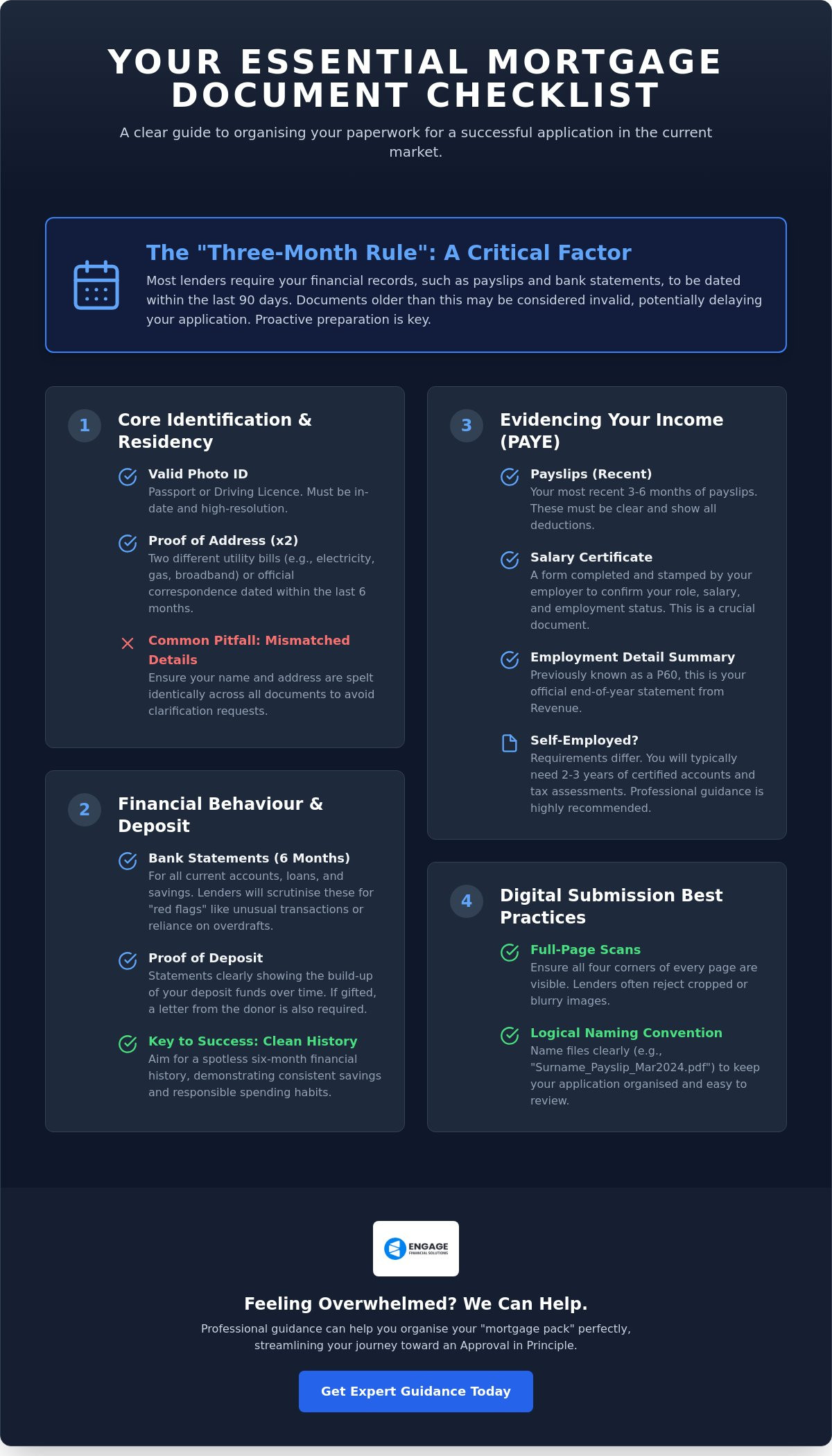
- Learn why the “Three-Month Rule” is vital for ensuring your paperwork remains valid throughout the lender’s review process.
- Understand the specific documents needed for mortgage application success in this market, including tailored requirements for different employment types.
- Identify common bank statement “red flags” that lenders look for and how to present a clean six-month financial history.
- Recognise the importance of the Salary Certificate and how to ensure your employer provides the correct details for your application.
- See how professional guidance can help you organise your “mortgage pack” to streamline your journey toward an Approval in Principle (AIP).
Organising Your Mortgage Paperwork: Why Preparation is Paramount
Think of your mortgage application as a professional financial resume. It’s far more than a simple collection of forms; it’s a curated narrative designed to demonstrate your stability and reliability to a lender. When you begin gathering the documents needed for mortgage application success within the national market, you’re essentially building a case for your future security. Starting this process early protects you from “deal fatigue,” that specific type of exhaustion that sets in when administrative hurdles delay your progress just as you find your dream home.
The mortgage origination process involves several layers of scrutiny. Preparing your pack before you even start browsing listings ensures that when the right opportunity arises, you can move with the speed and precision that the current market demands.
The Role of Central Bank Rules
The regulatory framework set by the Central Bank ensures that every lender follows a standardised set of criteria. These rules are designed to safeguard both you and the financial institution by ensuring you don’t overstretch your finances. Every piece of paper you provide seeks to answer one core question: do you have the “Proof of Capacity” to manage this loan? Because these requirements are largely consistent across national lenders, once you’ve organised one comprehensive pack, you’re effectively ready to approach multiple providers to find the best fit for your needs.
Digital vs Paper: How to Store Your Documents
Modern lending is increasingly digital, which means the way you present your files matters just as much as the data within them. Whether you’re using a high-end scanner or a mobile app, ensure that all four corners of every page are visible. Lenders often reject cropped images or blurry photos because they can’t verify the document’s integrity. Use a logical naming convention for your files, such as “Surname_Firstname_DocumentType_Date,” and store them in a secure, encrypted folder. This meticulous approach minimises friction and keeps your sensitive personal data protected throughout the submission journey.
Core Identification and Residency Verification
Before a lender can assess your financial health, they must establish a clear and verified understanding of your identity. This stage is about more than just a name on a page; it’s about safeguarding the integrity of the documents needed for mortgage application processes and ensuring your personal data is correctly linked to your credit history. Your passport or driving licence must be in date and the images must be high resolution. If a document is expired or even slightly blurry, it can cause unnecessary friction that stalls your progress. Precision at this early stage sets the tone for a straightforward transition later on.
Consistency is the silent partner of a successful application. Lenders look for a perfect match between the names and addresses on your ID, your bank statements, and your utility bills. Even a small discrepancy, such as a missing middle name on one form or a slightly different spelling of an address, can trigger a request for further clarification. Your PPS number is also a vital component here; it allows the lender to perform a mandatory check with the Central Credit Register. This check provides a comprehensive view of your existing credit commitments and repayment behaviour, so ensuring these details are aligned from the start creates a sense of calm competence that reassures the underwriter.
Valid Proof of Address Options
Most lenders require two separate proofs of residency dated within the last six months. Standard options include utility bills for gas, electricity, or landline broadband. If you find yourself in a situation where you aren’t the primary account holder, perhaps because you are living at home or renting a room with bills included, you can still provide a clear paper trail. In these cases, a bank statement or a letter from the Revenue Commissioners can often serve as valid proof. You might also consider a signed letter from a landlord or parent, supported by their own utility bill, to verify your residency. You can find a detailed list of acceptable documents for a mortgage application through official consumer protection resources to ensure your pack is bulletproof.
Non-National Applicant Requirements
If you have recently moved to the area from abroad, lenders will require a slightly more extensive history to build a complete picture of your financial stability. This typically involves obtaining credit reports from your previous countries of residence to prove your past repayment behaviour. Whether you are an EU citizen or require a specific employment permit or visa, such as a Stamp 4, having these records ready is essential. Proactively gathering these international records prevents delays and shows the lender that you are a reliable partner. If you’re unsure how your specific residency status might impact your timeline, exploring first-time buyer mortgages with a professional advisor can provide the clarity you need to move forward with optimism.
Evidencing Your Income: Requirements for Different Employment Paths
Your income is the engine of your mortgage application. Lenders don’t just look at the final figure on your payslip; they meticulously categorise your earnings to determine how much they can safely lend. Most financial institutions distinguish between “guaranteed” income, which is your basic salary, and “variable” income, such as bonuses, commission, or overtime. It’s common for lenders to only count a percentage of variable earnings, often averaging them over a two-year period to ensure long-term stability and security.
One of the most important components you’ll need is the Salary Certificate. This isn’t just your employment contract; it’s a specific, standardised form that your employer must sign. It confirms your job title, your permanent status, and your basic salary. If you’re receiving a “Benefit in Kind” (BIK), such as private health insurance or a company car, this will also be noted. While these benefits are valuable, they’re taxable and can affect your net take-home pay, which lenders use as the primary metric for your repayment capacity.
You’ll also need to provide your Employment Detail Summary from the Revenue Commissioners. This document, which has replaced the old P60, provides a verified overview of your pay and the tax you’ve paid over the previous year. Having these documents needed for mortgage application success organised and ready to go demonstrates a level of professional preparation that reassures lenders of your financial maturity. You can find a comprehensive list of the documents you need when applying for a mortgage through official consumer resources to ensure nothing is overlooked.
The PAYE Employee Checklist
Lenders typically require three to six months of consecutive, recent payslips to verify your current earnings. If you’ve recently changed jobs or had a gap in your employment history, be prepared to provide a brief explanation or a copy of your new contract to show stability. For those on maternity or paternity leave, the process remains straightforward. You’ll simply need a letter from your employer confirming your return date and that you’ll be returning on the same salary and terms as before you left, ensuring your “mortgage pack” remains robust.
The Self-Employed and Business Owner Requirement
If you’re a business owner or a freelancer, the requirements are naturally more detailed to reflect your unique financial structure. You’ll generally need to provide two to three years of audited or certified accounts to show a consistent track record of earnings. Alongside these, lenders require “Chapter 4” tax assessments to prove you’re fully tax-compliant. It’s also standard practice to provide business bank statements for the last six months. This allows the lender to see the health of your business and ensures that your personal drawings are sustainable for the future.
Financial Behaviour and Deposit Verification: What Lenders Scrutinise
While your salary provides the foundation, your bank statements offer the narrative of your daily financial life. Lenders typically require a minimum of six months of consecutive statements for all current accounts, savings accounts, and credit cards. This window allows them to assess your financial behaviour and ensure that your lifestyle aligns with the commitment of a long-term loan. They aren’t looking for perfection, but they are looking for stability and a lack of friction. Your statements are arguably the most revealing documents needed for mortgage application success, as they showcase your ability to manage money over time.
Identifying “red flags” early is essential for a seamless process. Lenders scrutinise statements for referral fees, which occur when a direct debit fails, or excessive gambling transactions that might suggest a high-risk approach to credit. They also look for a recurring reliance on an overdraft facility, particularly if it’s used to cover basic living expenses. Even small, frequent transfers to “Buy Now Pay Later” schemes can suggest a lack of financial discipline to an underwriter. A clean account run, free from missed payments or over-limit fees, projects the image of a reliable partner who is ready for the responsibility of home ownership.
Verifying your deposit is equally critical. You must provide a clear paper trail that proves the source of your funds is legitimate and compliant with anti-money laundering regulations. If your deposit has been built through consistent savings, your statements will tell that story. However, if you’re receiving a “Gifted Deposit,” you’ll need to provide a formal letter from the donor stating that the funds are a gift and not a loan, alongside proof of where the donor’s funds originated. If you are ready to take the next step toward your new home, our team can help you with first-time buyer mortgages to ensure your application is built on solid ground.
Scrutinising Your Savings and Outgoings
Lenders use your current rent payments and monthly savings to calculate your “Repayment Capacity.” They want to see that you can comfortably afford the stressed mortgage rate, which is usually higher than the advertised rate to account for future interest shifts. Whether you are paying into a dedicated savings account or maintaining a high monthly rent, these figures prove you can handle the monthly outgoings. Be mindful of existing loans or credit card balances, as these will be deducted from your total borrowing capacity during the assessment.
Specific Support Scheme Documentation
If you are purchasing a new build, you’ll need to provide a summary from your “Help to Buy” (HTB) claim portal. This digital record confirms the tax refund amount you are eligible for as part of your deposit. Similarly, those utilising the First Home Scheme, which is a shared equity initiative, must provide the specific application approval documents. Whether you are using these schemes or the “Fresh Start” principle for those previously divorced or bankrupt, having the correct verification ready ensures your application moves forward with optimism and clarity.
Finalising Your Application: How Professional Guidance Simplifies the Process
As you approach the final stages of your journey toward home ownership, the role of a trusted advisor becomes even more significant. While you’ve spent weeks gathering the documents needed for mortgage application success, a broker provides the expert oversight required to ensure your submission is flawless. Unlike bank-specific representatives who only have access to their own products, a broker reviews your financial narrative with a “big picture” perspective. They understand how to frame your data correctly, often turning a potential “maybe” into a definitive “yes” by highlighting your strengths and addressing any minor inconsistencies before the lender even sees them. For those exploring international property markets or moving between regions, you can check out My Finance Friends for an example of how specialised brokerage services support clients in Australia.
Securing an Approval in Principle (AIP) is your first major milestone. This document acts as a conditional green light, giving you the confidence to bid on properties and showing sellers that you’re a serious contender. You’ll also need to integrate Mortgage Protection and life insurance into your final pack. These policies are not just optional extras; they’re essential components of your long-term security, ensuring that your home remains safe for your family regardless of what the future holds. Having these organised early prevents a last-minute scramble that could delay your closing date.
The Final Hurdles: Valuation and Solicitor Docs
Once you’ve found a property, the focus shifts slightly. The home itself requires its own set of paperwork, primarily in the form of a Valuation Report. This ensures the lender that the property’s market value matches the loan amount. At the same time, your solicitor will work with you to verify the “Statement of Funds,” providing a clear record of where your deposit and any gifted funds are held. It’s vital to keep your financial behaviour consistent during this time. Avoid taking out new loans or making large, unexplained purchases after receiving your AIP, as lenders can perform a final credit check right before the funds are released.
Next Steps to Your New Front Door
Getting your mortgage pack ready is a methodical process, but you don’t have to do it alone. Booking a consultation allows you to have your current records professionally reviewed, ensuring you meet every local regulatory requirement with ease. This tailored approach is equally beneficial for those switching mortgages to take advantage of better rates and lower monthly outgoings. By following a clear, tick-box list of essentials, you can transition from applicant to homeowner with absolute peace of mind. Your future stability starts with a well-prepared application, and we’re here to guide you through every step of that straightforward process.
Step Into Your New Home with Confidence
Organising your financial life is the most significant step you can take toward long-term security. By understanding how to present a clean narrative through your records, you remove the friction that often stalls the home-buying journey. We’ve explored how a meticulous approach to the documents needed for mortgage application success ensures you’re viewed as a reliable partner by national lenders. From verifying your income to securing your deposit trail, every piece of paper brings you closer to your new front door.
Our team is here to provide the “calm competence” you need to manage these complexities. As specialists in first-time buyer and switcher mortgages, we offer personalised financial guidance tailored to your unique goals. We’re regulated by the Central Bank and dedicated to turning your aspirations into reality. Whether you’re just starting your savings journey or are ready to bid on a property, Book a consultation with our expert team to review your mortgage documents and ensure your application is built on a foundation of stability. You’ve done the hard work of saving and planning; now let us help you finish the journey with optimism and ease.
Frequently Asked Questions
How long are bank statements valid for a mortgage application?
Bank statements are generally considered valid for three months from the date of issue. Lenders require your financial history to be as current as possible to ensure your circumstances haven’t changed since you began the process. If your application takes longer than 90 days to reach the offer stage, you’ll likely need to provide refreshed versions to maintain your “mortgage ready” status and keep the timeline on track.
Can I use an online bank statement or does it need to be an original paper copy?
Most national lenders now accept original digital PDF e-statements downloaded directly from your online banking portal. You should avoid using screenshots or photographs of your screen; these lack the necessary security features and clarity for verification. Ensuring your digital files show all transactions and account details clearly is a vital part of gathering the documents needed for mortgage application success within this market.
What is a Salary Certificate and where do I get one?
A Salary Certificate is a standardised document that your employer completes to verify your basic pay, bonus structure, and permanent status. It’s a core requirement for most lenders because it provides a more formal confirmation than a simple contract. You can usually obtain this form from your mortgage broker or download it directly from your chosen lender’s website before asking your HR department to sign it.
Do I need to provide documents for my partner if it is a joint application?
A joint application requires a complete set of documentation for both individuals involved in the purchase. This includes everything from photographic identification and proof of address to individual bank statements and employment records. Lenders need to assess the combined financial stability and repayment capacity of both parties to ensure the loan is sustainable for your shared future and long-term security.
How much history do lenders need if I have recently changed jobs?
Lenders typically prefer you to have completed your probationary period, which usually lasts six months, before they’ll consider your income. If you’ve recently moved to a similar role with a higher salary, they may look more favourably on the change, provided you can show a consistent employment history. It’s helpful to have your new contract and at least three recent payslips ready to demonstrate your new earning level.
What happens if I cannot find my P60 or Employment Detail Summary?
You can easily retrieve a lost Employment Detail Summary by logging into your Revenue MyAccount portal online. This digital record has replaced the traditional P60 and provides a verified summary of your pay and tax for the year. It’s a straightforward process that ensures your “mortgage pack” remains professional and complete without the stress of searching for old paper records or contacting previous employers.
Is a gift letter enough to prove the source of my deposit?
A gift letter is a necessary starting point, but it’s rarely enough on its own to satisfy anti-money laundering requirements. You’ll also need to provide bank statements from the donor to show the clear “paper trail” of how the funds were accumulated. This transparency protects all parties and ensures the lender is confident that the deposit is a genuine gift with no hidden repayment obligations or secondary loans.
Will a small overdraft usage on my bank statement lead to a rejection?
Occasional, arranged overdraft usage isn’t usually a reason for rejection, but it is something lenders will examine closely. They’re more concerned with “unarranged” overdraft usage or a pattern where you’re consistently living beyond your means. Maintaining a “clean” account run for six months before your application is the best way to project a sense of calm competence and show you’re ready for the responsibility of a loan.
Disclaimer
Engage Financial Services LTD T/A Engage Financial Solutions is regulated by the Central Bank of Ireland CRO 764570. Director David Moore. Suite 2 First Floor, 14 -18 Main street, Blackrock, Co Dublin A94 W0Y3