


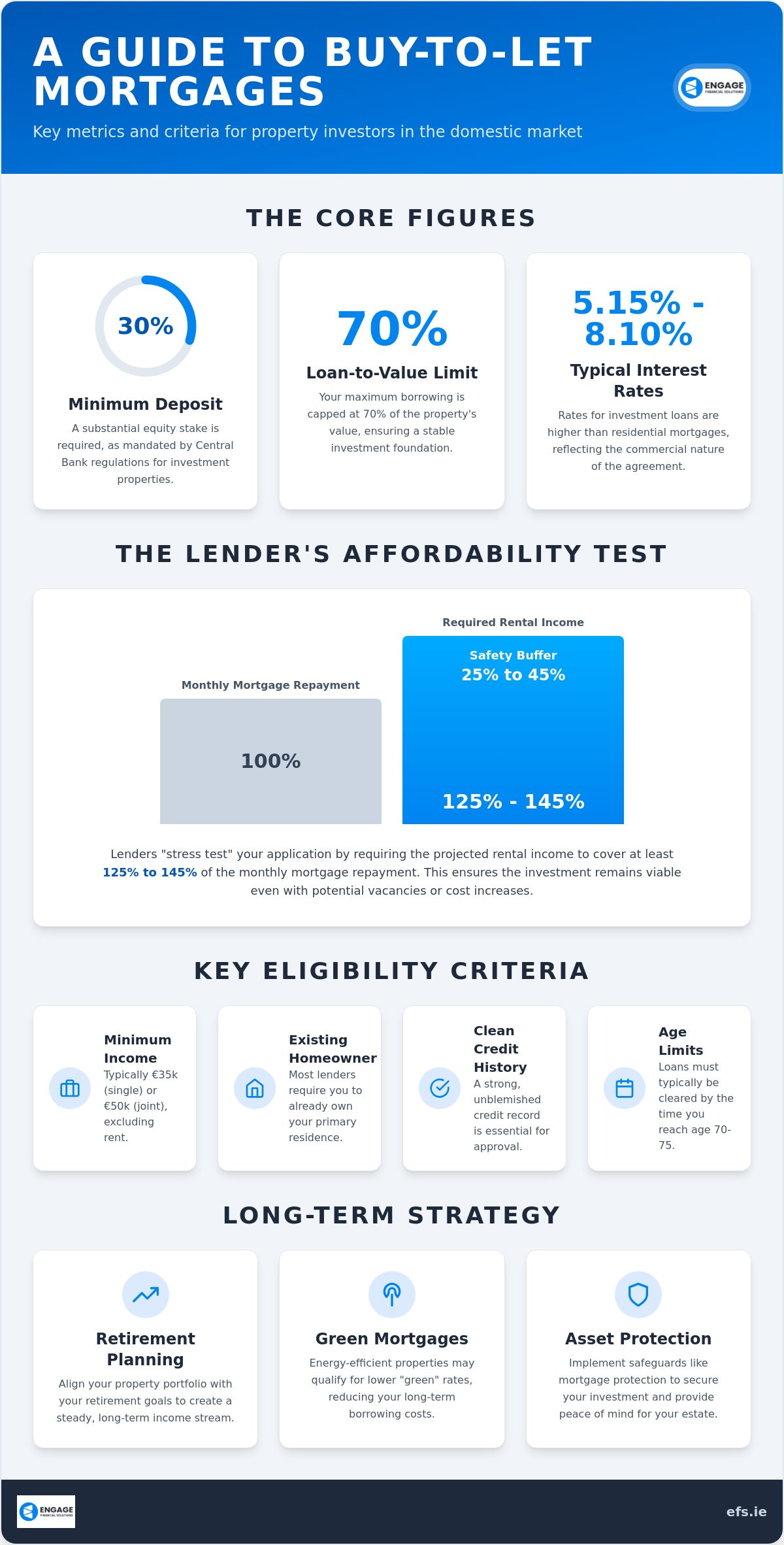
Did you know that entering the rental market as an investor now requires a minimum 30% deposit, a significantly higher hurdle than for those buying a home to live in? It’s a reality that can feel daunting, especially when you consider that interest rates for these loans often sit between 5.15% and 8.10% today. Securing a buy to let mortgage Ireland involves more than just finding the right property; it requires a calculated approach to Central Bank regulations and a clear understanding of how rental yields must cover at least 125% of your monthly repayments.
We understand that the current landscape, with its strict 70% loan-to-value limits and complex stress testing, can seem like a lot to manage. You likely want to ensure your investment serves your future, perhaps as a steady income stream for retirement, without the friction of unexpected costs or regulatory hurdles. This guide simplifies the journey by breaking down the true cost of borrowing and offering expert strategy for your portfolio. We’ll examine the latest lending criteria, the impact of Rent Pressure Zones, and the practical steps you can take to achieve long-term financial security through property within the domestic market.
Key Takeaways
- Learn why a 30% deposit is the standard entry point for investors and how the 70% loan-to-value limit shapes your borrowing capacity within the domestic market.
- Discover how lenders use stress testing to ensure your rental income comfortably covers repayments, typically requiring a buffer of 125% to 145%.
- Explore how choosing a buy to let mortgage Ireland can be tailored to your long-term goals, whether through stable fixed rates or lower-cost green options for energy-efficient properties.
- Understand the importance of aligning your property portfolio with your broader retirement strategy to ensure a seamless transition into your later years.
- Identify the essential safeguards, such as mortgage protection, needed to secure your assets and provide lasting peace of mind for your estate.
Understanding the Buy-to-Let Mortgage Landscape (2026)
Investing in property remains a cornerstone of wealth creation for many within the state. A buy to let mortgage Ireland is specifically designed for individuals who wish to purchase a residential property with the intention of renting it out to tenants. Unlike a standard home loan, this is a commercial arrangement where the lender evaluates the potential rental income as much as your personal earnings. By Understanding the Buy-to-Let Mortgage Landscape, you can better appreciate how these loans facilitate long-term capital growth whilst providing a steady monthly income. In 2026, the demand for quality rental accommodation continues to outstrip supply, making this asset class a favourite amongst those looking to secure their financial future.
You’ll find that the mechanics of an investment loan differ significantly from a residential mortgage. Lenders typically require a much larger stake in the game, often a 30% deposit, because they view these properties as carrying a higher risk profile. Interest rates also reflect this, currently ranging from 5.15% to 8.10%, which is notably higher than what you would pay for a primary residence. Despite these costs, the projected rental growth of 4% to 5% for the coming year ensures that yields remain attractive for the proactive investor who chooses their location wisely.
The Role of the Central Bank
The regulatory framework established by the Central Bank plays a vital role in maintaining stability within the domestic lending market. By enforcing a strict 70% loan-to-value (LTV) limit on investment properties, they ensure that both you and the lender are protected against market volatility. This cap prevents over-exposure and ensures that every landlord has significant equity from day one. Lenders view these properties as higher risk because rental income can fluctuate; these regulations act as a safeguard, fostering a more resilient and sustainable investment environment for everyone involved.
Property Investment vs. Other Asset Classes
Choosing where to place your capital is a significant decision. Whilst standard savings and investments offer liquidity and ease of access, property provides a tangible asset that historically appreciates over time. Diversification is essential for a healthy portfolio; you shouldn’t rely on a single source for your future security. Bricks and mortar offer a unique combination of capital appreciation and cash flow that few other asset classes can match. It’s about finding a balance that aligns with your lifestyle goals and retirement aspirations, ensuring your wealth works as hard as you do.
Key Eligibility Criteria and Lending Limits for Landlords
Securing a buy to let mortgage Ireland involves meeting specific criteria that differ from a standard residential loan. One of the most significant hurdles is the 70% Loan-to-Value (LTV) limit. This means you’ll need a minimum deposit of 30% of the property’s value. This rule is part of the regulator’s mortgage measures, designed to ensure that investors have a substantial equity stake. It protects the financial system from volatility while ensuring you aren’t over-leveraged from the start. It’s a high bar. But it’s there for a reason.
Lenders also look closely at your personal financial health. Most require a minimum personal income, often around €35,000 for a single applicant or €50,000 for a joint application, earned outside of any potential rent. They want to know you can maintain the mortgage during periods when the property might be vacant. Additionally, it’s almost a universal requirement that you already own your own home. If you don’t have a primary residence, securing an investment loan in the domestic market becomes significantly more complex. Your credit history must be spotless; even a few missed payments on a credit card years ago can lead to a rejection in this high-risk category. Age is another factor, as most lenders require the loan to be cleared by the time you reach 70 or 75.
The 30% Deposit: Strategies for Accumulation
Gathering such a large sum can feel like a slow process. Many investors choose to release equity from their current home to fund the deposit for a new purchase. This can be a seamless way to grow your portfolio without waiting years to save cash. Keep in mind that a larger deposit, perhaps 40% or more, can often unlock “LTV Managed” rates. These are lower interest rates offered to those with more equity, reducing your monthly costs and improving your overall yield. If you’re ready to see how your current equity could work for you, our buy-to-let mortgages service offers a straightforward path to starting your journey.
Portfolio Landlords vs. First-Time Investors
Lenders treat a first-time investor differently than someone with five properties. For those starting out, the focus is on personal income and the potential of the single property. However, once you become a portfolio landlord, banks assess your total debt-to-income ratio across all units. They’ll look at the “global” health of your investments to ensure the entire structure is stable. Professional guidance becomes invaluable here, as we can help you tailor your application to show a stable, profitable business model that appeals to local lenders. Managing these moving parts requires a proactive approach to ensure each new acquisition fits your long-term retirement goals.
Evaluating Affordability: Yields and the Lender’s Stress Test
When you apply for a buy to let mortgage Ireland, lenders don’t just look at whether the rent covers the monthly payment today. They want to be certain that your investment remains viable even if economic conditions shift. This is where the “Stress Test” comes in. It’s a calculated assessment where the lender applies a higher hypothetical interest rate, often between 5% and 8%, to ensure the property’s income can still service the debt. This buffer protects you as much as the bank. It ensures you aren’t left vulnerable if market rates climb later in the term.
A key metric in this process is the Rental Interest Cover (RIC), sometimes called the Interest Coverage Ratio. Most domestic lenders require that the projected rental income covers at least 125% of the mortgage repayments at the stressed rate. In some cases, depending on your tax bracket or the lender’s specific appetite for risk, this requirement can rise to 145%. To satisfy these checks, you’ll need a realistic rental valuation from a qualified estate agent. Lenders won’t simply take your word for it. They require professional evidence that the local market supports your figures. This meticulous approach helps prevent over-leveraging and keeps your portfolio on a steady footing.
Calculating Your Gross vs. Net Rental Yield
It’s easy to get caught up in the “headline” rent. However, your gross yield is only part of the story. To understand your true return, you must calculate the net yield by factoring in all operational costs. This includes property management fees, which typically range from 6% to 12% of rental income, along with landlord insurance and a contingency fund for maintenance. In the 2026 market, identifying properties with high yield potential requires looking beyond the purchase price. You have to consider the long-term cost of upkeep and tenant management. A property that looks cheap might have high service charges that eat your profit.
Tax Efficiency and the BTL Mortgage
Your bottom line is heavily influenced by how you manage your tax obligations. Currently, 100% mortgage interest relief is available for properties registered with the Residential Tenancies Board (RTB). You must also account for the Local Property Tax (LPT) and the fact that rental income is taxed at your marginal rate. This can result in an effective tax rate of over 50% when PRSI and USC are included. Because these factors directly impact your ability to meet the lender’s stress test, seeking professional tax advice before committing to a mortgage contract is a vital step. It’s about ensuring your investment aligns with your broader financial health and retirement aspirations.
Comparing Buy-to-Let Mortgage Rates and Features
Choosing the right financial product is just as critical as selecting the property itself. A buy to let mortgage Ireland isn’t a one-size-fits-all solution; the features you prioritise will depend on whether you value immediate cash flow or long-term stability. Fixed rates remain a favourite amongst local investors, offering a predictable repayment for three to five years. This protects your margins from sudden market shifts. Conversely, variable rates provide more flexibility if you plan to sell the property or pay down the debt early, though they leave you exposed to potential rate hikes.
Energy efficiency has become a significant factor in 2026. Properties with a high Building Energy Rating (BER), specifically A or B, often qualify for “Green Mortgages.” These products offer lower interest rates as a reward for sustainable investment, which can noticeably improve your net yield. Regarding interest-only options, they are less common in the current domestic market than in previous decades. Most high-street lenders prefer capital and interest repayments to ensure the debt is reducing. However, some specialist lenders still offer interest-only periods for professional investors or those using specific corporate structures. You should also be cautious of cashback offers. Whilst an upfront payment of several thousand euros is tempting for renovations, these loans often carry higher interest rates that cost you more over the life of the term.
The Advantage of an Independent Mortgage Broker
Switching Your BTL Mortgage for Better Terms
Loyalty rarely pays in the financial world. You should ideally review your investment rate every two to three years to ensure you aren’t overpaying. The process of switching mortgage Ireland allows landlords to move from a standard variable rate to a more attractive fixed term, potentially saving thousands in interest costs. Even a small reduction in your rate can significantly boost your monthly profit and accelerate your path to a secure retirement. If you want to see how much you could save by moving to a more competitive rate, we invite you to explore our buy-to-let mortgages service for a personalised market comparison.
Securing Your Investment and Planning for the Future
A successful property venture isn’t just about the immediate rental yield; it’s about how that asset fits into your life years from now. Integrating your property holdings into a broader retirement planning strategy ensures that your bricks-and-mortar investments work in harmony with your other financial pillars. When you secure a buy to let mortgage Ireland, you’re essentially building a future income stream that can provide stability when you eventually step back from your professional career. It’s a long-term commitment that requires a holistic view of your wealth.
We understand that the transition from active earner to retiree involves many moving parts. Rental income serves as a tangible bridge, but it shouldn’t be your only source of security. By aligning your property debt with your expected retirement date, you can ensure that the mortgage is cleared just as you begin to draw from your other funds. This proactive approach minimises stress and allows you to enjoy the fruits of your labour without the weight of significant monthly repayments hanging over your portfolio.
Property and Pensions: A Holistic Approach
Many investors wonder if they can use their pension to acquire residential units. Whilst direct residential purchase within a PRSA is restricted by specific “arm’s length” rules, your rental income plays a vital role in your post-work landscape. This cash flow can effectively supplement an annuity or an Approved Retirement Fund (ARF), providing a level of diversification that protects you against market volatility. You might also consider how a retirement bond can act as a companion to your property portfolio, ensuring your wealth isn’t concentrated in just one asset class. Balancing these elements creates a robust financial foundation for your later years.
Essential Protections for the Modern Landlord
Protecting your estate is just as important as growing it. Standard life insurance often falls short for the serious property investor who has multiple liabilities. You need tailored mortgage protection that specifically matches the term and decreasing balance of your BTL loan. This ensures that, should the unexpected happen, your family isn’t left managing a debt they didn’t sign up for. Income protection is another vital safeguard. If you rely on rental income to maintain your lifestyle, ensuring that your mortgage repayments are covered during periods of illness or injury provides essential peace of mind. It’s about safeguarding the future you’ve worked so hard to build.
The Engage Financial Solutions Seamless Process
We believe that growing a property portfolio should be a rewarding experience, not a source of friction. Our team acts as your steady guide, searching the domestic lending market to find a buy to let mortgage Ireland that truly fits your needs. We take a meticulously personalised approach, managing the lender negotiations and paperwork from start to finish so you don’t have to. If you’re ready to take the next step toward a secure financial future, Book a consultation with our BTL specialists today. We’re here to ensure your journey into property investment is as straightforward and successful as possible.
Building Your Future Through Strategic Property Investment
Success in the domestic rental market comes down to more than just finding the right building. It requires a firm grasp of the 70% loan-to-value limits and the ability to demonstrate that your yields can withstand rigorous stress testing. By aligning your borrowing with your long-term retirement goals, you transform a simple asset into a cornerstone of your future security. You’ve seen how the right deposit and a clear understanding of tax efficiency can make or break your margins.
Securing a buy to let mortgage Ireland is a significant milestone that benefits from professional stewardship. We provide access to a comprehensive panel of local lenders and our expert advisors bring decades of combined experience to your application. As a firm regulated by the Central Bank, we focus on removing the friction from financial transitions so you can move forward with confidence. We’re here to ensure your portfolio is built on a foundation of stability and growth.
Secure your investment future with a tailored buy-to-let mortgage from Engage Financial Solutions. We’re ready to help you turn your property aspirations into a stable reality.
Frequently Asked Questions
How much deposit do I need for a buy-to-let mortgage in 2026?
You need a minimum deposit of 30% for a buy to let mortgage Ireland. This requirement is driven by a 70% loan-to-value cap on investment properties within the domestic market. Whether you’re using personal savings or releasing equity from an existing asset; having this significant stake protects you from market volatility and ensures you have immediate equity in your new venture.
Can I get a buy-to-let mortgage if I don’t already own a home?
Generally, it’s very difficult to secure an investment loan if you don’t already own your own home. Most lenders in the local market require you to have a primary residence before they’ll consider you for a commercial property loan. They want to see a proven track record of managing a mortgage and want to ensure you aren’t trying to bypass stricter residential lending rules.
What is the maximum I can borrow for an investment property?
The maximum you can borrow is primarily determined by the property’s rental yield rather than just your personal salary. Lenders typically require the rent to cover 125% to 145% of the mortgage repayments. Some institutions also cap the total loan at 3.5 times your gross annual income to ensure you aren’t over-extended across your entire financial portfolio.
Are buy-to-let mortgage interest rates higher than residential rates?
Yes, interest rates for rental properties are notably higher than those for primary residences. In the current 2026 market; rates typically sit between 5.15% and 8.10%. This difference exists because lenders view investment loans as higher risk; they assume a landlord might prioritise their own home over a rental property during a period of financial stress.
Do I need mortgage protection insurance for a rental property?
Most lenders require you to have mortgage protection in place as a condition of the loan. This insurance ensures the debt is fully cleared if you pass away; which protects your family and your estate from an inherited liability. It’s a straightforward way to safeguard your investment and provide lasting security for your beneficiaries without adding friction to the process.
Can I use a gift as a deposit for a buy-to-let mortgage?
You can use a gifted deposit; but it usually requires a formal letter confirming the money isn’t a loan and doesn’t need to be repaid. Lenders still prefer that you provide a portion of the funds from your own resources. Showing that you’ve saved a significant amount yourself demonstrates financial stability and makes your application much more appealing to domestic banks.
What is a “Stress Test” and how does it affect my BTL application?
A stress test is a calculation used by lenders to ensure your rent covers repayments even if interest rates rise to 5% or 8%. This is a vital part of applying for a buy to let mortgage Ireland; as it proves the investment is sustainable. It protects both you and the bank from the risk of default if the economic climate shifts.
Is it better to have a fixed or variable rate on an investment property?
Choosing between a fixed or variable rate depends on whether you prioritise stability or flexibility. A fixed rate is excellent for locking in your profit margins and providing peace of mind for several years. A variable rate might be better if you plan to make large lump-sum repayments or sell the property soon; as it often avoids early exit fees.
Disclaimer
Engage Financial Services LTD T/A Engage Financial Solutions is regulated by the Central Bank of Ireland CRO 764570. Director David Moore. Suite 2 First Floor, 14 -18 Main street, Blackrock, Co Dublin A94 W0Y3