


For Irish borrowers, financing a second property starts with your income, existing commitments and the property’s intended use. Second-time buyers can typically borrow up to 3.5 times their income, but affordability may bring the amount down. Your deposit also matters: a second home and a rental property can have different deposit expectations.
It’s understandable to want a clear figure before viewing properties. But your borrowing limit is only one part of the picture. Lenders also assess your financial commitments and whether your income can support repayments on both properties.
This guide explains how income, deposit size, eligibility, age and affordability shape a second-property mortgage. You’ll also learn how existing home equity may affect your options and what to consider when buying a second home or rental property, so you can plan your next step with greater confidence.
Key Takeaways
- Compare a second charge mortgage with a top-up: one creates a separate loan, whilst the other increases your existing mortgage balance.
- Prepare a clear picture of your income, debts and regular outgoings, and keep six months of financial records in good order before applying.
- Clarify whether the property will be a second home or a rental, as its intended use can affect the deposit and mortgage assessment.
- Work out how much equity you have in your current home, but remember that lenders also assess whether you can manage the additional repayments.
- If considering a Second Home Lifetime Loan with a joint applicant, note that the younger applicant must be at least 60 years old.
Mortgage application documents and approval in principle
A holiday home, a second home for personal use and a rental property serve different purposes, so lenders consider how you intend to use the property. A rental purchase may be assessed as a buy-to-let mortgage, while a property you use yourself is treated as a second home. Be clear about the intended use from the outset.
Approval in principle gives an initial indication of how much a lender may consider lending, based on the information you provide. It isn’t a final mortgage offer: the lender still needs to assess your full application, financial records and the property. To prepare, organise income records, bank statements, regular outgoings and your current mortgage balance. These documents help show how your existing commitments fit alongside the proposed repayments.
Have six months of clear financial records ready before applying. Review your statements for unexplained spending or missed payments, and make sure your income and debts are represented accurately. Lenders assess affordability as well as the property’s value, so include existing loan repayments and household costs in your budget. Approval in principle can help you understand your position before committing to a purchase, but it doesn’t replace the lender’s full checks.
A second charge mortgage is a separate loan secured against your home alongside your existing mortgage. It can provide access to equity without replacing your current mortgage agreement, allowing you to retain its existing terms. A mortgage top-up works differently: it increases your current mortgage balance and is usually arranged through your existing lender. Compare total repayments and any costs before deciding which structure suits your plans.
Fixed and variable rates also affect how repayments can change. A fixed rate keeps the interest rate steady for the agreed period, making repayments more predictable during that time. A variable rate can change, so repayments may rise or fall. Consider how either option fits your wider budget, including payments on your current home. Ask for a projected repayment schedule to compare the effect on your monthly finances.
Before remortgaging, check your existing mortgage offer for a portability clause. Some lenders allow a mortgage to move to another property, subject to restrictions. Portability could help preserve existing terms, while a remortgage replaces the current loan with a new one. Note the balance, rate type and any restrictions in your offer, then compare them with the proposed borrowing. This gives you a clearer basis for discussing the available structures.
Deposit requirements for residential and buy-to-let properties
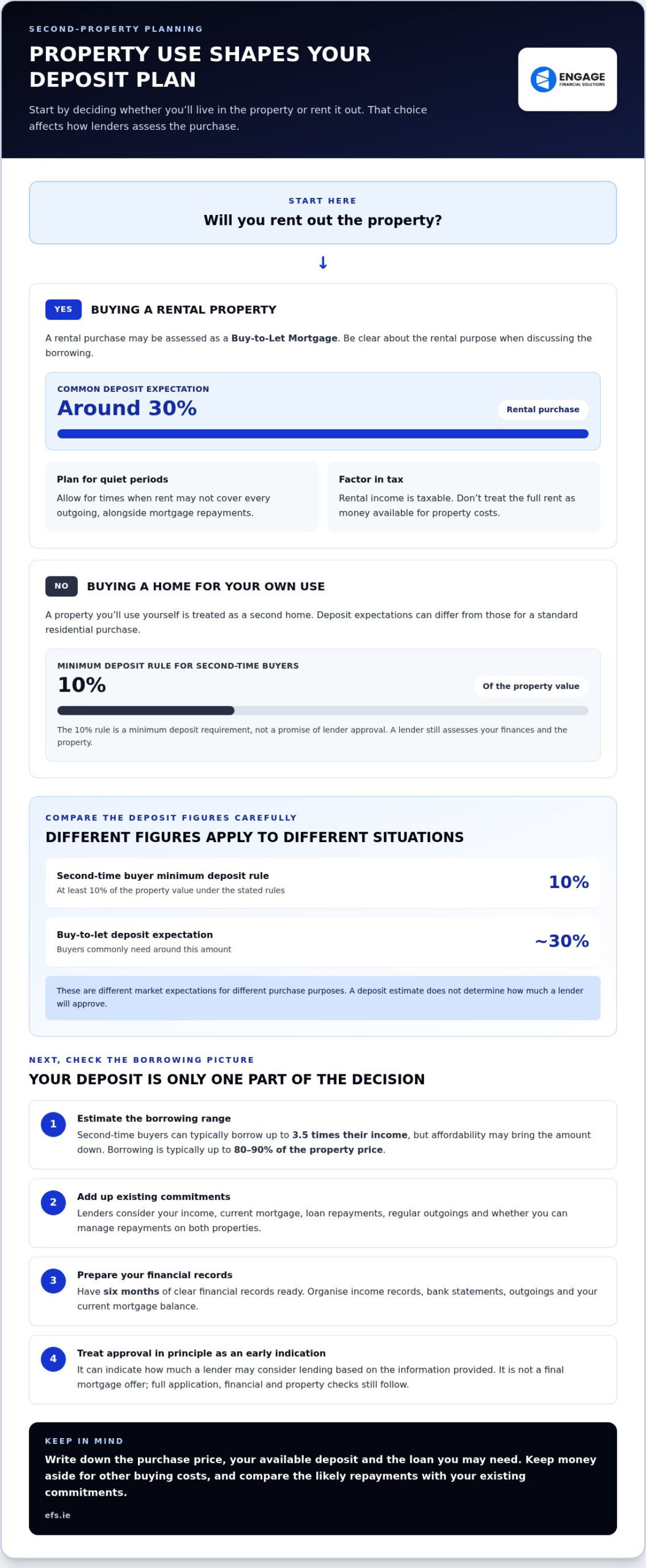
Your deposit depends on whether you’ll live in the property or rent it out. Clarifying its intended use helps you estimate the cash contribution and mortgage needed for the purchase.
Buy-to-Let Deposit Requirements
A buy-to-let deposit is your contribution towards a property bought for rental income. Buyers commonly need around 30%, so plan for a larger upfront contribution than the minimum deposit for a second-time buyer.
To estimate the deposit, apply the relevant percentage to the expected purchase price. Then separate these savings from money set aside for other purchase costs. For example, if you’re considering a rental property, build a budget that accounts for mortgage repayments and periods when rent may not cover every outgoing.
Rental income from a second property is taxable. Include this when estimating the income available for property expenses and repayments, rather than treating the full rent as spendable cash. The rental purpose also affects the mortgage assessment, so explain clearly how you intend to use the property when arranging your borrowing.
Deposits and Borrowing Limits
A deposit is the portion of the property price you fund yourself, reducing the amount you need to borrow. According to the Central Bank, second-time buyers need a deposit of at least 10% of the property value under its rules.
This illustrates the deposit calculation, but doesn’t establish how much a lender will approve. Your income, current mortgage and other commitments also affect the borrowing assessment.
For a second home, deposit requirements can differ from those for a standard residential purchase. Buy-to-let buyers commonly need around 30%. These are different market expectations from the 10% minimum deposit rule for second-time buyers. First decide whether you’ll occupy the property or rent it, then use the relevant estimate to plan your savings.
Second-time buyer borrowing is typically up to 80-90% of the property price. A larger deposit reduces the loan required, but doesn’t automatically increase the amount a lender will approve. Before setting a purchase budget, compare your available deposit with the repayments you could manage alongside your existing mortgage.
Write down the purchase price, savings available for the deposit and the remaining loan required. Keep a separate allowance for other buying costs rather than assigning all your savings to the deposit. If you’re weighing a rental purchase, Buy-to-Let Mortgage options can help frame borrowing around the property’s purpose.
Who qualifies as a second-time buyer?
Your property ownership history matters when a lender classifies your application. If you’re buying another home or a rental property, you don’t qualify for first-time buyer status, regardless of where you bought your first property. This distinction affects which borrowing limits and supports may apply, so describe your ownership history accurately.
The difference can affect the income multiple used to calculate a borrowing limit. First-time buyers may borrow up to four times their income, compared with up to 3.5 times income for second-time buyers. These are limits, not promised loan amounts. Your income, existing repayments and other financial commitments still shape the lender’s affordability assessment.
For example, if you already own a home and plan to buy a rental property, it isn’t a first-time purchase, even if you bought your first home elsewhere. The same applies if your next purchase is a second home for personal use. Make a clear list of properties you own or previously owned, and explain how you intend to use the new property.
First-time buyer supports also depend on your status and the purchase purpose. The Help to Buy refund is worth up to €30,000, but a second-home or rental purchase does not qualify for first-time buyer status. Eligibility for first-time buyer incentives can depend on an applicant’s circumstances. Don’t build a purchase budget around that refund until you’ve established which category applies.
Eligibility for a mortgage and eligibility for first-time buyer support are related, but they’re separate decisions. A lender assesses your borrowing application, while a support scheme has its own qualifying conditions. Being eligible to apply for a mortgage doesn’t automatically make you eligible for a first-time buyer incentive.
To clarify your position, note whether you’ve owned property, where it was located and whether the new purchase is for you or tenants. Include any previous joint ownership, and distinguish a home you’ll occupy from one intended to earn rent. These details help frame the application correctly and prevent first-time buyer assumptions from distorting your budget.
If you’re comparing a second purchase with a first home, keep the categories separate. A first-time buyer mortgage may suit an eligible first purchase, but it doesn’t change the status of someone buying a second home or rental property. Confirm your ownership history before relying on a borrowing multiple or support payment, then assess repayments using the correct buyer category.
Assessing affordability and alternatives
Affordability means assessing whether your income can cover the new mortgage alongside existing commitments. According to the Central Bank, second-time buyers can typically borrow up to 3.5 times their income. Key risks include repayment pressure, interest charges, fees and using your home as security.
Assessing Affordability
Lenders assess affordability by looking at income, regular outgoings, debts and current mortgage repayments. The income multiple is a ceiling, not a spending target: monthly repayments must also fit your budget after essential costs.
Start by listing your income and every regular commitment, including loans, credit-card payments and household bills. Then compare the proposed mortgage repayment with what remains each month. If you plan to rent the property, include rental income in your calculations, but remember it is taxable and shouldn’t be treated as guaranteed cash flow.
Equity can affect your position. For example, a home valued at €400,000 with €200,000 remaining on its mortgage has €200,000 equity. Lenders may expect you to have cleared the first mortgage or hold considerable equity for a further purchase. Equity is not the same as available cash, so assess how the loan would be secured and repaid.
Compare the full borrowing requirement with the purchase price and your existing commitments. A €400,000 property bought by a second-time buyer is one example for modelling repayments, not a recommended budget. Ask yourself whether the repayment remains manageable if your income changes or the property produces less rent than planned.
Risks of Financing a Second Property
The main risks are taking on repayments that strain your budget and securing additional borrowing against a home. This matters because missed payments can put the property used as security at risk.
Make a list of costs before committing. These may include interest, arrangement and valuation fees, legal costs, and possible early repayment charges. They can increase the amount you need to fund beyond the purchase price and deposit.
Consider how a variable interest rate could affect repayments and whether a fixed-rate period would make your budget more predictable. For a rental purchase, allow for periods without rental income and account for tax on rent. Assess the purpose of the purchase, not just its expected return.
If the projected repayment leaves little room for other costs, consider a lower purchase price or delaying the purchase while you strengthen your finances. Compare these options with using existing equity, then assess the effect on both properties and your longer-term financial plans.
Borrower age eligibility
Age can shape the mortgage term you can manage and the income available to support repayments. A specific age threshold applies when two people apply together for a Second Home Lifetime Loan.
If two people apply for the Second Home Lifetime Loan, the younger applicant must be at least 60 years old. The loan is secured against a property other than the borrower’s primary residence. Borrowers and their family members don’t have the right to live permanently in the property used as security.
That arrangement differs from buying a second home with a standard mortgage. A holiday property you plan to use yourself and a property secured through a Second Home Lifetime Loan have different purposes and conditions. Before comparing options, note who will occupy the property and whether you intend to live there permanently.
For a regular mortgage application, consider how your age relates to the repayment period you’re seeking. A longer term spreads repayments over more time, while a shorter term means less time to repay the capital. The suitable term depends on your income, existing mortgage commitments and likely finances in the years ahead. Don’t assess the monthly repayment in isolation.
For example, an applicant approaching retirement may need to compare expected income changes with mortgage repayments. List current income, planned retirement income and essential outgoings, then compare them with the proposed repayment schedule. This can show whether the borrowing remains manageable after a change in earnings, not just under current circumstances.
Age doesn’t replace an affordability assessment. Lenders consider the overall application, including income, existing debts and the property securing the loan. For a joint application, prepare a clear picture of both applicants’ finances and the ownership arrangement. For a Second Home Lifetime Loan, also consider the restriction on permanent residence before deciding whether it suits your plans.
Before choosing, compare the loan purpose, security property, repayment structure and expected income across the borrowing period. This helps distinguish a standard purchase mortgage from a Second Home Lifetime Loan, whose age condition applies specifically to joint applicants. Keep the figures current, especially if retirement or a change in work income is approaching.
If illness could affect your ability to maintain repayments, consider how Income Protection may fit into your wider financial plans. Compare the cover’s role with your household budget and planned borrowing, so your repayment strategy accounts for income as well as age.
Engage Financial Solutions: Switching mortgages
Engage Financial Solutions can help you consider Switching mortgages as part of planning for a second property. This may be relevant if you’re weighing your existing mortgage terms against new borrowing, or considering whether a different mortgage arrangement better suits your plans.
Bring together your current mortgage details, the new property’s intended use and your repayment estimates. This gives you a clearer basis for discussing whether a residential purchase or a Buy-to-let mortgage fits your circumstances. If you’re also reviewing how your household would manage a change in income, Income Protection may be part of the wider conversation.
For tailored guidance on your mortgage plans, visit efs.ie or contact Engage Financial Solutions.
Make your next property decision with confidence
Before taking the next step, decide how the property should fit your plans over time. Whether you’re considering a home for personal use or a rental, financing a second property in Ireland starts with being clear about its purpose and your budget.
Consider how the purchase fits alongside your existing mortgage and wider financial goals. For financing a second property in Ireland, a written outline of your plans, current commitments and questions can make a mortgage discussion more focused.
You don’t need every decision settled before exploring your options. Start with the property’s purpose and the budget you want to protect. Contact Engage Financial Solutions to discuss your mortgage plans and consider a next step that supports your future.
Frequently Asked Questions
How much can I borrow?
According to the Central Bank of Ireland, second-time buyers can typically borrow up to 3.5 times their income. Your practical borrowing limit can be lower after lenders account for existing mortgage repayments, loans, credit commitments and household spending. To estimate a manageable amount, add your current commitments and proposed repayment to your monthly budget. Treat the income multiple as an upper limit, not a target to spend.
What are the costs of a second mortgage?
Costs can include interest charges, arrangement fees, valuation fees, legal costs and possible early repayment charges. The total depends on the loan structure and the terms of your existing mortgage. A second charge is secured against your home separately, while a top-up increases your current mortgage balance. Compare overall repayments and charges, not just the initial amount borrowed.
What mortgage options are available for buying a second property?
Options include a mortgage for a second home, a Buy-to-Let Mortgage for a rental property, a separate second charge or a top-up to your existing mortgage. A fixed rate keeps repayments more predictable during its agreed period; a variable rate can change. Portability may let you move an existing mortgage to another property, subject to restrictions. Match the mortgage type to how you’ll use the property.
What deposit is required for a second home or buy-to-let mortgage?
According to Central Bank of Ireland rules, second-time buyers need at least 10% of the property value as a deposit. For a second home, buyers should expect around 20% or more; buy-to-let purchases commonly require around 30%. These are different deposit expectations, so first identify whether you’ll occupy the property or rent it out. Then compare the required contribution with the borrowing you can afford.
What are the current mortgage interest rates for second properties?
There isn’t one rate for every second-property mortgage. The rate offered depends on the lender, mortgage type, fixed or variable structure, loan amount and property purpose. A rental purchase may be assessed differently from a home you’ll use yourself. Compare the rate with the repayment schedule and any fees, then consider how repayments would fit your budget if a variable rate changed.
How do lenders assess affordability for a second-property mortgage?
Lenders assess whether your income can support the proposed mortgage alongside your existing commitments. They consider regular expenses, debts and current housing repayments, not just income. If the property will be rented, rental income is taxable, so account for tax when planning expected cash flow. Prepare a household budget that includes both properties, then work out how much remains for repayments and other costs.
What stamp duty applies when buying a second property?
Residential stamp duty starts at 1% on the first €1 million of a property’s value. There is no stamp duty surcharge specifically for buying a second home. Include stamp duty in your purchase budget separately from your deposit, and leave room for other buying costs. If you’re comparing properties at different prices, calculate the duty against each purchase price before deciding how much cash to set aside.
Can I use equity in my current home to finance a second property?
Yes. You may be able to access equity through a second charge mortgage, a separate loan secured against your home, or by topping up your existing mortgage. A second charge can leave your current mortgage agreement in place; a top-up increases its balance. Lenders still assess affordability, and the home securing the borrowing is at risk if repayments aren’t maintained. Compare the terms and total costs before choosing.
Disclaimer
Engage Financial Services LTD T/A Engage Financial Solutions is regulated by the Central Bank of Ireland CRO 764570. Suite 2 First Floor, 14 -18 Main street, Blackrock, Co Dublin. A94 W0Y3