


Could a mortgage rate one percentage point lower still leave you worse off? It can, if the costs of switching outweigh the interest you’d save. So, is it worth switching mortgage for 1 percent? The answer depends on your figures, not the rate difference alone.
A lower rate may reduce your monthly repayment, but the size of that saving also depends on your outstanding balance and how long you have left on the mortgage. Fees, any early repayment charge on a fixed-rate deal and the terms of the new offer can all change the result. Compare the full picture before deciding whether the potential saving justifies switching.
This guide shows you how to estimate repayments and costs, compare the two options over the same period and work out how long it could take to break even. You’ll also find out which mortgage details to gather before comparing offers or getting personalised guidance.
Key Takeaways
- One percentage point means a rate moving from 5% to 4%, not a 1% relative reduction. Compare the actual rates on the offers you’re considering.
- To assess whether it’s worth switching mortgage for 1 percent, compare repayments using the same balance, remaining term and repayment structure.
- Estimate how long potential savings could take to outweigh switching costs, including any charge for leaving your current mortgage early.
- Review the full offer, your repayment history and the time left on your mortgage before deciding. A lower headline rate doesn’t guarantee a net saving.
- Gather your mortgage figures and offer details first, then use personalised mortgage guidance to assess whether switching suits your circumstances.
Is a 1% Lower Mortgage Rate Worth Switching For? Start With the Real Question
The rate difference alone can’t tell you whether switching is worthwhile. A one-percentage-point reduction may lower your repayments, but the benefit depends on how much you still owe, how long you have left, the costs of switching and the new mortgage’s terms. The real test is whether the savings you’re likely to make outweigh the costs over the period you expect to keep the new deal.
A lower monthly repayment doesn’t automatically mean your borrowing will cost less overall. If the new mortgage has a longer repayment term, for example, you could pay less each month but pay interest for longer. Compare the monthly amount and the overall cost over the same period, including any relevant charges.
What does a one-percentage-point mortgage reduction mean?
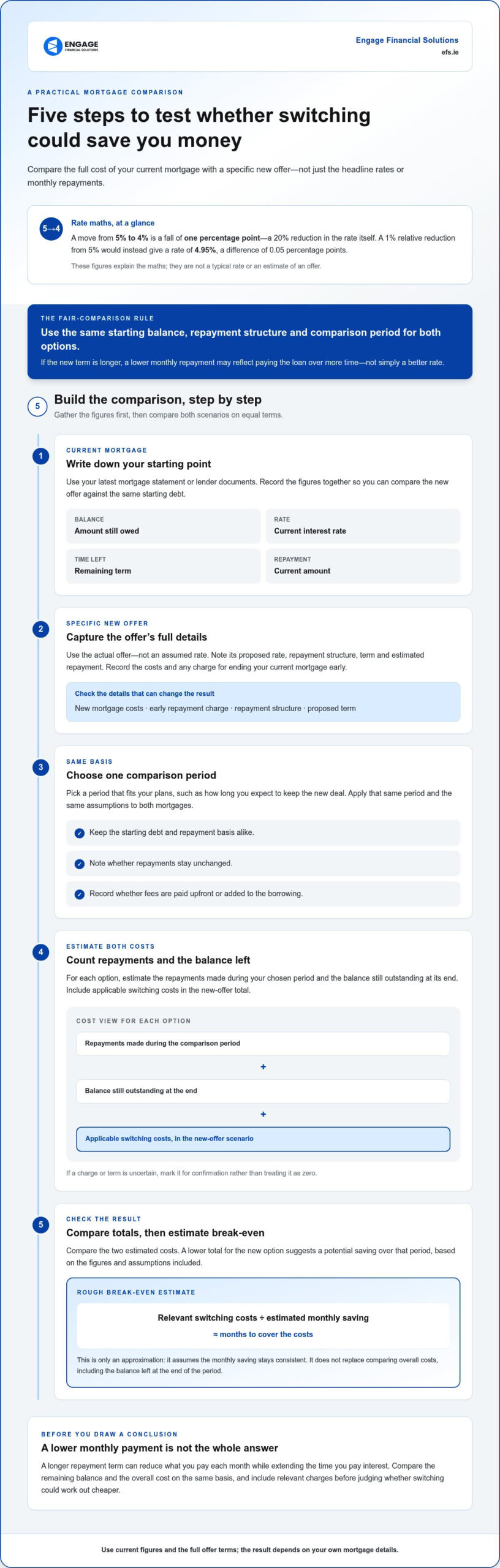
A percentage point measures the direct difference between two rates. For example, a rate moving from 5% to 4% has fallen by one percentage point. In relative terms, that’s a 20% reduction in the rate itself, not a 1% reduction. By contrast, a 1% relative reduction from 5% would move the rate to 4.95%, a difference of just 0.05 percentage points.
Use your current rate and a specific alternative offer to make a meaningful comparison. The example above explains the maths only; it isn’t a typical rate or an estimate of what you might be offered. A one-point difference won’t produce the same saving for every borrower.
Why is the rate difference only one part of the decision?
Your outstanding balance and remaining term shape how much interest a rate change could save. A lower rate applied to a larger balance or over a longer period may have a different effect from the same reduction on a smaller balance or with less time left. That’s why the question “is it worth switching mortgage for 1 percent” needs to be answered using your own figures and the full offer.
Compare the new mortgage’s terms with your current arrangement. Check that the repayment structure and comparison period are alike. If the new term differs, separate the effect of the lower rate from the effect of paying over more or fewer years. The term remortgage is used for replacing an existing mortgage with a new one, often to access a different rate or terms.
List every relevant cost before deciding, including any charge for ending your current deal early and any costs associated with arranging the new mortgage. Don’t assume a lower rate will outweigh them. Compare:
- the estimated repayments and remaining balance under your current mortgage;
- the estimated repayments and remaining balance under the specific new offer; and
- the potential difference between those options after applicable switching costs.
This gives you a useful starting point. Next, calculate the comparison using the same balance, term and repayment basis.
How to Calculate Whether Switching for 1% Could Save You Money
A useful comparison starts with two complete mortgage scenarios, not just two interest rates. Gather the figures for your current mortgage and a specific alternative offer, then compare their estimated costs over the same period. This helps you see whether a lower repayment comes from a better rate or from changing how long you’ll repay the loan.
Gather the figures for both mortgage options
Use your current mortgage statement or lender documents to find your balance, interest rate, remaining term and repayment. For the alternative, use the actual offer details, including its rate, repayment structure and term. Record any fees and charges that apply to switching, along with any charge for ending your current mortgage early. Use up-to-date figures rather than estimates where you can.
Compare like with like
Choose a comparison period that fits your plans, such as the time you expect to keep the new deal. For each mortgage, estimate the repayments made during that period and the balance still outstanding at its end. Include relevant switching costs in the new-mortgage scenario. This helps prevent you from treating a smaller monthly repayment as a saving when it simply reflects a longer repayment term.
- Record your starting point. Note the current balance, rate, remaining term and repayment. Keep these figures together so you can check that the new offer is being compared with the same starting debt.
- Enter the alternative offer. Use the proposed rate, term and repayment structure, along with its estimated repayment. Note any differences from your current mortgage.
- Set the time period. Compare both options across the same period and use the same assumptions for each. Include whether repayments stay unchanged and whether fees are paid upfront or added to the borrowing.
- Estimate each option’s cost. Add the repayments made during the comparison period to the balance that would remain at its end. Then include applicable switching costs in the new-offer total. If a charge or term is uncertain, mark it for confirmation rather than treating it as zero.
- Check the net difference. Compare the two totals. A lower estimated cost for the new option suggests a potential saving over that period, but the result depends on the assumptions and charges included.
The break-even point is when estimated cumulative savings have covered the switching costs. As a rough guide, divide the relevant costs by the estimated monthly saving to estimate how many months it may take. This is only an approximation: it assumes the monthly saving stays consistent and doesn’t replace a comparison of overall costs, especially if the term or repayment structure changes. This is the practical way to assess whether it’s worth switching mortgage for 1 percent.
Use your mortgage records and the lender’s current offer documents to check the figures before relying on your estimate. If you’d like help weighing the numbers against your circumstances, explore personalised mortgage guidance.
When a 1% Mortgage Rate Cut May Not Be Worth Switching For
A lower headline rate doesn’t guarantee that you’ll be better off overall. Switching costs can reduce or outweigh the potential interest saving, particularly if you have a smaller balance, little time left on your mortgage or a charge for leaving your current deal. Whether it’s worth switching mortgage for 1 percent depends on how these factors work together in your case.
Look at the whole repayment period, not only the next monthly payment. Extending the term could make repayments smaller by spreading them over more time, but it may also mean paying interest for longer. Compare the new and current options over the same period, and note how much would still be outstanding at the end.
| Scenario | Key variable | Effect to investigate | Decision implication |
|---|---|---|---|
| Short time left | Remaining term | Whether savings have enough time to offset switching costs | A shorter potential saving period may weaken the case for switching |
| Smaller mortgage balance | Amount still owed | How much of the balance benefits from the lower rate | Estimate savings using the current balance, not the original loan |
| Fixed-rate deal ended early | Applicable early repayment charge | Whether the charge absorbs some or all of the projected savings | Include the charge before judging the offer |
| Longer new term | Repayment period | Whether lower monthly payments come with higher total interest over time | Compare the remaining balance and overall cost as well as repayments |
How balance, term and loan-to-value affect the comparison
Loan-to-value, often shortened to LTV, is your mortgage balance compared with your property’s value. If the balance falls or the property value changes, the LTV may change too. A lender may consider this alongside other information when assessing an application, but it doesn’t guarantee eligibility or a particular rate. Lender criteria differ, so base your comparison on the terms of the specific offer.
Fixed-rate charges and other costs that can change the answer
If you leave a fixed-rate arrangement before its agreed end, a charge may apply, depending on your mortgage terms. Review the relevant documents and use current information for any applicable switching costs. Don’t treat a possible charge as zero simply because you don’t have the amount to hand. Include confirmed costs in your estimate, then compare them with projected savings over the period you expect to keep the new deal.
Before deciding, test the comparison using your current balance, the time remaining and the actual offer terms. If changing the term is part of the proposal, note its effect separately. That keeps the rate saving distinct from the impact of borrowing for longer and gives you a clearer basis for weighing the options.
A Practical Checklist Before Switching to a Mortgage 1% Cheaper
Before committing, bring the key figures and offer details together. A clear checklist makes it easier to spot differences that could affect your repayments or overall costs, and gives you a useful basis for discussing your options.
Documents and details to bring together
Start with your latest mortgage statement and the documents showing your current rate, balance, repayment and remaining term. Add the proposed offer and a breakdown of any costs that apply. Having both sets of information side by side helps you compare the actual terms rather than relying on a headline rate or estimated repayment.
- Current mortgage: note the outstanding balance, interest rate, remaining term, repayment and rate type.
- Proposed offer: record the rate, term, repayment structure and any conditions that could affect the comparison.
- Costs: gather current information on applicable switching costs and any charge for ending your existing arrangement early.
- Repayment history: make a note of your recent repayments and any circumstances that may be relevant to an application.
- Your situation: note relevant changes to your income, property value or financial commitments since taking out your current mortgage.
Think about how long you expect to keep the new mortgage before reviewing or switching again. If you may move or change your plans sooner than expected, you could have less time to benefit from a lower rate. Use a realistic period based on your circumstances rather than assuming you’ll keep the offer for its full term.
Questions to resolve before making a decision
Use these questions to check that you’re comparing fairly and that the new repayment fits your wider finances:
- Are both options being compared using the same balance, time period and repayment structure?
- Are the rate types alike, or does one offer a different arrangement that could change repayments later?
- Have all applicable costs been included when estimating how long it could take for savings to offset them?
- If the proposed term is longer or shorter, have you considered what that means for the remaining balance and total interest?
- Would the proposed repayment remain manageable alongside your other financial commitments?
A repayment that looks lower on paper still needs to fit your budget. If it relies on extending the term, weigh the immediate monthly difference against the longer repayment period. This gives you a more practical answer to “is it worth switching mortgage for 1 percent” than the rate alone can provide.
Once your figures and questions are ready, personalised mortgage switching guidance can help you assess the offer against your circumstances and compare the options more clearly.
How Engage Financial Solutions Can Help You Assess a Mortgage Switch
Once you’ve gathered your mortgage details and a specific alternative offer, personalised guidance can help you bring the figures together and consider what they mean for your plans. Engage Financial Solutions provides Switching Mortgages and tailored mortgage guidance, helping you compare options in light of your circumstances rather than focusing on a rate in isolation. The aim is to make the decision clearer, not to assume that switching will always be right for you.
What a tailored mortgage comparison should consider
A useful assessment looks at your current mortgage alongside the proposed offer, including the balance, interest rate, remaining term, repayment structure and any applicable costs. It also considers how long you expect to keep the mortgage and what matters most to you, whether that’s understanding potential repayments or weighing the longer-term cost.
Repayment options can affect how a mortgage fits your wider finances, so consider the proposed payment alongside your other commitments and plans. A comparison can clarify the differences and help you understand the choices available, but it can’t promise a particular saving or mortgage approval. Your decision should reflect the full offer and your own priorities.
Take the next step with confidence
Engage Financial Solutions is an award-winning financial consultancy with certified experts who have decades of experience. The company has 64 Google reviews. This background supports a considered, client-focused conversation about whether a mortgage switch may suit your situation, with the focus on your figures, goals and the terms available to you.
Before a discussion, bring your current mortgage statement, the proposed offer and details of any relevant charges. It can also help to note what you want from a switch, such as a repayment that better fits your budget or a clearer view of the total cost. If you’re asking, is it worth switching mortgage for 1 percent, those details provide a grounded starting point.
You don’t need to make a decision before talking through the comparison. A focused conversation can help you understand how the options relate to your circumstances and what questions remain. Discuss your mortgage switch with Engage Financial Solutions when you’re ready to explore your options.
Make Your Next Mortgage Decision With Clarity
A mortgage decision is about more than securing a lower rate. It’s also a chance to consider what you want your repayments to support, whether that means more room in your monthly budget or a repayment plan that fits your longer-term priorities. Identify what matters most to you before weighing the options.
If you’re still asking, is it worth switching mortgage for 1 percent, consider how a change would work in your life as well as in the calculations. The right choice should make sense for your finances and future plans, not just look attractive in an offer summary. Take the time you need to understand the options before deciding.
For a considered conversation about your circumstances and potential next steps, explore Switching Mortgages with Engage Financial Solutions. A clear view of your priorities can help you move forward with confidence, whether you choose to switch now or stay with your current mortgage.
Frequently Asked Questions
Is a mortgage 1% cheaper always worth switching to?
No. A lower rate is only one part of the decision, and switching may not suit you if costs absorb the projected benefit or you expect to move again soon. Consider how long you’ll keep the mortgage and whether the new terms match your priorities. If the offer changes your repayment period or structure, assess that separately so the headline rate doesn’t distract from the wider financial commitment.
How much could I save if my mortgage rate falls by 1%?
There’s no single saving that applies to every borrower. The result depends on your balance, current rate, remaining term and the specific offer, as well as any charges. For a useful estimate, compare the two mortgages over the same period and include the balance still owed at the end of it. Use current figures from your mortgage documents, and treat any calculator result as an estimate rather than a guaranteed saving.
Can switching my mortgage lower my monthly repayments without saving overall?
Yes. For example, a new offer might spread repayments over a longer period, lowering the monthly amount while leaving you paying interest for longer. Check whether the proposed term differs from your current one and look beyond the monthly budget impact. If your main goal is to reduce repayments, consider whether the change remains manageable over time and how it affects the total borrowing cost across a comparable period.
What happens if I leave a fixed-rate mortgage early?
You may have to pay an early repayment charge, depending on the terms of your current mortgage. Before making plans to switch, read the section of your mortgage documents dealing with ending or changing the fixed-rate arrangement, then use the applicable figure in your comparison. Add the charge to your estimate. If the fixed period is nearing its end, compare switching now with reviewing your options when it ends.
Is switching worthwhile if I have only a small mortgage balance left?
It can be, but a smaller balance may mean the potential interest reduction is lower in cash terms, so charges can have a greater influence on the result. Check whether the alternative offer’s minimum balance and remaining-term conditions fit your situation. Then compare the estimated costs with staying on your current mortgage until the planned end date. Avoid basing your decision on calculations made for a larger loan.
Should I switch my mortgage or keep my current deal?
Choose the option that best fits your finances and plans, rather than deciding from the headline rate alone. If you’re asking, “is it worth switching mortgage for 1 percent”, compare a specific offer with your existing arrangement and consider how long you expect to keep it. Include any relevant charges and check that the proposed repayments fit your budget. Personalised mortgage guidance can help you understand the trade-offs before you decide.
Disclaimer
Engage Financial Services LTD T/A Engage Financial Solutions is regulated by the Central Bank of Ireland CRO 764570. Suite 2 First Floor, 14 -18 Main street, Blackrock, Co Dublin. A94 W0Y3