


Regular overpayments can reduce the interest you pay and shorten your mortgage term, provided your lender applies them directly to your mortgage capital. The amount you could save, and how much sooner you might clear your mortgage, depends on your mortgage balance, interest rate and overpayment arrangements. If you’re considering how to pay off your mortgage faster, start by understanding your lender’s overpayment terms, particularly if you’re on a fixed rate.
It makes sense to want your repayments to work harder, but putting every spare euro towards your mortgage is not automatically the best choice. This guide explains how regular overpayments and lump sums affect interest and repayments, what to consider before paying extra, and how to weigh mortgage savings against accessible savings and investment returns.
Whether you are deciding what to do with a bonus or considering a manageable monthly top-up, the right approach depends on your mortgage terms and wider financial priorities. These sections set out the key trade-offs to help you make a considered plan that supports both your current needs and long-term security.
Key Takeaways
- Review your mortgage terms and any early repayment charges before making extra payments, especially if you’re on a fixed rate.
- Ask for overpayments to be applied directly to your mortgage capital, then choose whether to lower repayments or shorten the term.
- Compare the interest saved with the potential return from savings or investments, while keeping accessible money for emergencies.
- Use lump sums strategically: how they affect your repayments and mortgage term depends on the option you choose.
- If your current mortgage no longer suits your plans, explore whether switching could better support your repayment goals.
What should I do if I want to pay off my mortgage early?
Start by reviewing your mortgage contract and asking your lender how extra payments will be handled. Any early repayment charge, permitted overpayment limit and your preferred outcome matter.
Checking overpayment limits and charges
An overpayment limit sets how much extra you can repay without triggering a charge. Limits and early repayment charges vary between lenders and mortgage contracts, particularly for fixed-rate mortgages. Some lenders allow fee-free annual overpayments of up to 10% of the outstanding balance. Others may charge a fee when you exceed the permitted amount, so read the terms before transferring money.
On a fixed rate, repaying beyond the allowance may lead to early repayment compensation. This charge depends on your lender’s terms; there is no single standard amount. Ask how the limit applies to regular overpayments and lump sums. Variable-rate mortgages usually allow overpayments without a penalty, but check your agreement before acting.
Consider switching your mortgage if a lower rate or more flexible overpayment terms could better suit your plans. Compare the proposed rate with your current one, and include any early repayment charge on your existing mortgage in the overall calculation. A lower rate alone does not show whether switching is worthwhile; the remaining term and new mortgage conditions also affect the result.
Look beyond the headline rate. If you expect to make occasional lump-sum repayments, flexibility may matter as much as a competitive rate. Compare how each option treats extra payments, whether they reduce the balance immediately, and whether charges apply. This helps you assess the effect on total interest and future repayments, rather than focusing on one feature.
How extra payments affect balance and interest
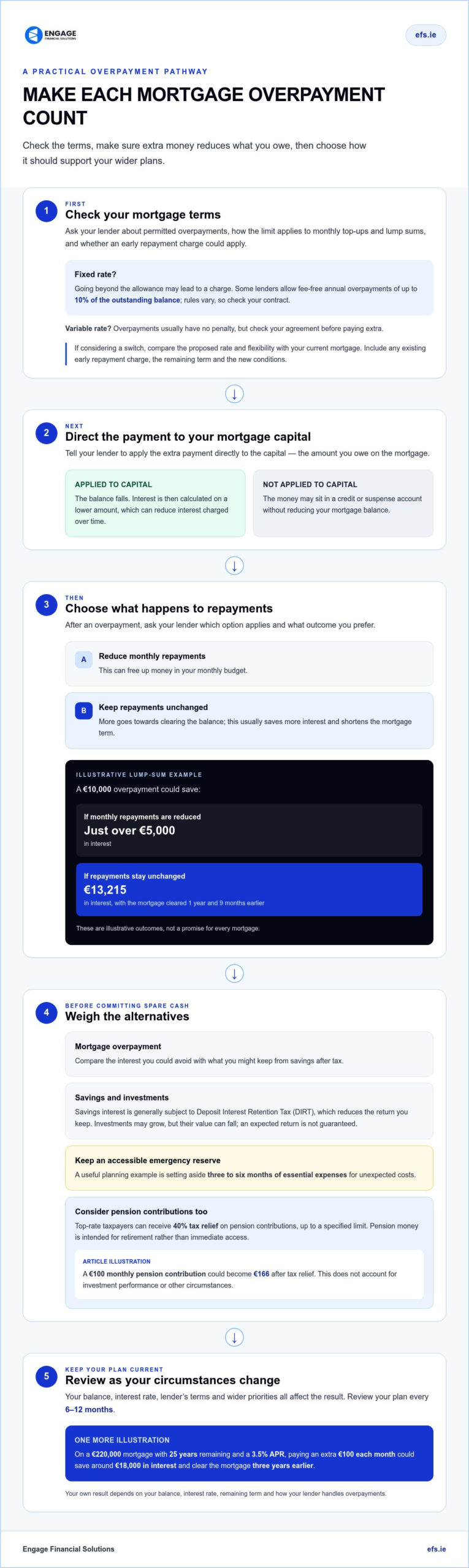
When your lender applies an overpayment directly to mortgage capital, the amount you owe falls. Interest is then calculated on a lower balance, which can reduce the interest charged over time. Instruct your lender to apply extra money to the mortgage capital; otherwise, it may remain in a credit or suspense account without reducing the balance.
For example, a €10,000 lump-sum overpayment could save just over €5,000 in interest if monthly repayments are reduced. Keeping repayments unchanged after the same overpayment could save €13,215 in interest and clear the mortgage 1 year and 9 months earlier. These are illustrative outcomes, not a promise for every mortgage. Review your plan every 6-12 months as your balance and circumstances change.
There is no general tax figure to apply to paying down your mortgage in these examples. The relevant cost to establish is any charge under your mortgage terms. If you are comparing overpayments with savings, remember that savings interest is generally subject to Deposit Interest Retention Tax (DIRT), which reduces the return you keep.
Can you pay extra off your mortgage?
Yes, you can make extra repayments, but your mortgage type and contract determine the terms. Variable-rate mortgages usually allow overpayments without penalties, while fixed-rate mortgages may have limits or charges. If you are choosing between paying down your mortgage and investing, compare the interest saved with potential investment returns, while accounting for investment risk and your need for accessible savings.
Choose what happens to your repayments
After an overpayment, your lender may reduce your monthly repayments or keep them unchanged and shorten your mortgage term. Lower repayments can free up money in your monthly budget. Keeping repayments unchanged directs more towards clearing the balance, usually saving more interest and ending the mortgage sooner.
Consider an illustrative mortgage of €220,000, with 25 years remaining and a 3.5% APR. Paying an extra €100 each month could save around €18,000 in interest and clear the mortgage three years earlier. Your own result depends on your balance, interest rate, remaining term and lender’s treatment of overpayments.
Weigh mortgage payments against savings and investments
Compare the mortgage interest avoided with the return you could keep after tax from savings. Savings interest is generally subject to Deposit Interest Retention Tax, or DIRT. Investments may grow, but their value can fall, so an expected return is not the same as a guaranteed saving from reducing mortgage interest.
Keep an emergency reserve accessible before committing spare cash to your property. A useful planning example is setting aside three to six months of essential expenses. This buffer can help cover unexpected costs without needing to borrow again or interrupt regular repayments.
Balance pension contributions with mortgage repayments
Your pension deserves consideration alongside mortgage overpayments, particularly if you’re deciding where regular spare money should go. Top-rate taxpayers can receive 40% tax relief on pension contributions, up to a specified limit. That relief changes the effective value of a contribution, but pension money is intended for retirement rather than immediate access.
For illustration, directing €100 a month into a pension could become €166 after adding tax relief. This example doesn’t account for investment performance or other circumstances. Compare your mortgage rate, pension contribution options, accessible savings and household commitments before settling on a monthly amount.
Fixed-rate charges can make an otherwise attractive overpayment less worthwhile, because lender rules and mortgage contracts differ. Variable-rate overpayments usually avoid penalties, but compare the terms that apply to your own loan. If your current rate or repayment flexibility no longer suits you, explore switching mortgage options as part of your comparison.
What are the benefits of overpaying your mortgage?
Overpayments can reduce the interest charged over time and may bring your final repayment closer. The benefit depends on your mortgage balance, interest rate and remaining term. Understanding these factors helps you decide how to pay off your mortgage faster while keeping other financial priorities in view.
Saving interest through overpayments
A mortgage charges interest on the balance you still owe, so reducing that balance can lower future interest. Regular overpayments can also mean more of each later repayment goes towards clearing the debt. Your mortgage agreement determines how extra payments are treated, including whether they shorten the term or reduce monthly repayments.
This shows why timing matters: reducing the balance earlier leaves less time for interest to build. Check how your lender applies the payment before setting your overpayment amount.
Estimating interest and term reductions
To estimate the effect, compare your current repayment schedule with one that includes the extra payment. Use your outstanding balance, interest rate and remaining term, then distinguish between a lower monthly repayment and a shorter term. Keeping repayments unchanged after reducing the balance usually saves more interest and clears the mortgage sooner.
That is not an overpayment saving; it shows the interest cost across the example term. Your lender’s calculation reflects your own agreement and repayment pattern.
Comparing mortgage and savings rates
Compare the interest avoided on your mortgage with the savings interest you would keep after Deposit Interest Retention Tax (DIRT). Savings interest is generally subject to DIRT, so compare the after-tax return rather than the advertised rate. An overpayment reduces mortgage interest, while investment returns can rise or fall.
Credit card interest can reach 20% or more, so clearing that debt may save more per euro than paying down a mortgage at around 3%. A €25,000 car loan at 10% compared with a €25,000 mortgage balance at 3% illustrates why the higher rate deserves attention first. Keep accessible savings for emergencies while deciding how to direct spare income.
Before committing, list each debt’s interest rate, required repayment and any early repayment penalties. Then decide how much remains available for mortgage overpayments without using money needed for near-term bills. This comparison can help you choose a sustainable way to reduce mortgage interest while maintaining financial flexibility.
Comparing mortgage, savings and investment returns
Before using spare income for a mortgage overpayment, compare the interest avoided with the return you might keep elsewhere. Include access to your money, tax and the possibility that investment values can fall.
Compare returns on a like-for-like basis
Start with your mortgage’s annual percentage rate of charge (APRC), which reflects the borrowing cost used in an example. An illustrated APRC of 4.3% gives you a reference point for comparing savings interest and investment returns. For savings, consider the amount left after Deposit Interest Retention Tax (DIRT), as savings interest is generally subject to this tax.
A mortgage overpayment reduces the balance and the interest charged on it, while investment growth is uncertain. The comparison is not just between headline rates: include tax on savings interest, your investment timeframe and whether you can leave invested money untouched. Use a calculator to compare projected mortgage repayments with and without the extra payment, using your current balance, rate and remaining term.
Keep enough money accessible
Money paid into a mortgage is less readily available than cash in a savings account. Before increasing repayments, set aside a buffer for essential costs and unexpected bills. One example is a cash reserve equal to six months of net disposable income. If your monthly take-home income is €3,000, an €18,000 emergency fund illustrates that approach.
Liquidity matters if your income changes or a large bill arrives. A mortgage overpayment may reduce interest, but it does not provide the same immediate access as cash savings. Weigh the value of accessible funds against the potential interest saved, then choose a monthly payment that leaves your household budget workable.
Consider pension contributions alongside overpayments
A pension is another use for money otherwise directed towards the mortgage. One illustration assumes a 7% return and estimates that a pension could grow to nearly €87,000 over 20 years. That figure depends on the example’s assumptions; investment returns can vary, and pension funds carry investment risk.
Compare the mortgage rate with the potential long-term return from a pension, but do not treat a projected return as certain. The decision also depends on when you expect to need the money: mortgage overpayments reduce debt, while pension savings are intended for later life. A calculator can help you model different monthly contributions against your mortgage repayment schedule.
Paying a lump sum off the mortgage
A lump sum can reduce the amount you owe in one payment, but its effect depends on how your lender applies it. Before using a bonus, inheritance or other cash reserve, decide whether your priority is lower monthly repayments or a shorter mortgage term.
According to the CCPC’s illustrative example, a €10,000 lump-sum overpayment on a mortgage with 25 years remaining could reduce monthly repayments by €50. This shows how a single payment may ease regular household costs. Your lender’s calculation depends on your mortgage balance, interest rate and remaining term, so use its figures when comparing options.
Ask your lender to explain both outcomes before making the payment. If monthly repayments fall, you gain more room in your budget but may keep the mortgage for its existing term. If repayments stay unchanged, the lower balance can help shorten the term and reduce interest over time. The better fit depends on whether you need immediate cash-flow flexibility or want to clear the debt sooner.
Check your mortgage agreement before transferring a lump sum, especially if you have a fixed-rate mortgage. Limits and charges vary by contract, and paying beyond an allowed limit may incur a cost. Find out how much you can pay without a charge and whether your lender needs instructions to apply the money directly to mortgage capital.
Keep enough accessible savings for expected costs and emergencies. Once a lump sum is used to repay your mortgage, it is not as readily available as cash in an account. Weigh the value of reducing interest against the flexibility of retaining the money, and avoid using funds set aside for near-term bills or essential property repairs.
Before deciding, write down the lump sum available, your current repayment, the remaining term and the lender’s proposed revised figures. Ask for the new monthly repayment and, if you keep payments unchanged, the estimated revised end date. This gives you a practical side-by-side comparison rather than relying on a general illustration.
If a lump sum is not available, you can still consider smaller, regular overpayments, subject to your mortgage terms. If your current mortgage structure makes extra repayments difficult, explore mortgage repayment options as part of your planning.
Engage Financial Solutions: Switching mortgages
Engage Financial Solutions can help you explore Switching Mortgages if your current rate or repayment terms no longer suit your plans. Switching may be worth considering if you want to compare your existing mortgage with options that could offer a lower rate or greater flexibility for overpayments. Look at the full picture, including your current agreement, any early repayment charge and how a new term could affect total interest and monthly repayments.
Gather your outstanding balance, current rate and remaining term before reviewing your options. This makes it easier to assess whether switching supports your goal of reducing mortgage costs or whether your existing mortgage remains a better fit.
To discuss switching your mortgage, contact Engage Financial Solutions.
Make your next mortgage decision with confidence
Your mortgage plan should support the life you want beyond the final repayment. Set a review point when your income, household commitments or property plans change, then revisit how much you can comfortably commit. This keeps your approach connected to your wider financial priorities, rather than treating your mortgage as a decision made once and never reconsidered.
If your plans involve changing your current mortgage, buying your first home or arranging a buy-to-let mortgage, Engage Financial Solutions can help you explore those options. A conversation can help you consider how a mortgage decision fits your circumstances and what you want your next step to achieve.
Start a conversation about your mortgage plans and take a considered step towards the future you’re working towards.
Frequently Asked Questions
Can you balance saving and paying off your mortgage?
Yes, you can divide spare income between mortgage repayments and savings. First, keep enough accessible cash for essential bills and unexpected expenses, so an overpayment does not leave you short. Then compare your mortgage interest rate with the return you would keep from savings after Deposit Interest Retention Tax (DIRT). If you have expensive credit card debt, compare its interest cost before paying extra off your mortgage.
How can you calculate your potential savings?
Use a mortgage calculator to compare your current repayment schedule with one that includes your proposed overpayment. Enter your outstanding balance, interest rate and remaining term, then compare total interest and the expected end date. Keep the repayment amount consistent if you want to see the effect of shortening the term. For a more useful estimate, account for any rate changes and charges under your mortgage agreement.
How much can you overpay without penalty?
There’s no single allowance for every mortgage. Some lenders permit fee-free annual overpayments of up to 10% of the outstanding balance, while other limits depend on the lender and your contract. Find the clause covering overpayments and note whether it applies to regular extras, lump sums or both. Confirm how the limit is calculated before paying, particularly if your mortgage is fixed-rate.
How do mortgage overpayments work?
An overpayment is money paid in addition to your scheduled mortgage repayment. Ask for it to be credited directly against mortgage capital, then review your next statement to see how the balance has changed. If the statement shows the money separately as a credit, contact your lender to ask how it was allocated. Your lender’s process and contract determine whether the payment changes your repayment amount or mortgage end date.
What charges apply to early repayment on a fixed-rate mortgage?
Charges for breaking a fixed-rate mortgage depend on your lender’s terms and your mortgage contract. Repaying beyond an allowed overpayment amount can lead to a charge or early repayment compensation. The amount is not the same across lenders, so look for the section explaining early repayment and how charges are calculated. Consider this cost alongside the interest you might save, especially before making a large payment or switching mortgages.
How much can you overpay on a variable-rate mortgage?
Variable-rate mortgages usually allow overpayments without penalties, but there is no universal amount that applies to every loan. Your mortgage agreement sets the relevant terms, including how extra payments are accepted and applied. Check whether your lender places a limit on the amount or frequency. If you are planning a sizeable lump sum, review the repayment conditions first and keep enough cash available for upcoming expenses.
How much interest can regular overpayments save?
The amount you save depends on your balance, interest rate, remaining term and how much extra you pay. To estimate it, compare the total interest on your existing schedule with the total after adding a regular overpayment. Use the same assumptions in both calculations, including the interest rate and repayment frequency. If the rate changes during the term, recalculate, as that can alter the projected saving.
Is a lump sum or a higher monthly payment better?
Either approach can reduce your mortgage balance; the better fit depends on when you have money available and how steady your budget is. A lump sum suits a one-off amount, while regular increases spread the commitment across your pay cycle. Compare both using your lender’s repayment figures, and consider whether you will need the lump sum for planned costs before committing it to the mortgage.
Disclaimer
Engage Financial Services LTD T/A Engage Financial Solutions is regulated by the Central Bank of Ireland CRO 764570. Suite 2 First Floor, 14 -18 Main street, Blackrock, Co Dublin. A94 W0Y3