


You can assign an existing life insurance policy to a mortgage lender if it provides enough cover, runs at least as long as the mortgage and isn’t already assigned to another loan or mortgage. When assigning a life insurance policy to a mortgage lender, you give the lender the right to receive the payout if you die before the mortgage is repaid.
It’s understandable to wonder whether a policy you already have can meet your lender’s requirements, or whether you need separate Mortgage Protection. The answer depends on the policy’s cover, term and existing assignments.
This article explains how assignment works, what paperwork is involved and how a payout is used. It also explains how Mortgage Protection differs from Life Insurance, helping you understand the options and make an informed decision about protecting your home and loved ones.
Key Takeaways
- Assess whether your existing policy’s cover and term match the mortgage before considering an assignment.
- Understand what assigning the policy means for who receives its payout if you die while the mortgage is outstanding.
- Know which documents are involved and how the lender’s interest is recorded with the insurer.
- Consider how an assignment could affect the amount left for your loved ones after the mortgage is repaid.
- Explore whether Income Protection could complement your plans by helping protect your income if illness or injury prevents you from working.
What’s the difference between mortgage protection and life insurance?
Mortgage Protection is designed to clear a home loan if an insured person dies during the policy term. Life Insurance can also provide a death benefit, but the purpose and payment arrangements may be broader.
Mortgage Protection pays the outstanding mortgage if the insured person dies before repaying it. When the policy is assigned, the lender receives the payout to clear the debt before any surplus reaches loved ones. An unassigned Life Insurance payout goes to the policy’s beneficiary, who may use it for the mortgage, living expenses or other debts.
Mortgage protection is generally required for a mortgage, subject to exemptions. According to the Irish Statute Book, Section 126 of the Consumer Credit Act 1995 sets out the requirement to take out mortgage protection and its exemptions. A lender may require cover before releasing the mortgage funds, although you don’t have to buy it from that bank.
Conditions and lender cover requirements
An existing Life Insurance policy may serve as Mortgage Protection if its cover and term are sufficient for the loan. A policy with a shorter term or lower payout could leave some of the mortgage unpaid.
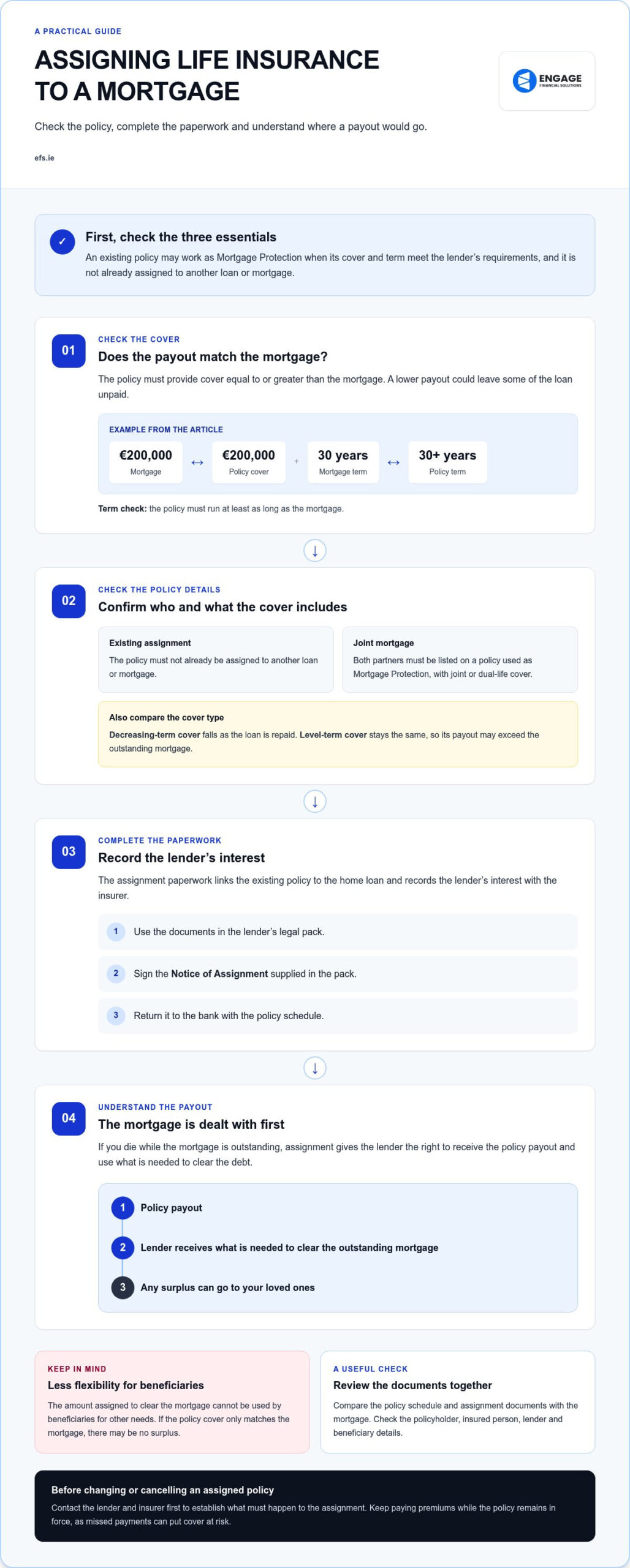
The policy must provide cover equal to or greater than the mortgage, run at least as long as the mortgage, and not be assigned to another loan or mortgage. For example, a €200,000 mortgage with a 30-year term could be matched by a policy providing €200,000 cover for 30 years or longer.
Term Life Insurance can provide decreasing-term or level-term cover. Decreasing cover falls as the borrower repays the loan, while level cover stays the same. With level cover, the payout may exceed the outstanding balance. The lender can use what it needs to clear the mortgage, with any remainder going to the beneficiary.
For a joint mortgage, both partners must be listed on a policy used as Mortgage Protection, with joint or dual-life cover. Mortgage Protection is commonly arranged on a joint-life first-death basis, meaning the policy ends after the first partner dies. If you already have Life Insurance, compare the insured amount, term and people covered with the mortgage before relying on it.
Policy assignment payouts and risks
Assignment gives the lender the right to receive the policy payout if you die before repaying the mortgage. The lender is paid first, and any surplus goes to your loved ones.
The main disadvantage is reduced control over the payout: beneficiaries cannot use the amount assigned to clear the mortgage for other needs. If the cover only matches the mortgage, there may be no surplus. If the loan balance falls, level-term cover may leave a remainder. Consider whether separate Life Insurance is needed for family expenses alongside Mortgage Protection.
Meaning of assigning a life insurance policy to a lender
Assigning a Life Insurance policy gives your mortgage lender a recorded interest in its payout. If you die before repaying the mortgage, the lender can receive the benefit and apply it to the outstanding loan. This links an existing policy to a specific debt. It doesn’t make the lender the person insured or change who pays the premiums.
Assignment changes who has a claim on the policy proceeds, rather than changing the purpose of the mortgage. For example, if a policy pays out while a home loan remains outstanding, the lender’s interest means the debt is dealt with first. Any amount remaining after the mortgage is repaid can go to your loved ones. The outcome depends on the policy benefit and the loan balance at that time.
It helps to distinguish an assignment from naming a beneficiary. A beneficiary is the person who would receive a policy benefit under its terms. An assignment gives the lender a right to the payout for the mortgage debt. Without an assignment, the insurer pays the benefit to the policy’s beneficiary rather than the bank. Review the policy schedule and assignment documents together to understand how the lender’s interest affects the payment. For those coordinating property security with broader inheritance planning, firms specialising in property and estate law such as Aquarius Lawyers emphasise the value of ensuring policy nominations and deed assignments align with your estate objectives.
For a couple, the policy must show who is insured and whose death could trigger a payout. If both partners are borrowers, the lender’s security depends on the arrangement covering the relevant insured person or people. A joint-life first-death policy, for example, pays after the first insured partner dies and then ends. The assignment links that benefit to the mortgage; it doesn’t create a separate payout for the surviving partner.
Can I change or cancel an assigned life insurance policy? An assignment doesn’t itself cancel your cover, but changing or cancelling the policy can affect the lender’s recorded interest. Contact the lender and insurer before making a change, and establish what must happen to the assignment first. Keep paying premiums while the policy remains in force, because missed payments can put the cover at risk.
To understand the arrangement, identify the policyholder, insured person, lender and beneficiary in the documents. Then compare the assignment details with the mortgage account. If the loan is repaid or replaced, the lender’s interest may need to be addressed as part of that change. Keep written records of any release or update, so you, the insurer and anyone named to receive a remaining benefit can understand the policy’s status.
Assigning an existing life insurance policy to a mortgage lender
An existing Life Insurance policy can be assigned as security for a mortgage if its cover and term meet the lender’s requirements. The paperwork records the lender’s interest with the insurer, linking the policy to the home loan. Before starting, compare the policy schedule with the mortgage amount and term, and make sure the policy isn’t already assigned to another loan.
The process uses documents from the lender’s legal pack. When purchasing a home or securing a mortgage, conveyancing specialists such as trianglelegalservices.co.uk can assist buyers in navigating lender requirements and legal packs. Sign the Notice of Assignment supplied there and return it to the bank with the policy schedule. The schedule identifies the policy details, including its insured amount and term, so the lender can match the cover to the mortgage. Keep copies of both documents for your records.
After receiving the paperwork, the bank sends the Notice of Assignment to the insurer. The insurer records the lender’s interest and confirms this to the bank. Mortgage drawdown can proceed once the lender receives confirmation that its interest has been recorded on the policy. The assignment is therefore part of the mortgage process, not simply a note to keep with your insurance documents.
- Review the policy schedule. Compare the insured amount and term with the mortgage, and check whether another loan already has an interest in the policy.
- Complete the lender’s Notice of Assignment. Use the form in the legal pack and ensure the policy details match the schedule.
- Return both documents to the bank. The lender needs the signed notice and policy schedule to progress the assignment.
- Wait for the recorded interest confirmation. The bank receives confirmation from the insurer before mortgage drawdown proceeds.
For a couple using two separate policies, a Deed of Assignment is completed for each policy. Each document relates to its own policy, so check that both schedules and notices identify the correct insured person. If one policy is missing from the paperwork, the lender may not have a recorded interest in that cover.
A death-in-service benefit through work cannot be assigned to a mortgage lender. It cannot be treated like an individually held Life Insurance policy for this assignment process. If you’re relying on an existing policy, identify whether it is personal cover or a workplace benefit before sending documents to the bank.
Once the insurer records the lender’s interest, continue paying the policy premiums and keep the schedule with your mortgage records. The assignment doesn’t replace the policy; it directs the lender’s claim to the payout if the insured person dies while the mortgage remains outstanding. Keep the bank’s confirmation with the Notice of Assignment so you can find the completed paperwork later.
Assignment fees
There is no charge to assign a Life Insurance policy to a mortgage lender. The assignment records the lender’s interest in the policy payout; it is not a new insurance benefit or a replacement policy. This helps distinguish the paperwork from the ongoing cost of keeping your cover active.
No assignment charge doesn’t mean every cost connected with a mortgage or policy is removed. Your existing policy may still have premiums, which are separate from the assignment. Keep paying them as required to maintain the cover. If premiums stop and the policy lapses, the lender’s recorded interest cannot provide the intended protection from that policy.
Also distinguish a charge for assigning a policy from the amount of cover. The assignment doesn’t increase the insured amount or extend the policy term. For example, assigning a policy with a set benefit gives the lender an interest in that benefit; it doesn’t create extra cover. Compare the policy schedule with the mortgage to understand what protection is in place.
The assignment concerns the death benefit payable under the policy. It doesn’t mean every benefit attached to a policy is automatically available to clear the mortgage. An illness benefit, for instance, may have its own terms and purpose. Read the policy schedule to see which benefits are covered and how the lender’s interest applies before relying on them.
As you review the paperwork, keep these distinctions clear:
- Assignment: the process that records the mortgage lender’s interest in the policy payout, with no charge to assign.
- Premiums: payments that keep the Life Insurance policy active, separate from the assignment.
- Cover amount: the benefit available under the policy, which assignment does not increase.
- Mortgage balance: the debt to be repaid, which may change over the life of the loan.
If you’re budgeting for a home purchase, record the assignment separately from your regular premium. This makes it easier to distinguish the payment that maintains your cover from the task that secures the lender’s interest. Keep the insurer’s confirmation with your policy documents and refer to it if you later review your mortgage or cover.
When the mortgage is repaid, the lender’s reason for having an interest in the policy may end. Keep the repayment records and assignment documents together so the policy’s status can be dealt with clearly. The key point is that assigning the policy itself carries no charge, while premiums and cover remain governed by the policy’s terms.
Can an existing life insurance policy be assigned to a new mortgage?
Yes, an existing Life Insurance policy can be assigned to a new mortgage if it meets the lender’s requirements. The policy must provide enough cover, last at least as long as the mortgage and not already be assigned to another loan or mortgage. These checks help establish whether the existing cover can secure the new borrowing.
Start by comparing the policy schedule with the new mortgage details. Check the insured amount against the mortgage balance and compare the policy term with the loan term. For example, a policy that ends before the mortgage term may not cover the full borrowing period. A policy already assigned to an existing mortgage cannot simply secure another loan at the same time.
Then consider who is insured. If a couple applies for a joint mortgage, both partners must be listed on the Life Insurance policy used as Mortgage Protection. A policy covering only one partner may not meet that requirement. The policy schedule should clearly identify the insured people so the lender can assess the cover against the borrowers.
The assignment also affects how a future payout is used. If the insured person dies while the new mortgage remains outstanding, the mortgage provider uses the payout to repay the outstanding loan first. Any amount left after the mortgage has been repaid goes to loved ones. The amount available to beneficiaries depends on both the policy benefit and the mortgage balance at that time.
For an existing policy to support a new mortgage, the lender’s interest must be recorded with the insurer. The lender supplies a Notice of Assignment in its legal pack. Sign it and return it with the policy schedule. The bank then sends the notice to the insurer, which records the lender’s interest and confirms this to the bank. Mortgage drawdown can proceed once that confirmation reaches the lender.
Before returning the documents, compare the policy number, insured person, cover amount and term across the schedule and assignment notice. If you’re using two policies for a couple, a Deed of Assignment is completed for each policy. Keep copies of the signed documents and the insurer’s confirmation with your mortgage records. These details make it easier to understand which policy secures the new borrowing.
If the existing cover doesn’t match the new mortgage, consider how Mortgage Protection could fit alongside your wider financial plans. Explore Mortgage Protection options to consider suitable cover for your borrowing.
Engage Financial Solutions: Income Protection
Engage Financial Solutions can help you consider Income Protection as part of your wider financial planning. Mortgage Protection addresses the home loan if you die, while Income Protection is designed to support your finances if illness or injury affects your ability to earn. These cover different needs, so reviewing them together can help you see how each fits your household budget and commitments.
Consider this option if you want to look beyond the mortgage and plan how you would manage everyday costs during a period away from work. You can also discuss Mortgage Protection when arranging a home loan or reviewing existing cover. A clear view of your priorities can make it easier to decide what protection suits your circumstances.
Contact Engage Financial Solutions to discuss your protection and financial planning needs.
Make your next mortgage decision with confidence
Before assigning a Life Insurance policy to a mortgage, consider how the decision fits your wider financial plans. The home loan is one part of your household’s commitments, alongside everyday spending and future goals. A considered review can help you balance the lender’s security with the protection you want for your family.
Whether you’re switching mortgages, buying your first home or considering a buy-to-let mortgage, Engage Financial Solutions can help you explore relevant mortgage options. Consider the borrowing decision and your protection needs together, so the arrangements support the plans you’re making.
Contact Engage Financial Solutions to discuss your next steps. A clear plan can help you move forward with greater confidence.
Frequently Asked Questions
How do you assign a Mortgage Protection policy?
Use the Notice of Assignment in your mortgage lender’s legal pack, and match its details to your policy schedule before signing. For example, check that the policy number and insured person are correct. Return the signed notice and schedule to the bank. The bank sends the notice to the insurer and receives confirmation when the lender’s interest is recorded. Keep copies of the documents and confirmation with your mortgage records.
Can you use an existing Life Insurance policy?
Yes, an existing personal Life Insurance policy can be used if it meets the lender’s cover and term requirements and isn’t already assigned elsewhere. A workplace death-in-service benefit cannot be assigned to a mortgage lender. Review your policy schedule to identify the type of cover, insured person and benefit amount. For a joint mortgage, both borrowers must be listed on the policy used as Mortgage Protection.
What is a Deed of Assignment?
A Deed of Assignment records a lender’s interest in a particular Life Insurance policy. For a couple using two policies, a separate deed is completed for each one. This helps identify which policy secures the mortgage and whose life is insured. Compare each deed with its policy schedule before signing, so the lender’s details are linked to the correct cover.
What happens if I die after paying off a large chunk of my mortgage?
The lender’s claim relates to the mortgage debt outstanding when the policy pays out, rather than the original loan amount. With level-term cover, the insured amount stays the same, so any amount above the remaining debt can pass to the beneficiary. With decreasing-term cover, the insured amount falls over time. Check your policy schedule and mortgage balance together to understand how they compare.
Who sends the Notice of Assignment?
You receive the Notice of Assignment from the mortgage lender as part of its legal pack, then sign and return it with your policy schedule. The bank sends the notice to the insurer. The insurer records the lender’s interest and confirms this to the bank. Keep the signed notice and confirmation together, particularly if you hold separate policies or later need to review the mortgage paperwork.
Why do banks require assignment?
Assignment gives the bank a recorded interest in a policy payout that can be used towards the outstanding mortgage if the insured person dies. Without that arrangement, the insurer pays the benefit to the policy’s beneficiary rather than the bank. For example, a lender may require confirmation that its interest has been recorded before mortgage drawdown. The assignment connects the policy benefit with the debt it is intended to secure.
What does assigning a Life Insurance policy to a mortgage mean under Irish mortgage arrangements?
It means giving the mortgage lender the right to receive the policy payout if the insured person dies while the mortgage remains unpaid. The insurer records the lender’s interest, linking the policy to that borrowing. This differs from simply naming a family member as beneficiary. Review the policy and mortgage documents together to understand how the lender’s claim affects any benefit that may remain for loved ones.
Is assigning Life Insurance to a mortgage required by Irish lenders?
Mortgage Protection is generally required for a mortgage, but exemptions can apply. Section 126 of the Consumer Credit Act 1995 sets out the requirement and exemptions, according to the Irish Statute Book. Some lenders may not require cover for borrowers over 50, investment properties, inability to obtain cover due to serious illness or dangerous work, or sufficient existing Life Insurance. Ask how the lender applies the relevant exemption to your circumstances.
Disclaimer
Engage Financial Services LTD T/A Engage Financial Solutions is regulated by the Central Bank of Ireland CRO 764570. Suite 2 First Floor, 14 -18 Main street, Blackrock, Co Dublin. A94 W0Y3