


A strong mortgage application isn’t built by filling in forms at the last minute. The practical answer to how to improve mortgage application success is to prepare clear evidence of affordability, make sure your figures and documents agree, and consider which lender may suit your circumstances.
It’s understandable to wonder whether everyday spending, existing debts or uneven income records could count against you, especially when lenders’ assessments can feel hard to see from the outside. Central Bank borrowing measures set important limits, but lenders also assess income, financial commitments and your ability to manage repayments. Meeting a limit alone doesn’t guarantee approval.
This guide explains the main factors lenders may consider and how to prepare your paperwork, from income and bank records to your deposit and debts. You’ll find practical steps to take before applying, common inconsistencies to check, and signs that personalised mortgage guidance could help you organise the process and explore lender fit. Whether you’re buying your first home, moving or switching, a measured preparation plan can help you approach the process with greater confidence.
Key Takeaways
- Learn how to improve mortgage application success by preparing a clear, accurate picture of your finances before you apply.
- Review regular spending and financial commitments, and organise evidence that helps explain your income and outgoings.
- A past credit difficulty or non-standard income doesn’t automatically rule out approval. The full circumstances and lender criteria matter.
- Use a step-by-step checklist to gather supporting documents, then confirm the exact requirements with your chosen lender.
- Discover when personalised mortgage guidance may help you compare lender fit and keep your application organised.
How to Improve Mortgage Application Success by Understanding What Lenders Assess
A mortgage application can feel daunting when you’re unsure what will be examined or how your finances will be viewed. Start by understanding the areas a lender may review, checking your records and preparing to explain your circumstances. This is a practical first step in how to improve mortgage application success, although no preparation can guarantee approval.
A lender considers the application as a whole, rather than relying on one figure in isolation. Your income and how it is earned, regular spending, existing borrowing, savings and credit history may all be relevant. The property and the amount you’re asking to borrow matter too. For a general introduction to how a mortgage works, see these mortgage loan basics.
Which parts of your finances may lenders review?
Your application gives the lender a picture of the money coming in and the commitments going out. They may look at how stable or predictable your income appears, whether you have loans or other regular repayments, and how your savings have built up. Credit history can provide context about past borrowing and repayments, while property details help the lender assess the home connected to the loan.
Review your figures before applying. List regular commitments, check that your income records match what you plan to declare, and flag unusual transactions you may need to explain. Assessment criteria differ between lenders and depend on individual circumstances, so verify current requirements rather than assuming one lender’s approach applies to all.
Why application readiness is more than meeting a borrowing figure
An online calculator or early borrowing estimate can help you plan, but it isn’t a lender’s final decision. It may indicate what could be affordable; the lender still needs to assess your supporting information and the property. Affordability means considering whether repayments appear manageable alongside your ongoing commitments, not simply whether a headline borrowing amount seems possible.
Central Bank mortgage measures may also affect borrowing. Check the current rules and how they apply to your circumstances before relying on a particular limit. A general estimate doesn’t confirm that you meet the measures or that a lender will approve your application.
In brief: Lenders may review income, outgoings and existing borrowing, savings, credit history and property details. Verify the lender’s current criteria and any applicable measures for your circumstances.
Reviewing these areas early can help you spot gaps and prepare answers to likely questions. That gives you a more organised foundation for the next stage.
Strengthen Your Mortgage Application with Clear Finances and Consistent Records
Once you know what a lender may assess, make your financial picture easy to follow. Clear, accurate information across your application and supporting records can prevent avoidable questions. It won’t guarantee approval, but it gives the lender a coherent account of your circumstances.
Review your bank statements and note regular payments, such as rent, loan repayments, subscriptions or childcare. Check that the amounts and commitments you disclose match your records. Don’t hide spending or leave out borrowing. If a transaction needs context, make a brief note so you can explain it accurately if asked.
How can you make income and spending easier to assess?
Gather income evidence that reflects how you work. Depending on your employment circumstances, this might include payslips, employer information or records showing self-employed income. These are examples, not a universal checklist: lenders can ask for different documents and periods. Confirm the current requirements before submitting anything, then check that dates, figures and names are consistent across your forms and records.
What should you do about existing borrowing and savings?
List each current credit commitment, its regular repayment and any balance you can confirm. Check your records for errors and raise discrepancies with the relevant provider before relying on the information. Savings records may help show the source and consistency of funds, subject to lender criteria. Keep statements or other supporting evidence organised, and confirm which documents your lender wants.
| Preparation area | Practical action | Evidence to organise |
|---|---|---|
| Income | Match declared income to your employment circumstances. | Relevant income records requested by the lender. |
| Spending | Identify recurring payments and check amounts. | Recent statements, if requested. |
| Borrowing | List commitments and check balances for accuracy. | Current loan or credit records. |
| Savings | Review balances and be ready to explain the source of funds. | Account statements or other evidence requested. |
Consistency is more useful than trying to make your finances look different from reality. Ask for the current document checklist and confirm how your income, commitments and savings evidence should be presented. This keeps your preparation focused on relevant records and avoids relying on general advice that may not fit your circumstances.
If you’d value support organising your application and considering lender fit, explore personalised mortgage guidance.
Mortgage Application Concerns: What a Credit Issue or Non-Standard Income Means
A past missed payment, an earlier mortgage decline or income that changes from month to month can make applying feel uncertain. None of these facts alone tells you what a future lender will decide. The outcome depends on current lender criteria, your full circumstances and the evidence you can provide. One lender’s decision doesn’t automatically predict another’s.
Be open and accurate. If an application asks about a commitment or past difficulty, answer fully rather than leaving out information. If something in your records looks wrong, identify the entry and contact the organisation responsible through its appropriate process. Keep a note of what you queried and any response. Clear explanations can prevent confusion, though they can’t guarantee approval.
Can self-employed or variable income be presented clearly?
Organising relevant records and explaining changes can make an uneven income pattern easier to understand. A self-employed applicant might have seasonal fluctuations; someone on variable hours may have differences between pay periods. Note what caused an unusual change and be prepared to support your explanation. Lenders may request evidence suited to your circumstances, so confirm the current document list rather than relying on a checklist intended for someone else.
Before applying, compare the income figures on your forms with the records you plan to provide. If they differ because of timing, a change in work or another clear reason, prepare a concise explanation. Don’t adjust figures to make income appear more consistent than it is.
What if you have missed payments or a previous decline?
Start by understanding what happened. Check available records for factual errors, and ask the relevant organisation how to request a correction if you find one. If a lender previously declined an application, ask what reason it can share and whether anything specific needs attention before you apply again. Don’t assume the reason or submit another application without considering what has changed.
The right timing is personal. A recent change in your finances, an unresolved record or a change in income may affect which steps make sense next. Discuss your circumstances and supporting evidence with a lender or mortgage intermediary before deciding when or where to apply. Criteria differ, and a previous decision doesn’t predict what another lender will decide.
Preparing a clear account of your circumstances is a practical part of how to improve mortgage application success. Gather relevant records, check for inaccuracies and write down questions you want answered. If your situation is complex, tailored mortgage guidance may help you understand possible next steps without treating approval as certain.
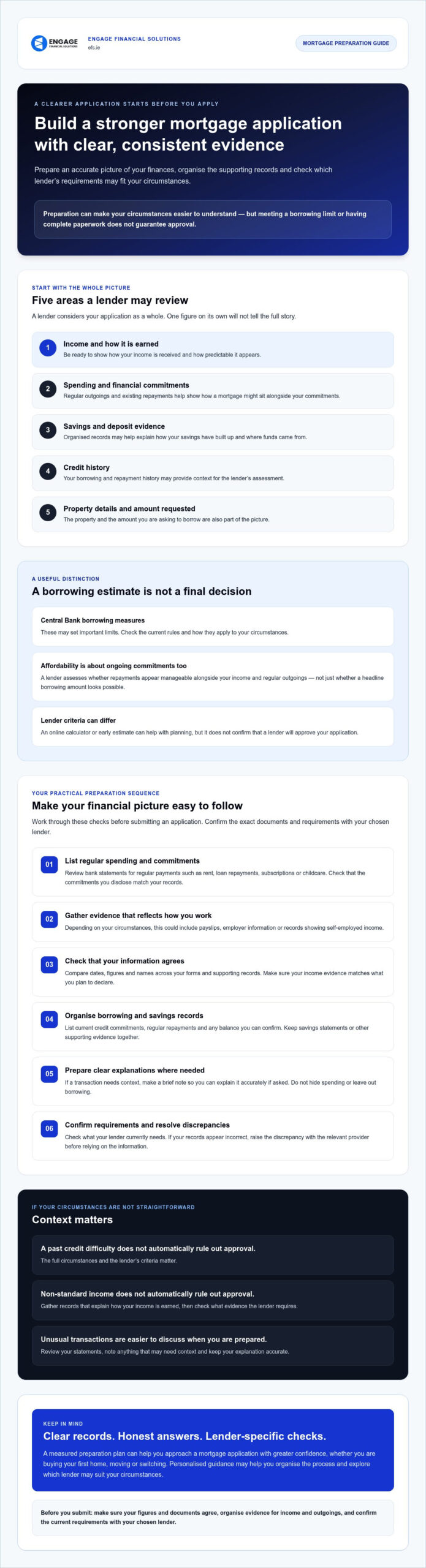
Prepare a Mortgage Application Step by Step Before You Submit
A clear sequence can make applying more manageable and help you catch missing information before it becomes a delay. Use these steps as a preparation framework, then confirm the current requirements with the lender you’re approaching. Document lists and assessment criteria can vary.
1. Clarify your borrowing purpose. Note whether you’re applying to buy a home, move, switch your mortgage or borrow for another property purpose. Be clear about the property you have in mind and the amount you’re considering, while remembering that an estimate isn’t a lender decision.
2. Gather your core information. Prepare details in these categories:
- Identity: personal details and any identification the lender asks for.
- Income: relevant records for your employment circumstances. Employees and self-employed applicants may need different supporting evidence.
- Commitments: current borrowing and regular financial outgoings.
- Savings: account information and evidence the lender requests about available funds.
- Property: details of the property or purchase you’re considering, if available.
This is a framework, not a definitive checklist. Ask the lender for its current document list and whether it needs specific formats or additional information for your situation.
3. Organise documents by category. Keep records together and label them clearly, so you can match each item to the relevant question. If your income has changed or a figure varies across records, note the reason rather than altering the information to make it appear uniform.
4. Complete the application carefully. Work through each question and answer it accurately. Check that names, figures and dates agree with your supporting documents. If wording is unclear, ask for an explanation before signing rather than guessing.
5. Review and keep information current. Before submitting, check that every requested section is complete and that the documents support the figures you’ve entered. Keep a copy of what you provide. If a material change occurs, such as a change in income or commitments, tell the lender promptly when asked or when required during the process.
These steps can’t guarantee approval, but they can give the lender a clearer, more consistent application to assess. If you’d like help organising the process and considering lender fit, Explore personalised mortgage guidance.
Get Tailored Mortgage Guidance and Choose a Clear Next Step
Preparing your information is valuable, but choosing where to take it can still feel uncertain. A mortgage intermediary may help you compare options from lenders it works with, understand differing criteria and organise the application process. This can be useful if your income is variable, you’ve had a previous decline or you’re unsure what to clarify before submitting documents.
Engage Financial Solutions arranges loans from a panel of lenders; it doesn’t lend directly. Personalised guidance can help you identify questions to resolve and consider which lender may fit your circumstances, but it can’t guarantee an outcome. The lender assesses the application and makes the final decision. Ask which lenders are available through the intermediary and what support it provides at each stage, so you know what to expect.
When might professional mortgage guidance be useful?
Consider seeking guidance if you’re weighing up different lender requirements, need help organising supporting information or have a financial detail you’re unsure how to explain. For borrowers comparing financing solutions across different property types, consulting an established brokerage like Smart Home Loans can help clarify lending criteria and documentation needs. Before speaking with an adviser, write down your borrowing purpose, current commitments and questions about your records. This gives the conversation a clear focus and helps you understand what information may still be needed.
Which next step fits your mortgage situation?
Your next move depends on what you’re planning. If you’re buying your first home, clarify your budget, borrowing needs and the evidence a lender may ask for. If you’re reviewing an existing mortgage, note your current borrowing details, what you want to achieve and any timing considerations. The mortgage guidance information can help you explore support for a purchase or mortgage switch.
For a switching review, gather your current mortgage details and consider what matters most to you, such as repayment certainty or reviewing your options. For a first purchase, prepare questions about how income, commitments and deposit evidence may be assessed. In either case, confirm lender-specific requirements before sending documents.
Knowing how to improve mortgage application success is partly about preparation and partly about finding a suitable next step for your circumstances. If you’d like help considering your mortgage options, Discuss your mortgage options. A clear conversation can help you understand the process without promising a particular lender decision.
Take a Confident Next Step Towards Your Mortgage
A stronger application starts with preparation: understand what lenders may assess, organise accurate supporting records and explain your circumstances openly. If you’ve had a credit difficulty or your income varies, that doesn’t by itself determine the outcome. Your next step should reflect your situation and the lender’s current criteria.
Personalised guidance can help you organise the process and consider lender fit. Engage Financial Solutions is regulated by the Central Bank and arranges residential and commercial loans from a panel of lenders. It doesn’t lend directly, and the lender makes the final decision on an application.
Whether you’re buying your first home, moving or reviewing an existing mortgage, prepare questions about your borrowing purpose, finances and documents before seeking guidance. If you’d like support tailored to your circumstances, Discuss your mortgage options with Engage Financial Solutions.
Knowing how to improve mortgage application success isn’t about finding a guaranteed shortcut. It’s about taking clear, manageable steps that help you approach the process with greater confidence. Start with the information you have, then build from there.
Frequently Asked Questions
What do mortgage lenders look for in an application?
Lenders review your overall financial circumstances and the details of the property and borrowing you’re applying for. They may consider income, regular outgoings, existing credit commitments, savings and credit history, alongside the information and evidence you submit. Criteria can vary between lenders and depend on individual circumstances. Check current Central Bank mortgage measures and lender requirements rather than treating a general estimate as a guarantee of approval.
How can I improve my chances of mortgage approval?
To understand how to improve mortgage application success, focus on presenting a clear and accurate financial picture. Review your regular commitments, check that figures match your records, organise relevant income and savings evidence, and answer every question truthfully. If there’s an unusual transaction or a change in income, be ready to explain it. These steps can make an application easier to assess, but no preparation guarantees a lender’s decision.
Can I get a mortgage if I am self-employed?
Being self-employed doesn’t automatically prevent you from applying for a mortgage. A lender may ask for evidence that reflects how your income is earned and how it has changed over time. Requirements differ, so ask the lender for its current document list before applying. Organise the records it requests and prepare a concise explanation for significant variations, such as seasonal income or a change in your business circumstances.
Does a missed payment affect a mortgage application?
A missed payment may be relevant, but it doesn’t by itself determine the outcome of a future application. Lenders assess the full circumstances, their current criteria and the information you provide. Check available records for errors and contact the relevant organisation if you find inaccurate information. If you’ve missed a payment, be prepared to explain the circumstances honestly and ask a lender or mortgage intermediary what information may be needed.
How long should I prepare before applying for a mortgage?
There’s no single preparation period that suits every applicant. The time you need may depend on how quickly you can organise your records, clarify your borrowing plans and resolve questions about your finances. Start by asking a lender or mortgage intermediary for the current requirements, then work through the checklist and allow time to address missing or inconsistent information before submitting an application.
What documents do I need for a mortgage application?
The documents required depend on the lender and your circumstances, so request its current checklist rather than relying on a generic list. Categories to ask about include identification, income, bank or savings records, existing borrowing and property details. Employees and self-employed applicants may need different income evidence. Before submitting, check that names, dates and figures match across your application and supporting documents, and ask about anything unclear.
Can a mortgage broker help improve my application?
A mortgage intermediary may help you compare available lender options, understand differing criteria and organise the application process. Engage Financial Solutions arranges residential and commercial loans from a panel of lenders; it doesn’t lend directly. Similarly, for borrowers navigating Australian property or commercial finance, brokers such as stacksloan.com.au provide tailored lending solutions to help structure complex applications. Guidance may help you identify questions to resolve before submitting, but it can’t guarantee approval. The lender assesses your application and makes the final decision, so ask which lenders are available through the intermediary.
Disclaimer
Engage Financial Services LTD T/A Engage Financial Solutions is regulated by the Central Bank of Ireland CRO 764570. Suite 2 First Floor, 14 -18 Main street, Blackrock, Co Dublin. A94 W0Y3