

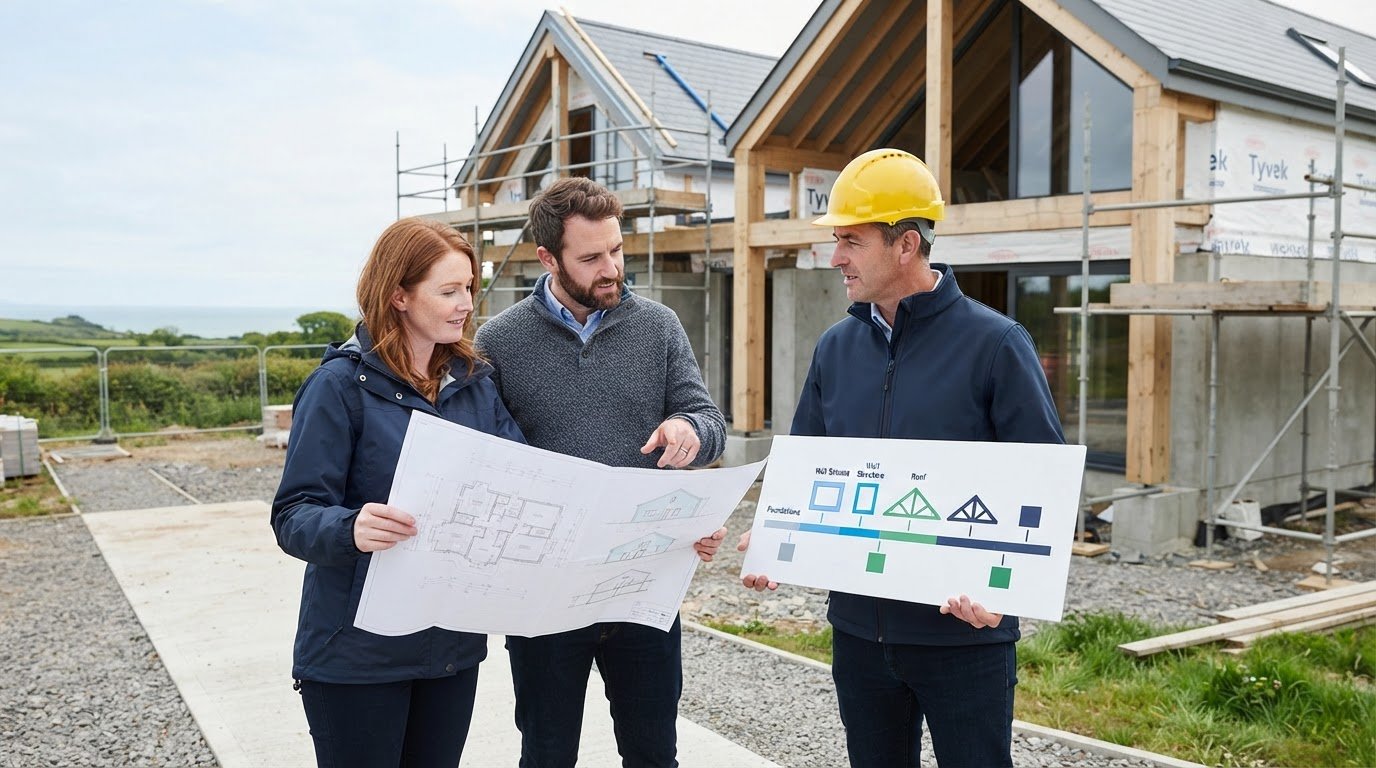
If you’re searching for “self build mortgage stage payments Ireland”, the key question is not only how much you can borrow, but when each payment reaches you. With a self-build mortgage, funds are usually released in stages as work progresses. A gap between paying your builder and receiving a drawdown can put pressure on cash flow, so it’s important to understand the timing early.
It’s natural to worry about running short, meeting lender requirements or absorbing unexpected cost increases. You may also need to use your own funds to get construction started before the first stage payment is available. Careful planning can help you anticipate these costs and coordinate professional certification with your lender’s drawdown process.
This guide explains how stage payments work, what documentation lenders may ask for and how to plan for each release. It also covers payments in arrears and in advance, with practical ways to build a clearer budget buffer. An organised funding plan can help you approach each construction milestone with greater confidence.
Key Takeaways
- Understand how self-build mortgage stage payments are released as construction milestones are reached. Match your builder’s payment schedule to the lender’s drawdown process.
- Check which planning, legal and professional requirements must be met before requesting the first release, and keep the relevant documents organised.
- Prepare a detailed cost breakdown so you can track spending and spot potential budget pressures as the build progresses.
- Consider how a short-term funding gap could affect cash flow. Carefully assess whether bridging finance or another funding option suits your circumstances.
- A mortgage broker can help coordinate lender communications while you keep your construction funding and wider financial plans in view.
Understanding the Mechanics of Stage Payments in Construction Finance
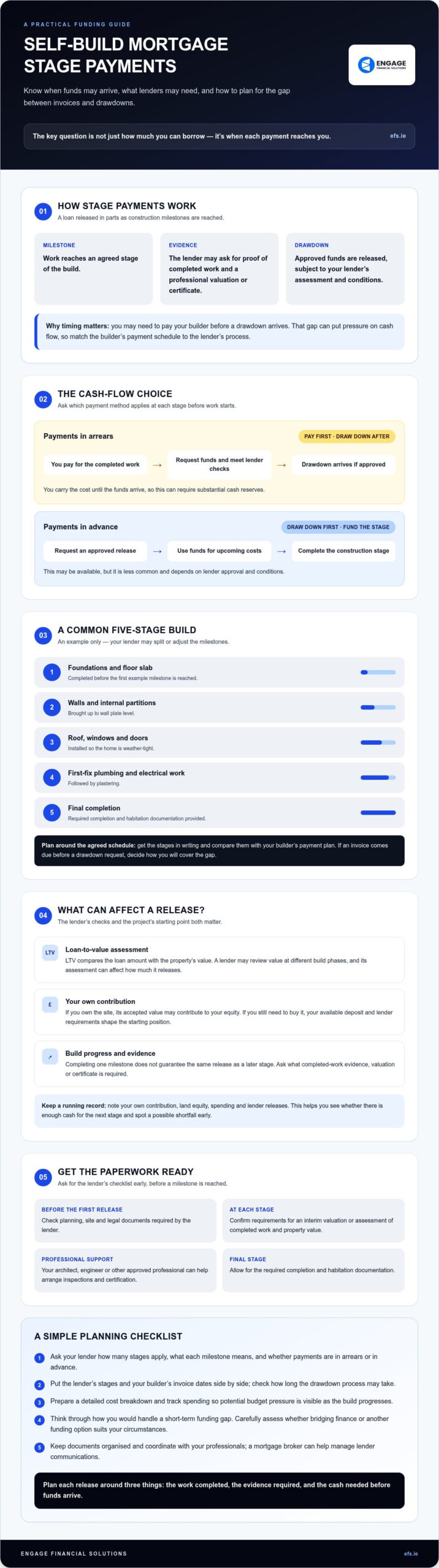
Building your own home means coordinating the site, materials, tradespeople and funding as the project develops. A stage payment is a partial release from your self-build mortgage once an agreed construction milestone has been reached. Instead of receiving the full loan at the outset, you draw down funds in stages as the build progresses. For a high-level overview of the self-build process, you can refer to Wikipedia.
This staged approach lets the lender monitor the property securing the loan. As work advances, the property’s value is considered alongside the amount already borrowed. The loan-to-value ratio, or LTV, compares the loan amount with the property’s value. The lender’s assessment of this balance can affect how much it releases at each stage. The exact assessment and conditions depend on your lender and mortgage offer.
Your starting position matters. If you own the site, its accepted value may contribute to your equity, the share of the project funded by you rather than borrowed. If you still need to purchase the site, your available deposit and the lender’s requirements will shape how the project can be funded from the beginning. Don’t assume the full building budget will be available for the first drawdown. You may need accessible funds for early costs before a release is approved.
The Role of the Loan-to-Value Ratio in Drawdowns
A lender may review the property’s value at different construction phases before releasing funds. Completing groundwork, for example, does not necessarily mean you can draw the same amount as you could after a later milestone. The lender may require evidence of completed work and a professional valuation or certificate. Ask how each assessment affects the amount available and what evidence is needed before scheduling payments to your builder.
Keep a clear record of your own contribution, land equity, spending and lender releases. This makes it easier to see whether you have enough cash for the next stage and gives you a useful basis for raising any shortfall early.
Advance vs. Arrears: Choosing Your Funding Path
With payments in arrears, you pay for a stage of work first, then request a drawdown after it’s completed and approved. This can require substantial cash reserves because you carry the cost until the funds arrive. With payments in advance, funds are released at the start of a stage, giving you money to meet upcoming costs. This option may be available, but it’s less common and depends on lender approval and conditions.
Before work begins, ask your lender which method applies to each stage, how certification works and how long the drawdown process may take. Then compare expected builder invoices with the release dates and evidence requirements. This simple cash-flow check can help you plan your reserves and reduce the risk of a funding gap.
The Step-by-Step Drawdown Process for Your Self-Build Mortgage
A smooth drawdown starts before work begins. Check that you can meet the lender’s conditions for the first release, including any planning, site and legal documentation it requires. Ask for the drawdown checklist early and confirm who needs to provide each item. This helps prevent a document being outstanding when you reach a construction milestone.
Construction loans are often released across five or six stages, although the exact number and milestones depend on the lender and your project. A common five-stage structure may look like this:
- Stage 1: Foundations and floor slab completed.
- Stage 2: Walls and internal partitions brought up to wall plate level.
- Stage 3: Roof, windows and doors installed, making the home weather-tight.
- Stage 4: First-fix plumbing and electrical work completed, followed by plastering.
- Stage 5: Final completion, with the required completion and habitation documentation provided.
Your lender may split or adjust these milestones, so treat this as an example, not a guaranteed schedule. Get the agreed stages in writing and compare them with your builder’s payment plan. If an invoice is due before you can request a drawdown, plan how you’ll cover the gap.
Coordinate certification before you request funds
At each stage, the lender may require an interim valuation or an assessment of the work completed and the property’s value at that point. Your architect, engineer or other approved professional can help arrange inspections and provide the certificate or evidence the lender specifies. Confirm the required form, signatories and submission route in advance. Incomplete certification can delay a request.
Check whether the lender needs information about your contractor’s insurance or tax affairs, and what documents it will accept. For contractors seeking advice on business policies and site liability, independent brokerages such as patersonib.co.uk provide tailored commercial risk solutions. Requirements can differ, so don’t assume paperwork supplied for one stage will satisfy another.
Build a realistic drawdown timeline
There’s no single reliable turnaround time for every release. Processing depends on the lender’s requirements, how quickly inspections and documents are completed, and whether anything needs correcting. Before each milestone, ask your lender how to submit the claim, what happens after submission and how much notice to allow before builder payments are due. The CCPC’s mortgage application guidance is also a useful reference as you prepare your overall application.
Keep a simple tracker with the milestone, inspection date, documents submitted, lender follow-up and expected invoice date. Engage Financial Solutions offers personalised mortgage guidance, including support for self-build projects. Find out more about a self-build mortgage drawdown.
Exploring Bridging Finance and Alternative Funding Solutions
A gap between paying for work and receiving a mortgage drawdown can put pressure on your build budget. Bridging finance is short-term borrowing that may help cover a temporary funding need. For a self-builder, that might mean paying early project costs before the first mortgage release or meeting a stage invoice while waiting for another source of funds, such as the sale of a previous home.
Bridging finance is not limited to buying a property. It may help keep construction moving when the timing of available funds does not match the builder’s payment schedule. However, it is generally more expensive than long-term borrowing, and the amount, conditions and repayment arrangements depend on the lender. Treat it as a temporary solution, not extra budget for costs you can’t yet meet. For broader insights into how asset-backed building facilities operate, visit JGL Capital LLC to read their guide on construction loans.
Plan the funding gap and exit
Before considering a bridge, write down how much you need, when you need it and which funds you expect to use to repay it. This repayment plan is your exit strategy. If, for example, you’re waiting for a previous home to sell, consider what you would do if the sale takes longer than expected. Don’t assume a future mortgage drawdown will automatically repay the bridge. Confirm in advance whether the lender will allow this and what approval is required.
Ask for the full borrowing costs, repayment terms and consequences of delays before committing. Compare the proposed repayment date with realistic build and sale timelines, and keep a contingency plan in case the expected funds are delayed.
Compare funding sources for your build
A self-build mortgage is designed to release funds in stages as construction progresses, subject to the lender’s conditions. Bridging finance may provide short-term flexibility between those releases, but comes with its own repayment commitment. Personal savings can provide a buffer without a loan repayment, although using them may reduce your reserve for overruns or household needs.
If family offers a “soft loan”, agree clearly whether it must be repaid, when repayments begin and whether the arrangement affects your finances or mortgage application. Put the terms in writing and check with your mortgage adviser how the lender will view it.
Review your savings and investments as part of the whole budget. Check which funds are readily accessible, whether withdrawing or selling investments could have consequences, and how much you need to retain as a reserve. First-time self-builders may also want to check eligibility for relevant supports. The Citizens Information guide to the Help to Buy Scheme explains the scheme. Confirm current criteria before including any support in your plans.
Engage Financial Solutions provides personalised guidance on self-build mortgage funding and lender communications. Explore self-build mortgage guidance to help organise your funding plan and consider how each source fits your wider financial position.
Essential Documentation and Professional Oversight for Seamless Funding
Good records help keep your build and its funding aligned. Treat your project documents as a continuous record, from the original plans and site information through to updated costs, invoices and certificates. Lenders need a clear picture of what you’re building, what it is expected to cost and how the work is progressing before deciding whether to release funds.
Your core file may include planning permission, site maps, detailed plans, professional details and a cost breakdown. Take particular care with the cost breakdown. It connects the planned work to your budget and helps you compare estimates with actual spending as the build progresses. Ask your architect, engineer or Quantity Surveyor to help make the figures clear, consistent and easy to update. Check with your lender which documents it requires and whether it has specific templates.
A Quantity Surveyor can help monitor costs against the original estimate, assess changes and prepare information that supports a drawdown request. Their role is distinct from the lender’s decision-making process, so confirm who is responsible for each valuation, certificate and submission. To keep self build mortgage stage payments in Ireland on track, agree responsibilities with your professional team before construction starts.
Manage budget changes early
Material prices or design changes can push costs above your initial estimate. Rather than waiting until the next invoice is due, record each change and update your forecast as soon as you know about it. Keep a contingency allowance in your project budget, but don’t rely on a set percentage without checking the lender’s requirements and your own circumstances.
If the revised cost suggests your approved funding may not be enough, contact your lender or mortgage adviser before committing to additional work. Share the updated cost breakdown, explain what has changed and ask whether the loan terms or available funds can be reviewed. An increase isn’t automatic, so have a practical plan for prioritising work or meeting any shortfall without disrupting essential construction.
Clarify professional and certification requirements
An architect’s certificate may confirm specified aspects of the work, while a structural engineer’s report focuses on structural matters. They aren’t interchangeable by default. Ask the lender which professional must inspect each milestone and what wording or evidence it will accept. Also check whether the certifying professional needs professional indemnity insurance, which is cover for certain claims relating to professional advice or services. Confirm the required cover directly with the lender and professional.
Before work begins, make a checklist of documents, responsible people and lender submission requirements. If you’d like tailored guidance on organising your self-build mortgage funding and lender communications, speak with Engage Financial Solutions.
Partnering with a Specialist Broker for Your Self-Build Journey
A self-build involves decisions that affect both your construction schedule and your wider finances. A mortgage broker can help you understand lender requirements, organise communications and connect your funding plan with the project timeline. With your permission, a broker can help coordinate information between you, your builder and the lender, so questions about costs, certification or drawdown conditions are addressed before they become urgent.
Lender terms can differ, so look beyond the amount you may be able to borrow. Ask how each lender handles stage releases, what evidence it needs and what happens if your project costs or schedule change. Terms and approval depend on the lender and your circumstances. Get the conditions explained clearly before you commit.
Plan from the finished home backwards
A future-back approach means starting with the home and financial position you want after the build, then working back to the decisions you need to make now. Include repayments, household spending and a realistic reserve in your budget, not just construction costs. Consider how borrowing could affect longer-term priorities such as retirement planning, savings and other financial goals.
Review protection needs as part of that wider conversation. Ask whether your existing mortgage protection remains suitable as your borrowing changes, and whether any additional life cover is appropriate for your circumstances. Don’t assume a policy automatically covers every stage of construction. Confirm its terms, exclusions and start date with the relevant provider or adviser.
Prepare for an initial assessment
Before speaking with a broker, gather the information you have and note what is still outstanding. A useful starting checklist includes:
- Details of your income, regular commitments and available deposit or land equity.
- Site information, planning documents and current architectural plans.
- A detailed project cost breakdown, including your own contribution and any contingency allowance.
- Builder or contractor details, an indicative build schedule and expected payment milestones.
- Any existing borrowing, savings or other funding you expect to use.
These details help your adviser understand the project and identify gaps to resolve. You don’t need every document finalised before starting a conversation, but clear, up-to-date costings make an initial review more useful. Ask which items the lender will require and whether your figures need to be presented in a particular format.
Engage Financial Solutions provides personalised guidance for self-build projects and can help coordinate lender communications. To discuss your plans and arrange an initial assessment, contact Engage Financial Solutions about your project.
Build a Clear Funding Plan for Your Next Step
A well-planned build depends on more than securing a self-build mortgage. You need to understand when each stage payment can be requested, which documents and professional certificates the lender requires, and how your cash reserves will cover costs between drawdowns. Confirm the process and expected timelines with your lender before work reaches a payment milestone.
Keep your cost breakdown up to date and raise potential overruns early, while there’s still time to discuss your options. If you may need short-term funding, assess the repayment plan carefully and make sure it fits your wider finances. These steps can help you manage self-build mortgage stage payments with greater clarity and keep your plans connected to your long-term financial wellbeing.
Engage Financial Solutions is regulated by the Central Bank of Ireland and offers personalised mortgage guidance, including for self-build projects. To discuss your funding plan with an adviser, contact Engage Financial Solutions.
Frequently Asked Questions
How many stage payments are typically included in a construction loan?
A self-build mortgage typically releases funds across four to six stages, although the number and milestones vary by lender and project. Before work starts, ask your lender for its proposed schedule and compare it with your builder’s payment plan. Check what evidence is needed at each milestone and whether the stages match the order in which costs fall due. This gives you a practical basis for organising cash flow throughout the build.
Can I get a drawdown to buy the site before I start building?
Possibly, but it depends on the lender, mortgage structure and your application. Don’t assume the construction loan will automatically cover the site purchase or release funds before building begins. Ask whether site costs can be included, what conditions apply and how your deposit or existing land equity will be assessed. Clarify this before committing to a site, so you know how much funding you’ll need from your own resources.
What happens if my builder needs more money than the bank is willing to release?
The lender won’t necessarily increase a stage release simply because an invoice is higher than expected. First, check whether the difference reflects completed work, a cost increase or a change in scope. Update your cost breakdown and speak to your lender or mortgage adviser before agreeing to extra work. Ask whether the funding can be reviewed, and consider which work can be adjusted if extra funding isn’t available.
Do I need to pay interest on the full mortgage amount from the start?
Typically, interest is charged on the amount drawn down, rather than the full approved self-build mortgage from day one. As funds are released in stages, the balance on which interest is calculated can increase during construction. Your arrangement depends on the lender and mortgage terms, so check how interest is charged and when repayments begin. Include these payments in your household budget as well as your construction cash-flow plan.
What professional certifications are required for each stage payment?
Requirements depend on your lender and the stage being claimed. The lender may request an interim valuation, inspection or certificate from an approved architect, engineer or other professional to confirm progress. An Assigned Certifier may also inspect and certify building compliance. Before construction starts, ask the lender which professionals it accepts, what evidence each stage requires and how documents should be submitted. Confirming this early can help prevent avoidable paperwork delays.
Is it possible to switch to a different lender mid-build?
It may be possible, but don’t assume a new lender will take over the project or release funds on the same terms. It will need to assess your circumstances, the property, completed work and remaining costs, and may require fresh valuations or documents. Before making changes, speak with your current lender and a mortgage adviser. Check the conditions on your existing borrowing and secure approval for replacement funding before relying on it.
How does the ‘arrears’ payment system work for self-builders?
With payments in arrears, you pay for a construction stage first, then request a drawdown after the work is complete and the lender’s evidence requirements are met. For example, an invoice may need to be paid before an inspection and certification take place. Ask your lender about its claim process and expected timings, then keep accessible funds available for the period between paying the bill and receiving the release.
Disclaimer
Engage Financial Services LTD T/A Engage Financial Solutions is regulated by the Central Bank of Ireland CRO 764570. Suite 2 First Floor, 14 -18 Main street, Blackrock, Co Dublin. A94 W0Y3