


A search for “financial broker Ireland” often starts with a practical question: can an adviser help you make sense of the options you’re considering? If you’re weighing mortgage choices, planning for retirement or reviewing protection, it’s useful to understand what a broker can help with and how their guidance might fit your goals.
Financial advice in Ireland can cover different services and provider options. Before proceeding, check which areas the adviser handles, how recommendations are developed and whether fees or commission apply. That gives you a clearer picture of what to expect.
This guide explains a broker’s role, how to assess service scope and how broker advice compares with contacting a provider directly or researching options yourself. It also offers practical questions to help you choose guidance that reflects your circumstances and longer-term plans.
Key Takeaways
- Check what a broker can advise on before relying on their guidance. Service scope and provider access can vary.
- Ask how the adviser is paid, whether any client charges apply and what each part of the service includes.
- Compare using a broker, contacting a provider directly and researching options yourself to see which route suits your needs and comfort level.
- Before choosing a financial broker in Ireland, define your goal, check service fit and clarify the next steps.
- Engage Financial Solutions focuses primarily on Switching Mortgages, with guidance also available across protection, retirement planning, savings and investments.
What a financial broker does and when advice may help
If you’re facing a financial decision, you may be wondering whether an adviser can support you. A broker acts as an intermediary: they learn about your circumstances, help you explore relevant options and may assist with arranging a product within the services they provide. Their role is to help you understand possible routes, not to promise that a product will be available or right for you.
A financial broker helps you assess and arrange financial options within their service scope, but the advice and products available depend on the broker and your circumstances. The term “broker” can cover different areas of financial advice, so check what a firm actually handles before relying on its guidance. For broader background on the profession, see Financial adviser.
Which financial needs can a broker help you explore?
Mortgage advice can relate to different goals. Switching Mortgages involves reviewing whether changing your current mortgage may suit your situation. First-Time Buyer Mortgages relate to buying your first home, while Buy-to-Let Mortgages concern purchasing a property to rent out. A broker’s provider access and support can vary, so ask which needs they cover and what help they provide.
Protection is a separate area of advice. Mortgage Protection, Income Protection and Critical Illness Insurance address different financial concerns. Ask the adviser to explain their purpose and whether protection advice is included in the service.
Retirement guidance may include Pensions, PRSAs, ARFs and Annuities. Some brokers also advise on savings accounts and investments; for broader wealth planning, individuals often explore Investment Management through specialist financial advisers. These options work differently and aren’t right for everyone. An initial discussion can establish whether the adviser covers the area you want to explore, without assuming that you need a particular product.
When might speaking with a broker make sense?
You don’t need to assume that you require advice or will qualify for a product. Before arranging a discussion, note your main goal and ask whether it falls within the broker’s service. This can help you decide whether a conversation is worthwhile and keep it focused on what matters to you.
Financial broker Ireland: how to assess services and transparency
A clear explanation of the service is a good starting point. Before sharing documents or acting on a recommendation, find out which financial needs the broker advises on, which product categories are outside their remit and which providers they can consider. The Central Bank’s guide explains the intermediary’s role in advising consumers, including the distinction between a broad market review and a more limited provider selection. Ask which approach applies to your situation.
What should a broker explain before you proceed?
Ask how recommendations are developed and whether the adviser compares options from a broad range of providers or a defined selection. A limited selection isn’t automatically unsuitable, but you should understand what it means for the options being considered. Confirm that the service covers your specific need, whether that’s a mortgage, protection, retirement planning, savings or investments.
Remuneration also deserves a straightforward conversation. Brokers may receive commission from product providers, charge clients directly or use another arrangement. Don’t assume how payment works. Ask:
- Will I pay any fees or other charges directly?
- Could a provider pay commission, and how is that explained?
- What work and ongoing support are included in the service?
- Will you explain the recommendation and alternatives in plain language?
Ask for the answers in writing, particularly if they include unfamiliar terms. Keeping a brief note of the key points makes it easier to compare advisers and remember what was agreed.
How can you check credentials and fit?
Use the Central Bank’s official register to check the firm’s current status and details. Verify that the name and information match the business you’re considering, and contact the regulator if you’re unsure how to interpret an entry. Check the register directly rather than relying only on a website statement.
Before engaging a broker, verify their current status, service scope, provider access and remuneration, then decide whether their advice fits your needs. These checks help you assess transparency, but registration alone doesn’t show whether a particular recommendation suits your circumstances. Ask how the adviser will take your goals and financial position into account, and whether they handle the specific advice area you need.
If you’re weighing mortgage advice alongside wider financial goals, you can review Engage Financial Solutions’ services and clarify the scope and remuneration directly before proceeding.
Financial broker, bank or direct application: compare the routes
There isn’t one route that suits everyone. A broker may help you compare options and manage parts of an application, depending on their service and provider access. You can also approach a bank or another provider directly, while your own research can help you prepare. Compare the support available for your specific need before deciding.
| Route | Provider choice | Application support | Personalisation | Effort for you |
|---|---|---|---|---|
| Broker | Depends on the firm’s provider access and service scope. | May include help with an application; confirm what’s covered. | Advice may take your circumstances into account, depending on the service. | May reduce some comparison work, but you’ll still need to provide information and make decisions. |
| Contacting a provider directly | Centred on that provider’s own options. | The provider can explain its application process and available support. | Discussion focuses on your enquiry and that provider’s products. | You’ll need to contact other providers yourself if you want to compare them. |
| Self-directed research | You can review information from different sources. | You manage any application steps yourself unless you later seek support. | Research can help you explore general options, but it isn’t tailored advice. | Requires time to assess information and identify what applies to you. |
What does a broker route offer compared with going direct?
If you’re considering Switching Mortgages, for example, a broker may help you understand which options fall within their scope and what information an application may require. Don’t assume they can access every provider or will secure better terms. Ask which providers they can consider, whether their selection is broad or limited, and what application support is included.
Going directly to a provider can make sense if you already know which organisation you want to approach. You can ask about its products and process, then contact others if you want a wider comparison. To understand how the broker is paid, ask whether the firm receives commission and how its provider access affects the options considered. Get clear answers before proceeding.
When might each route suit your circumstances?
A broker conversation may suit you if you value guided comparison or help organising an application, provided the firm covers your need. Direct contact may be a practical starting point if you have a particular provider in mind. Self-directed research can help you learn the terms and prepare questions, but it won’t assess how options fit your personal circumstances.
Before choosing, write down your goal and compare the support, provider access and effort involved in each route. This gives you a clearer basis for deciding whether to explore a broker, contact a provider or continue researching first.
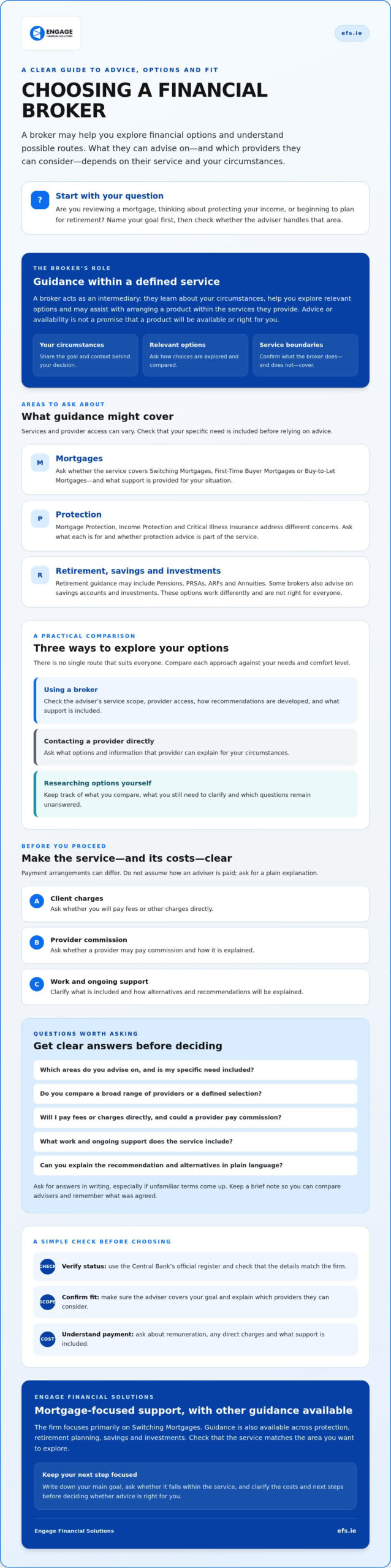
Questions to ask before choosing a financial broker
A first conversation is a chance to check whether the adviser’s service matches your needs before deciding whether to proceed. Take it step by step: define what you want help with, confirm the broker advises on that area, understand how they’re remunerated, then clarify what happens next. Recommendations and product outcomes depend on your circumstances and the relevant provider’s criteria, so no conversation can guarantee a particular result.
Which questions help reveal whether the service fits?
Ask what the initial discussion covers and what information the broker needs at this stage. Check which financial needs and product categories fall within the service, and whether you’d need a different specialist for anything outside it. Ask how the adviser will explain the options, relevant risks and next steps, and how they’re paid, including whether you may face any client charges.
It’s reasonable to expect plain-language answers. If something is unclear, pause and ask for an example or a written explanation. Keep a note of the responses so you can compare services without relying on memory.
How should you prepare for an initial conversation?
Write down your immediate priority, longer-term goals and questions you’re unsure how to phrase. For example, you might want to review a home loan now while also considering how that decision fits your wider plans. Ask what documents may be useful, but don’t send sensitive information until the broker explains what’s required and how to provide it through an appropriate channel.
If you’re buying your first home, the First-Time Buyer Mortgage guide can help you prepare questions. If your main goal is reviewing an existing home loan, see the Switching Mortgage guide.
Before wrapping up, confirm who will follow up, what information you’re expected to provide and whether you’ll receive a written summary of any recommendations. You don’t have to decide during an introductory conversation. Taking time to review the service, remuneration and next steps can help you proceed with greater clarity.
If you’d like to discuss whether mortgage guidance fits your circumstances, explore financial guidance from Engage Financial Solutions and clarify the service scope and remuneration before proceeding.
How Engage Financial Solutions can support your next step
Engage Financial Solutions is a financial services consultancy serving clients nationally, with personalised guidance across mortgages, protection, retirement planning, savings and investments. Switching Mortgages is its primary focus. Other services include First-Time Buyer Mortgages and Buy-to-Let Mortgages, alongside Mortgage Protection, Income Protection, pensions, PRSAs and investments. The right area to explore depends on your circumstances, and you don’t need to take up every service.
Before relying on any firm’s stated regulatory status, check its current entry on the Central Bank register and confirm that the wording used to describe its status is accurate. You can also ask the adviser to explain which services they provide and how they’re remunerated. These checks help you understand the relationship before discussing specific options.
A joined-up view of mortgages and financial planning
A mortgage decision can affect more than your monthly repayments. Depending on your priorities, it may be useful to consider whether protection or longer-term planning also needs attention. For example, you could ask whether Mortgage Protection is relevant to your circumstances, or whether Income Protection relates to a concern about maintaining income. These are separate considerations, not a package everyone needs.
If retirement is a more immediate priority, ask whether Retirement Planning is within the service you’re seeking and which options, such as pensions, may be relevant to discuss. Any guidance should reflect your goals and personal situation rather than assume a particular product is right for you.
What to expect from an initial conversation
Use an initial discussion to outline what you want to achieve, ask questions and establish whether the firm’s service fits. You might be reviewing a home loan, buying your first home or thinking about preparing for retirement. Start with your goal, then ask what information is needed, what the advice covers and what happens if you choose to proceed.
Clarify how the firm is paid, whether any client charges apply and how recommendations will be explained. You can ask for time to review the information before deciding. A conversation can help you understand possible next steps, but it can’t promise mortgage approval, savings, investment performance or a particular financial outcome.
If you’re exploring retirement options, use a retirement planning guide as a starting point for questions to raise. To discuss your financial goals directly, contact Engage Financial Solutions and ask whether its services fit your needs, what the advice includes and how remuneration works.
Choose guidance that fits your goals
The right adviser should help you understand your options in the context of your financial picture. Before proceeding, check that their service covers your specific need, ask which providers they can consider and get a clear explanation of how they’re paid. Verify the firm’s current status on the Central Bank register, too. Registration alone doesn’t mean a recommendation is right for you.
Engage Financial Solutions focuses primarily on Switching Mortgages, alongside services in protection and retirement planning. If you’re weighing a mortgage decision against longer-term priorities, clarify which areas the team can advise on and what support is included. Ask about remuneration and the next steps before deciding whether to proceed.
To discuss your circumstances, discuss your financial goals with our team. Get in touch to clarify whether the service fits your needs, what support is included and how remuneration works.
Frequently Asked Questions
What does a financial broker do?
A financial broker helps you explore and arrange financial options that may fit your circumstances. Depending on their service scope, they might advise on Switching Mortgages, protection, pensions, savings or investments. Brokers don’t all cover the same areas or providers, and advice doesn’t guarantee a particular product or outcome. Before proceeding, ask what the service includes, which options can be considered and how the broker is paid.
Is a financial broker the same as a mortgage broker?
Not necessarily. A mortgage broker focuses on mortgage-related needs, such as reviewing an existing mortgage or exploring First-Time Buyer Mortgages. A financial broker may cover a wider range of areas, including protection or retirement planning, but this depends on the firm. Titles alone won’t tell you what advice is available. Ask whether the adviser handles your specific need and which providers or product categories fall within their service.
How do I check whether a financial broker is regulated?
Check the firm’s current details on the Central Bank’s official register, using the exact business name to avoid confusing it with another firm. Confirm that the listed information matches the adviser you’re considering, and ask what services their status covers if you’re unsure. A register entry is a useful credential check, but it doesn’t prove that a recommendation suits your personal circumstances, so assess the advice and service separately.
Can a financial broker help me switch my mortgage?
Yes, a broker whose service includes Switching Mortgages may help you review available options and understand the application process. Engage Financial Solutions lists Switching Mortgages as its primary service, but provider access and the support included can vary. Ask which lenders can be considered, what assistance is provided and how the broker is remunerated. Any application or offer will depend on your circumstances and the provider’s criteria.
How much does it cost to use a financial broker?
There isn’t one standard charge: remuneration can vary by firm and service. A broker may receive commission from a provider, charge a client fee or use another arrangement. Don’t assume the advice is free or that a fee applies. Before proceeding, ask whether you’ll pay directly, whether commission may be received, what the payment covers and when any charge would apply. Request a clear explanation in writing.
What should I bring to a meeting with a financial broker?
Start with a short list of your immediate priorities, longer-term goals and questions. If you’re discussing a mortgage, note the details you already know, such as your current provider and what you want to review. Ask the broker which documents are relevant before sending anything, and use the firm’s appropriate channels for sensitive information. You can begin by discussing your goals without sharing unnecessary personal or financial details.
Disclaimer
Engage Financial Services LTD T/A Engage Financial Solutions is regulated by the Central Bank of Ireland CRO 764570. Suite 2 First Floor, 14 -18 Main street, Blackrock, Co Dublin. A94 W0Y3