


The right Company Pension isn’t simply the one with the longest list of features. If you’re searching for corporate pensions, start by looking at your workforce, business priorities and the responsibilities you’ll need to manage. A suitable arrangement should fit your employees and be practical to run.
It’s understandable to feel unsure where to begin. Pension options can involve unfamiliar terms, different ways of managing contributions and ongoing administration. The launch of MYFUTUREFUND on 1 January 2026 adds another consideration for employers reviewing their workplace pension arrangements.
This guide explains the main options and how to compare them. You’ll find practical questions to ask about employee needs, costs, administration and provider support, so you can assess what deserves closer attention without assuming one approach suits every business.
Engage Financial Solutions provides personalised guidance on Company Pensions and retirement planning. An adviser can help you work through the choices and identify a sensible next step for your business.
Key Takeaways
- Start with your workforce and business priorities, then consider which workplace pension arrangements may be suitable.
- Understand how different pension types work and what questions can help you compare them.
- Before seeking advice, gather details about your workforce, existing benefits and business goals.
- When comparing options, ask how contributions, records, employee communication and queries will be handled.
- If you’re exploring corporate pensions cork, an adviser can help clarify your needs and identify details that require specialist verification.
Corporate Pensions: Why Employers Consider a Workplace Scheme
A corporate pension is a workplace retirement-saving arrangement that helps employees build savings for later life. The employer provides or facilitates the arrangement, and employees may contribute, depending on its terms.
That distinguishes it from retirement savings an employee arranges independently: a workplace scheme is connected to their job, while a personal arrangement is set up outside the employer’s provision. The roles of employer and employee depend on the arrangement and applicable rules, so don’t assume every scheme works in the same way. For a high-level overview of workplace provision, see Occupational pensions.
What does a corporate pension mean for an employer?
In practical terms, you’re considering how retirement saving could fit into your employment offer and how the arrangement would work day to day. For example, an employer might make a Company Pension available and explain how eligible staff can participate, while employees consider whether and how to contribute. Check the details against the scheme and current requirements.
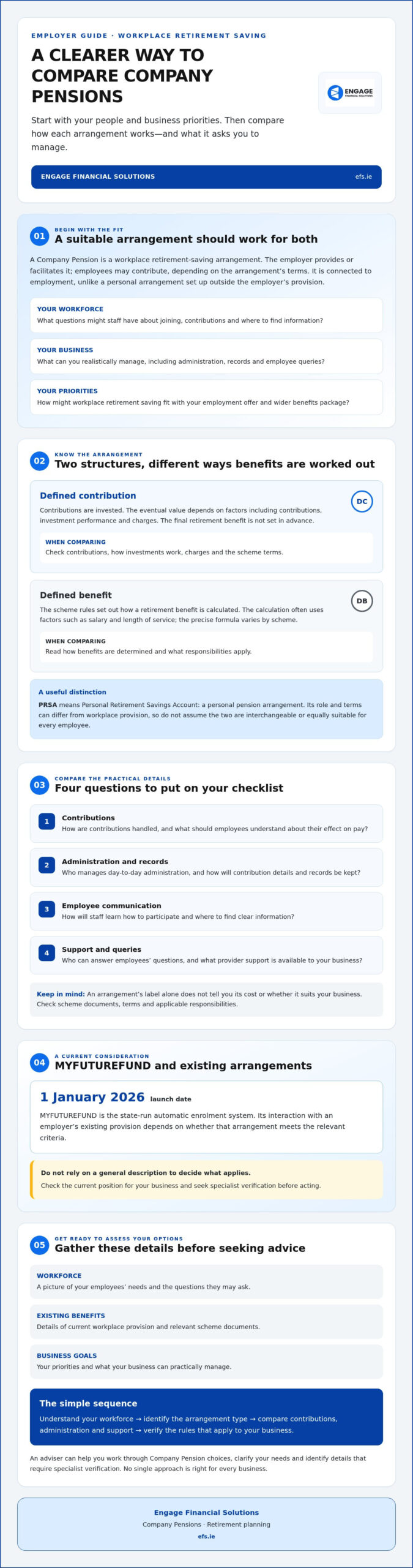
There’s also a current point to factor in: MYFUTUREFUND, the state-run automatic enrolment system, launched on 1 January 2026. Its interaction with an employer’s existing provision depends on whether that arrangement meets the relevant criteria. Don’t rely on a general description to decide what applies to your business. Confirm the current position before acting.
What might employees and employers value?
For employees, clear explanations can make a scheme easier to understand. They may want to know how to join, what contributions mean for their pay, where to find information and who can answer questions. Accessible communication matters whether your team is new to workplace pensions or already familiar with retirement saving.
For you, the arrangement needs to make sense for the business as well as its staff. Consider whether the administration is manageable, how contributions and records will be handled, and what support is available when employees have questions. A scheme may form part of the overall benefits package and be relevant to recruitment and retention discussions, but it can’t guarantee either.
Suitability depends on your workforce, business priorities and the rules currently in force. Before comparing providers, note the questions employees are likely to ask and what your business can realistically manage. If you’re researching corporate pensions cork, this groundwork can help you seek advice based on your circumstances rather than choosing from a product list alone.
Corporate Pension Options: Understand the Main Arrangement Types
“Company Pension” describes workplace pension provision, but it doesn’t specify how benefits are calculated or managed. Start by identifying the arrangement type, then compare its terms, administration and fit with your workforce. The labels below are a starting point, not a substitute for checking scheme documents and current rules.
How do defined contribution and defined benefit arrangements differ?
In a defined contribution arrangement, contributions are invested and the eventual value depends on factors such as contributions, investment performance and charges. The final retirement benefit isn’t set in advance. In a defined benefit arrangement, the scheme rules set out how a retirement benefit is calculated, often using factors such as salary and length of service. The precise formula varies by scheme.
These structures can involve different planning and administration considerations for an employer, but neither label alone tells you what an arrangement will cost or whether it’s suitable. Check the scheme’s governing documents, how benefits are determined and which responsibilities apply before deciding.
How do Company Pensions relate to other retirement options?
A Company Pension is workplace provision. A PRSA (Personal Retirement Savings Account) is a personal pension arrangement, and its terms and role can differ from those of a workplace scheme. Don’t assume the two are interchangeable or that the same option fits every employee. Their circumstances and the employer’s existing arrangements may affect what is relevant.
For a general overview of occupational pension arrangements and related employer considerations, consult Citizens Information. Use current official guidance and professional advice to check how the information applies to your circumstances. For broader personal retirement context, you can also explore retirement planning advice.
| Arrangement | How it is structured | What an employer should check |
|---|---|---|
| Defined contribution | Contributions are invested; the eventual value is not fixed in advance. | How contributions, investment choices, charges and employee information are handled. |
| Defined benefit | The scheme rules set a formula for calculating retirement benefits. | How the formula works and what funding, administration and ongoing responsibilities apply. |
| PRSA | A personal retirement savings arrangement, distinct from a Company Pension. | How it relates to existing workplace provision and which current rules apply. |
If you’re comparing corporate pensions cork, ask an adviser to explain the differences in plain language and identify details that need specialist verification. Engage Financial Solutions provides personalised guidance on Company Pensions and retirement planning, helping employers assess options against their business and workforce needs.
How to Compare Corporate Pension Arrangements for Your Business
Comparing arrangements means looking beyond product features. Assess the full arrangement, not just one feature. A scheme that looks attractive on paper may still be difficult to administer or explain to employees, so consider how each option would work in practice.
Which questions help assess scheme suitability?
Start with your workforce: consider its size and make-up, employees’ likely questions and any changes you anticipate. Then ask each provider or adviser how the arrangement fits those needs, what support is included and what information you’ll receive. Request a clear breakdown of fees and charges, and compare the same items across options rather than relying on assumed averages.
Use this checklist to guide your conversations:
- Fit: How does the arrangement suit our workforce and business priorities?
- Contributions: How are contributions calculated, collected and checked, and who handles any errors?
- Administration: What information must we provide, how are records maintained, and what reports can we expect?
- Employee communication: What clear information will staff receive, and how can they raise questions?
- Support and terms: Who is our point of contact, what ongoing support is available, and what are the full charges and conditions?
How can employers judge administration and employee support?
Map the process from start to finish before choosing. Note who will gather employee details, pass on contribution information, maintain records and share scheme updates. Ask the provider to explain what it handles and what remains with your business. Confirm any responsibilities against current applicable requirements rather than treating a provider’s general description as a complete compliance checklist.
Then test the process against your actual resources. If payroll or HR is managed by a small team, find out whether tasks can fit into existing processes and what help is available if information is missing. Ask how employees can access scheme details and get answers, especially when their circumstances or employment change.
Keep written notes of answers, fees, terms and points that need further checking. This makes it easier to compare options side by side and spot gaps before you commit. If you’re exploring corporate pensions cork, Engage Financial Solutions offers personalised guidance on Company Pensions and retirement planning. You can learn about its financial planning services as a starting point for discussing your business’s needs.
Preparing for a Workplace Pension: Employer Actions
Preparing in advance can make a Company Pension discussion more focused and help you identify what needs checking. This isn’t a legal or compliance checklist. The steps and sequence depend on the arrangement you consider, so use them to organise your questions rather than assume every business follows the same process.
What information should an employer gather first?
Start with a broad picture of your workforce and current benefits. You don’t need to collect detailed personal information for an initial discussion. Summarise the types of roles and working patterns in your team, note any existing retirement or employee-benefit arrangements, and identify who makes decisions about benefits and payroll.
Record what you want a workplace pension to achieve for the business and what your team can manage in practice. For example, consider who could oversee administration and how much time they can reasonably set aside.
What should be confirmed before a decision?
Ask the provider or adviser to set out the arrangement’s terms, charges, services and responsibilities in writing. Clarify which tasks sit with your business and which are handled by others. Before committing, have current requirements, scheme rules and tax treatment checked by appropriately qualified sources. These details can depend on the arrangement and your circumstances.
Use this short preparation list to get the conversation moving:
- Summarise your workforce profile and existing benefits, without sharing unnecessary personal employee information.
- Write down your business priorities, who will make the decision and the resources available for ongoing administration.
- Gather written details of provider terms, charges, services and the division of responsibilities.
- List questions about scheme rules, tax treatment and current employer requirements for professional verification.
Keep the sequence flexible. You may need to understand the available arrangements before you know which details to gather or confirm, and advice may raise further questions. If you’re considering corporate pensions cork, these notes can help an adviser focus on your needs and identify points that require specialist checking.
Explore financial guidance for your business with Engage Financial Solutions, which provides personalised advice on Company Pensions and retirement planning.
Getting Corporate Pension Advice: A Clear Next Step for Employers
Once you’ve gathered details about your workforce and business, an adviser can help turn them into a clearer set of options. They can discuss your priorities, explain how arrangements differ and identify questions that need confirmation from a provider or another appropriately qualified source. This gives you a structured basis for deciding what to investigate next, without assuming one scheme will suit every employer.
What can an adviser help an employer work through?
A useful discussion connects your workforce’s needs with your business priorities and practical considerations such as administration, employee communication, contributions and ongoing support. Ask the adviser to explain the scope of their service, how they’re remunerated and whether any relevant conflicts of interest apply. Clear answers help you understand the basis of the advice and what further checks may be needed.
Advice can support your decision-making, but it can’t guarantee investment performance or a particular retirement outcome. Check scheme terms, tax treatment and employer responsibilities against current requirements and your circumstances before acting.
How can employers take the first step?
Before making contact, bring together your notes on workforce needs, existing benefits, business objectives and administrative capacity. Add a short list of unresolved questions, such as who will manage particular tasks, what charges apply and which details need specialist verification. You don’t need to have every answer already; identifying the gaps is a useful part of the conversation.
Engage Financial Solutions provides personalised guidance on Company Pensions and retirement planning for businesses and individuals. The firm states that it is regulated by the Central Bank. You can check its regulatory information and clarify the scope of any advice directly as part of your initial enquiries.
For a broader personal retirement perspective, consider how workplace provision fits alongside an individual’s wider retirement goals. An employer’s scheme decision, however, should be based on the business’s circumstances and the terms available.
If you’re exploring corporate pensions cork, a conversation can help you clarify what matters most and decide which questions to resolve first. There’s no need to commit to an arrangement before you understand its terms. Discuss Company Pension guidance with Engage Financial Solutions as a straightforward next step.
Take a Clear Next Step for Your Business
A suitable Company Pension starts with your workforce and business priorities, not a provider’s product list. Compare the arrangement as a whole, including how it works, what administration involves and how employees will be supported. Before deciding, gather details of existing benefits and confirm scheme terms, charges, tax treatment and responsibilities with appropriate professional sources.
If you’re considering corporate pensions cork, personalised advice can help clarify your objectives and identify questions that need further checking. Engage Financial Solutions offers Company Pensions and retirement-planning services, with financial guidance for individuals and businesses. The firm states that it is regulated by the Central Bank.
You don’t need to have every detail settled before seeking guidance. Start with your notes and outstanding questions, then discuss Company Pension guidance with Engage Financial Solutions. Get in touch to talk through your business’s needs and a clear next step.
Frequently Asked Questions
What is a corporate pension?
A corporate pension is a workplace arrangement that helps employees save towards retirement. The employer provides or facilitates the arrangement, and employees may also contribute, depending on its terms. This differs from an individual arranging retirement savings independently. For example, a business might make a Company Pension available to staff and explain how the scheme works. Check the arrangement’s rules to understand who can participate and how contributions are handled.
What types of Company Pension can an employer consider?
Employers may encounter defined contribution and defined benefit arrangements. With defined contribution, contributions are invested and the eventual fund value depends on factors such as contributions and investment performance. A defined benefit arrangement calculates retirement benefits using a formula set out in its scheme rules. A PRSA is a separate personal retirement savings arrangement, not simply another name for a Company Pension. Compare scheme terms and check current requirements before deciding what may fit.
How does a defined contribution pension work?
In a defined contribution pension, contributions are invested to build a fund for retirement. The value available later isn’t fixed in advance: it can be affected by the amount contributed, investment performance and charges. The scheme’s terms explain how contributions and investment choices work. Ask the provider how members can access information about their fund and what support is available. Don’t treat projections as guaranteed outcomes, and check the relevant terms before making decisions.
Can a small business offer a Company Pension?
A small business can explore offering a Company Pension, but the right arrangement depends on its workforce, priorities and administrative capacity. Consider who would oversee the process, how contributions and records would be handled, and what support employees could access. The rules and responsibilities can depend on the arrangement and current requirements. Before choosing an option, discuss your circumstances with an appropriately qualified adviser and verify any obligations that may apply.
What should an employer compare when choosing a pension provider?
Compare how the arrangement fits your workforce, its terms and charges, the administration involved, employee communications and ongoing support. Ask who handles contributions, maintains records and responds to staff queries, and clarify which tasks remain with your business. Request charges and service details in writing so you can compare providers consistently. If you’re researching corporate pensions cork, assess the full arrangement rather than choosing based on one feature alone.
Are employer pension contributions tax-efficient?
The tax treatment of employer contributions depends on the arrangement and current rules, so don’t assume the same treatment applies in every case. Before setting contribution levels or selecting a scheme, ask an appropriately qualified tax or pension professional to explain the treatment relevant to your business and employees. Request a clear explanation of any conditions and keep the guidance with your scheme information. This helps you make decisions using checked, current details rather than general assumptions.
What information should a business prepare before setting up a pension?
Prepare a summary of your workforce, existing retirement or employee benefits, business priorities and who will make decisions. Note the resources available for administration, including who could manage contributions, records and employee communications. Avoid collecting or sharing personal employee details unless they’re needed for a specific, explained purpose. It’s also useful to list outstanding questions about scheme terms, charges, tax treatment and responsibilities, so an adviser can help identify what needs checking next.
Disclaimer
Engage Financial Services LTD T/A Engage Financial Solutions is regulated by the Central Bank of Ireland CRO 764570. Suite 2 First Floor, 14 -18 Main street, Blackrock, Co Dublin. A94 W0Y3