


Could the right way to access my pension depend more on the type of scheme than on my age? It can. A State Pension, workplace Company Pension and Personal Pension, such as a PRSA, may each have different access rules. Start by identifying what you have, then check the rules that apply to that specific arrangement.
It’s understandable to feel unsure when weighing up when you can take benefits, whether to choose a lump sum, and how a withdrawal might affect tax or your future income. Your options may include an Annuity, which can provide a guaranteed income for life, or an ARF, which keeps funds invested and allows withdrawals. Each has different trade-offs, and the right choice depends on your circumstances and the rules of your scheme.
This guide explains how to identify your pension, what access ages may apply, and what to consider before choosing an option. It also covers the information to gather, including your scheme details and other retirement income, so you can see how each decision fits your wider plans.
Key Takeaways
- Identify your pension provider, scheme type and latest fund value, then find the documents that set out its rules.
- To understand when you can access my pension, check the conditions that apply to your specific arrangement and circumstances.
- Compare the options available to you, including the balance each offers between income certainty and flexibility.
- Before requesting benefits, set out your intended retirement date, income needs and immediate priorities.
- Personalised retirement guidance can help you weigh pension choices against your wider plans for long-term security.
Accessing a pension: first identify what kind of pension you have
Whether you can access a pension, and when, depends on its type, the scheme’s terms and your circumstances. Reaching retirement and wanting to take benefits is different from seeking access earlier than expected. A route described for one arrangement may not apply to another.
Pension access means using or receiving the benefits held in a pension arrangement, subject to its rules and your eligibility. Before deciding how to access my pension, identify the arrangement. A Company Pension, PRSA and Personal Pension can each have different conditions, so don’t assume that one pension’s access age or withdrawal options apply to all your savings.
Which pension do you have?
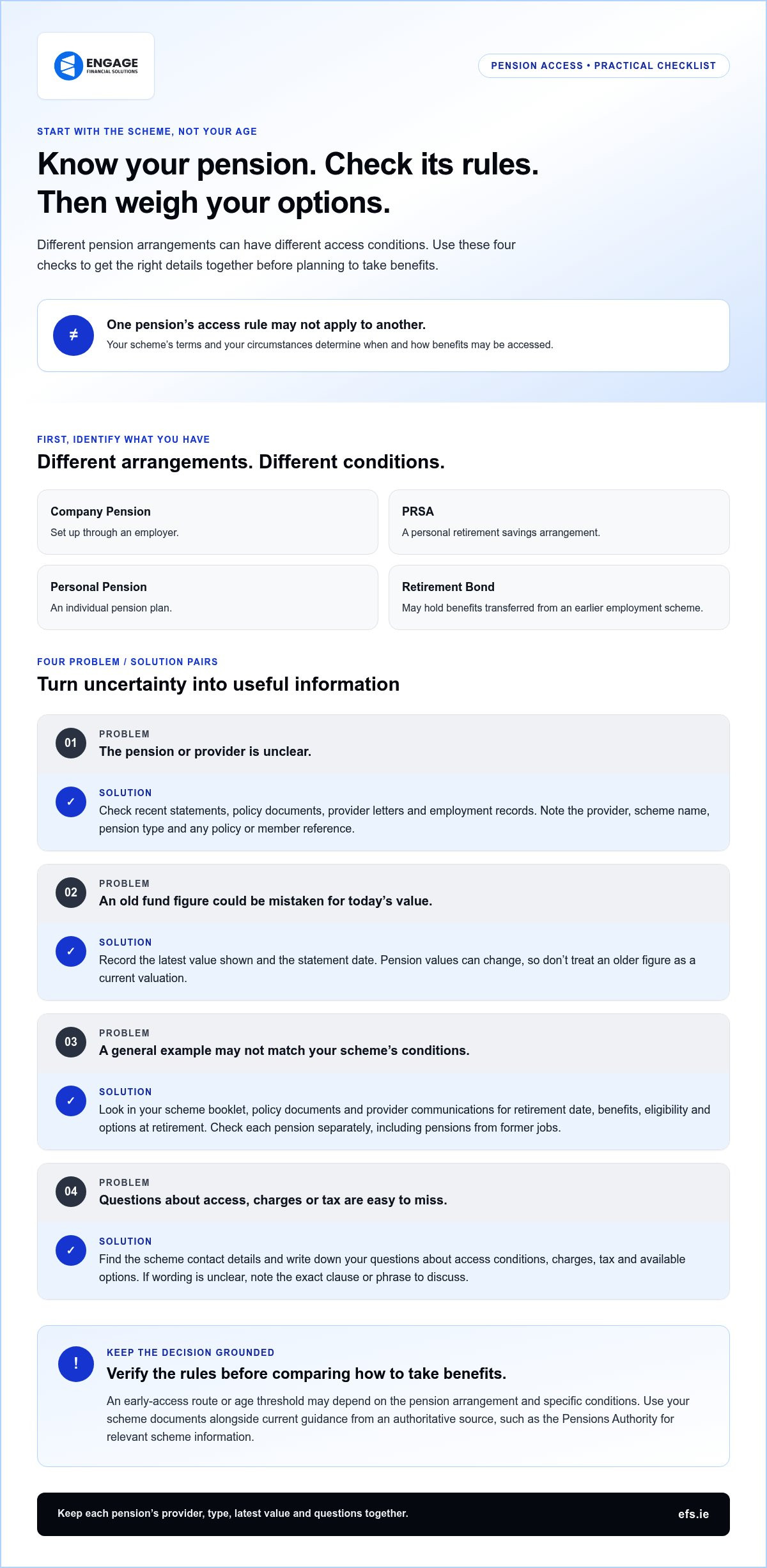
Start with your latest scheme statements, provider correspondence and employment records. These can help you identify the provider, the pension’s name and whether it relates to a current or former job. A Company Pension is set up through an employer. A PRSA is a personal retirement savings arrangement, while a Personal Pension is another type of individual pension plan. A Retirement Bond may hold benefits transferred from an earlier employment scheme. For a broad introduction to what kind of pension you have, including defined benefit and defined contribution arrangements, see this general overview. Your own scheme documents determine the applicable terms.
If the paperwork is unclear, note the employer connected with the pension and any provider or policy reference numbers. This gives you a practical starting point for identifying the arrangement and finding its specific rules. Keep documents for different pensions separate, as access conditions can vary from one scheme to another.
Does early access mean the same thing for every pension?
No. An age threshold or early-access route may apply only to a particular pension type and specific conditions, rather than giving you a general right to withdraw from any pension. For example, a claim that benefits may be available from a certain age could depend on the arrangement and circumstances behind that option. Don’t treat it as a rule for your own Company Pension, PRSA, Personal Pension or Retirement Bond.
Check the scheme documents for the normal retirement date, any options for earlier access and the conditions you must meet. Then compare those details with current guidance from an authoritative source. If you have pensions from several jobs, check each arrangement separately because their rules may differ. Establishing these facts first helps you understand which choices are available before planning how benefits might support your retirement.
How to check when and how you can access your pension
Once you’ve identified the pension arrangement, check its documents and conditions before planning to take benefits. An online example may describe one kind of scheme, but it can’t confirm your eligibility. The rules of your specific pension scheme, not a general online example, determine when and how you may access your benefits.
What documents and details should you gather?
Set aside recent statements, policy documents and correspondence about retirement benefits. If you have pensions from more than one job, keep the information for each one separate so you don’t mix up their terms. Note whether each pension is connected to your current or former employment.
Then work through these actions:
- Find the provider and scheme name. Check statements, policy documents and letters for the provider’s name, the pension type and any policy or member reference.
- Record the latest value. Note the date of the most recent statement as well as the value shown. Pension values can change, so don’t treat an older figure as a current valuation.
- Locate the scheme contact details. Use the latest correspondence or official documents. For a workplace pension, your employment records may also help you identify the scheme.
- Write down your questions. Include questions about access conditions, charges, tax and the options available under that arrangement. Keep questions about each pension together.
How can you confirm your access date and eligibility?
Look in the scheme booklet, policy documents and provider communications for terms such as retirement date, benefits, eligibility or options at retirement. These documents may explain when you can apply, whether conditions apply and what steps the scheme requires. If the wording is unclear, note the exact clause or phrase to discuss with the scheme contact or a financial adviser.
Don’t assume a stated age or early-access route applies to every pension. Requirements can differ between a Company Pension, PRSA, Personal Pension and Retirement Bond, and a former workplace arrangement may have its own terms. Confirm the details for each pension separately, including any exceptions and how benefits may be treated for tax. Use current guidance from an authoritative source, such as the Pensions Authority for relevant scheme information, alongside your own scheme documents.
If you’re unsure how the details fit together, personalised retirement planning guidance can help you consider your pension arrangements alongside your wider plans. Keep a record of the provider, pension type, latest value and questions you want answered. This will make a discussion more focused and help you decide what to do next.
Compare pension access options before choosing how to take benefits
Once you know which options your arrangement allows, compare how each could support your retirement. Taking benefits can provide money or income now, but may reduce the funds available to provide income later. If you’re deciding how to access my pension, weigh immediate priorities against the income you may need over time.
The options below aren’t available under every arrangement. Eligibility, terms and tax treatment depend on your scheme and the rules in force when you access benefits.
| Option | Income certainty | Flexibility and ongoing decisions | What to verify |
|---|---|---|---|
| Annuity | Can provide a guaranteed income for life, subject to its terms. | Requires less day-to-day management of an invested fund, but the income terms matter. | Whether it’s available through your arrangement and what income and conditions are offered. |
| ARF | Income isn’t guaranteed for life. | Your retirement funds remain invested, and you make decisions about withdrawals and investments. The value and income can change. | Eligibility, investment choices, withdrawal arrangements and tax on withdrawals. |
| Eligible lump sum | Provides a sum for immediate use, rather than a regular income in itself. | Can help meet a large expense, but taking money out leaves less in the pension to support future income. | Whether your scheme allows it, how much you may take and the tax treatment that applies. |
Annuity or ARF: what is the practical difference?
An Annuity is associated with a guaranteed income for life, subject to the terms you select. An ARF keeps retirement funds invested, giving you more flexibility over withdrawals but also requiring ongoing decisions. To compare them, consider how much you value predictable income, whether you’re comfortable making investment and withdrawal decisions, and how each option fits with your other retirement income. Neither route is automatically better.
What should you weigh before taking a lump sum?
A lump sum might help with an immediate priority, such as clearing a commitment or funding a planned expense. Set that need alongside your longer-term income requirements, other savings and retirement goals. A withdrawal may reduce the money available to provide future income, so weigh the lasting effect as well as the immediate benefit.
For eligible arrangements, current rules generally allow a lump sum of up to 25% of a pension fund. The first €200,000 is tax-free, subject to a lifetime limit across pension plans. Tax may apply to amounts above that, and the exact treatment depends on your circumstances and applicable rules. Check your scheme’s eligibility conditions and current tax guidance before acting. Comparing the figures with your expected spending and income needs can help you make a more considered choice.
Follow these steps before requesting pension benefits
Before sending in a request, decide what you want your pension to do for you. Write down your intended retirement date, your expected income needs and any immediate priorities. This gives you a practical basis for assessing the available choices without losing sight of your longer-term plans.
Questions to resolve before submitting a request
Use this checklist to prepare for a conversation about your pension benefits:
- What choices does my scheme permit? Confirm which benefit options apply to your arrangement and whether any conditions affect your eligibility.
- What do I need to submit? Find out which forms, supporting documents or decisions are required, and what steps follow once you make a request.
- What charges could apply? Identify any relevant charges associated with the options you’re considering.
- How could tax affect the outcome? Clarify how your choice may be treated for tax, using current authoritative guidance as well as information specific to your scheme.
- What could this mean for future income? Consider how taking benefits now may affect the funds available to support you later in retirement.
Write down the answers and anything that still needs clarification. If the available options or their consequences aren’t clear, pause before submitting a request. A decision that could shape your future income deserves careful consideration.
How to prepare for a pension review
Bring together your scheme documents and recent statements, then prepare a simple outline of your retirement goals. Note your intended retirement date, the income you expect to need, any major upcoming expenses and other savings or financial commitments. If you have more than one pension, include the details for each so the discussion reflects your wider position.
A review can help connect the choices available through a pension with the rest of your financial plans. For example, the regular income you need may influence how you weigh an immediate lump sum against options designed to provide income over time. Consider how your priorities might change, too, rather than planning around a single expense or one year of retirement.
For a broader view of how pension decisions fit into your future, read the retirement planning guide. Personalised retirement planning can help you organise your questions, understand the trade-offs and consider how a decision to access my pension may affect your wider goals. Once you understand the scheme’s requirements and likely implications, you’ll be better prepared to choose your next step.
Get personalised guidance to access your pension with confidence
A confident pension decision follows a clear path: identify your arrangement, verify its rules, compare the options it permits, then plan your next steps. If you’re deciding how to access my pension, personalised guidance can help you consider each choice in the context of your income needs, priorities and plans for the years ahead.
When can a pension adviser help?
An adviser can help you compare options such as an Annuity or an ARF, where these are available to you. An Annuity may offer an income with greater certainty, subject to its terms, while an ARF involves ongoing decisions about invested funds and withdrawals. The relevant considerations depend on your circumstances, including how you balance flexibility today with income and security over the longer term.
Guidance can also help connect your pension choice with other parts of your financial picture, such as savings, investments, regular commitments and retirement goals. That broader view matters whether you plan to stop work fully, reduce your hours or adjust your retirement plans over time.
Personalised advice doesn’t replace the rules of your scheme or current authoritative guidance on tax. It can help you understand the available choices, identify questions that need clear answers and consider how a decision fits your plans. Engage Financial Solutions provides pension and retirement-planning guidance across arrangements including Company Pensions, PRSAs, Personal Pensions and Retirement Bonds, as well as retirement-income options.
Your next step towards a more confident decision
Before arranging a conversation, gather your latest pension statements and scheme documents. Write down the provider, type of pension, intended retirement date and income you think you’ll need. Note immediate priorities, such as a planned expense, alongside questions about eligibility, charges, tax and the effect each option could have on future income.
With that information to hand, you can have a focused discussion about what your arrangement permits and how each choice may support your needs. You don’t have to decide everything at once. Taking time to understand the trade-offs can make the next step feel more manageable and help you approach retirement planning with greater clarity.
For tailored support in weighing your pension options against your wider financial plans, explore personalised pension guidance from Engage Financial Solutions.
Take your next step towards a clearer retirement plan
Before deciding how to access my pension, identify the arrangement, check its rules and compare the options available to you. Your scheme’s conditions and your circumstances matter, so don’t rely on a general example when weighing a lump sum, an Annuity or an ARF.
Keep your pension documents and latest statements together, and write down your intended retirement date, income needs and immediate priorities. This preparation can help you understand how a decision may affect your finances now and your future retirement income.
Personalised guidance can bring those details into a wider plan. Engage Financial Solutions’ experienced team provides financial guidance and retirement planning advice across Annuities, ARFs, PRSAs and pension arrangements, helping you consider flexibility, income and long-term security in context. Advice can support your decision alongside your scheme rules and current authoritative tax guidance.
For a considered conversation about your options, explore personalised pension and retirement planning with Engage Financial Solutions. With the right information and a clear view of your priorities, you can move forward at your own pace and feel more confident about the choices ahead.
Frequently Asked Questions
When can I access my pension?
It depends on the pension type, its scheme rules and your circumstances. Personal Pensions and PRSAs can typically be accessed from age 60, while some occupational schemes may allow access from age 50 if you retire from that employment. The State Pension has a separate age rule. To find out when you can access my pension, check your own scheme documents and current authoritative guidance rather than relying on a general age guide.
Can I access a pension from a former employer early?
Possibly, but early access isn’t automatic just because you’ve left the job. Some occupational schemes may allow benefits from age 50 if you retire from that employment, but the rules and conditions depend on the specific scheme. Check the documents for your former employer’s pension for its terms, eligibility criteria and process. If you’re unsure, use the scheme contact details in your correspondence before making plans around an early withdrawal.
How do I find out what type of pension I have?
Look through recent statements, policy documents and letters from pension providers. Note the provider, scheme or policy name, latest value and any employer linked to the pension. A Company Pension is arranged through an employer; a PRSA and Personal Pension are individual pension arrangements. A Retirement Bond may hold benefits from an earlier workplace scheme. If the documents don’t make the type clear, use the provider contact details to clarify the arrangement.
Can I take my pension as a lump sum?
You may be able to take an eligible lump sum, but the option and amount depend on your pension arrangement and its rules. In general, up to 25% of a pension fund may be available as a lump sum. The first €200,000 is tax-free, subject to a lifetime limit across pension plans; tax may apply above that. Confirm your eligibility and current tax treatment before deciding, as taking a lump sum can reduce funds for future income.
What is the difference between an Annuity and an ARF?
An Annuity can provide a guaranteed income for life, subject to the terms selected. An ARF keeps retirement funds invested, allowing withdrawals but also requiring ongoing decisions about investments and income. An ARF’s value and withdrawals aren’t guaranteed to provide a particular level of income. Which option suits you depends on your circumstances, the choices your arrangement permits and how you weigh income certainty against flexibility. Compare the terms before choosing.
Will accessing my pension affect my tax or future income?
It can. Tax depends on the type of benefit, your pension arrangement and the rules that apply when you take it. Withdrawals from an ARF are subject to income tax, the Universal Social Charge (USC), a tax on income, and Pay Related Social Insurance (PRSI), which funds social insurance benefits. Taking a lump sum or drawing from invested funds can also leave less to support later income. Check current tax guidance and consider your other retirement income and commitments.
What information do I need before requesting pension benefits?
Gather recent statements, scheme or policy documents and provider correspondence. Record the pension type, provider, latest value, scheme contact details and whether it relates to current or former employment. Before requesting benefits, clarify your intended retirement date, income needs and immediate priorities. Make a note of questions about eligibility, permitted options, tax, charges, forms and processing steps. This preparation can help you understand the implications and discuss your choices clearly.
Disclaimer
Engage Financial Services LTD T/A Engage Financial Solutions is regulated by the Central Bank of Ireland CRO 764570. Suite 2 First Floor, 14 -18 Main street, Blackrock, Co Dublin. A94 W0Y3