


Could Mortgage Protection be optional for your rental property but still a condition of borrowing? It’s understandable to ask, do I need mortgage protection for a buy to let, when the rules and priorities may differ from those for your own home. Mortgage Protection isn’t a legal requirement for a Buy-to-Let Mortgage, but a lender may require it as part of its loan conditions.
Separate what your lender requires from the cover that could help protect your finances and the people who may rely on you. Mortgage Protection is designed to address mortgage debt if you die, whilst broader Life Cover may provide support beyond the loan. Landlord Insurance is different: it protects the property and related risks, rather than paying off your mortgage if you die.
This guide explains how to check your mortgage offer, compare Mortgage Protection with broader Life Cover, and weigh the mortgage balance against dependants, rental income and other resources. Whether you’re buying your first rental property or reviewing an existing loan, use the steps below to make a more considered decision.
Key Takeaways
- If you’re asking, do I need mortgage protection for a buy to let, first separate your loan conditions from the financial support you want in place for others.
- Compare Mortgage Protection with broader Life Cover, Income Protection and Critical Illness Insurance by considering the different events and needs each is designed to address.
- Review the mortgage balance, remaining term and ownership arrangements alongside your dependants, co-borrowers and other financial commitments.
- Factor in existing cover, savings and other assets before deciding whether additional protection could help safeguard your plans.
- Gather your mortgage offer, policy details and a clear picture of your finances to assess your cover needs more carefully.
Do I need Mortgage Protection for a buy-to-let mortgage?
Not as a general legal requirement. Mortgage Protection isn’t legally required for a Buy-to-Let Mortgage, although a lender can set its own conditions. Don’t assume an investment property is subject to the same requirements as a home you live in, or that every Buy-to-Let Mortgage has identical conditions.
A buy-to-let property is purchased to rent to tenants rather than to live in yourself. For a neutral overview of what a buy-to-let property is, see Wikipedia. The borrowers and ownership arrangements for a rental property may differ from those for a home loan, which makes it important to read the terms of your specific mortgage.
Is Mortgage Protection compulsory on a buy-to-let?
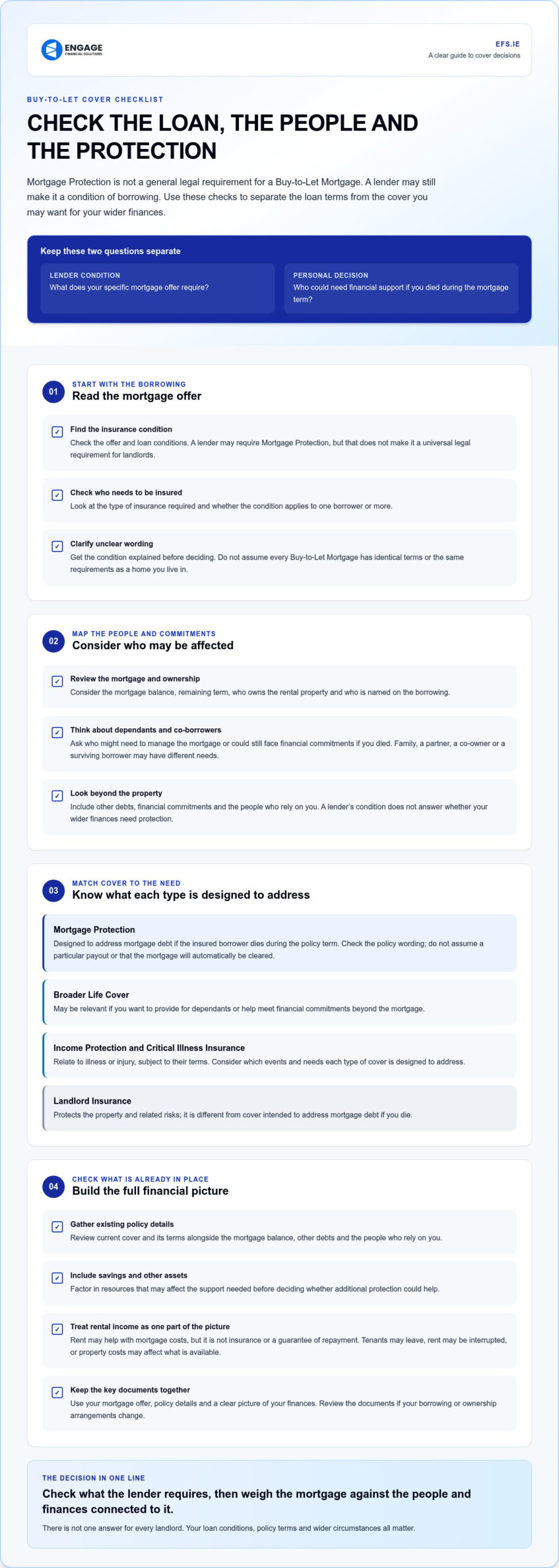
Distinguish a legal requirement from a condition set by your lender. A lender may require Mortgage Protection as part of its offer, but that doesn’t make the cover a universal legal requirement for landlords. Read the mortgage offer and loan conditions. Look for the type of insurance required, who needs to be insured and whether the condition applies to one borrower or more. If the wording is unclear, get it explained before making a decision.
In short: lender-required cover is a borrowing condition; cover you choose is a personal decision about financial security.
Why a lender’s condition is not the whole decision
Meeting your lender’s conditions tells you what you need to do to proceed with the loan. It doesn’t answer whether your family, co-borrower or business could be affected financially if you died during the mortgage term. Consider who would need to manage the debt, and whether rental income or other resources could help. Don’t assume rent would cover every cost or that another owner could comfortably take on the repayments.
For example, a landlord with a co-borrower and no dependants may have different priorities from someone whose family relies on their income or who owns the property jointly with a partner. The mortgage balance, ownership structure and other financial commitments all help shape the decision.
So, if you’re asking, do I need mortgage protection for a buy to let, start with the offer, then consider the people and finances connected to the property. There isn’t one answer for every landlord. Reviewing the loan conditions alongside your wider circumstances can help you decide whether Mortgage Protection is required by the lender, useful for your situation, or both.
What does Mortgage Protection cover on a rental property?
Mortgage Protection is a form of Life Cover intended to help address a mortgage debt if the insured borrower dies during the policy term. It’s designed with the loan in mind, but don’t assume a particular payout or that the mortgage will automatically be cleared. The benefit, how it’s paid and any limits depend on the policy terms. Read the documents carefully and consider how they relate to your borrowing.
For a fuller explanation of general cover, explore our Mortgage Protection guidance. For a landlord, the key question is how mortgage-linked protection fits alongside other financial responsibilities.
Mortgage-linked cover and broader Life Cover
Mortgage Protection focuses on the mortgage debt. Broader Life Cover may be relevant if you also want to provide for dependants or help meet other financial commitments. These needs can overlap, but they aren’t identical: cover aimed at a loan may not address every expense your family or co-owner could face.
Review the policy terms alongside your mortgage balance, other debts and the people who rely on you. Neither option is automatically better for every landlord. The right fit depends on what you want the cover to help protect.
What happens to the rental property and mortgage?
If you die, the property and borrowing don’t exist in isolation. Consider who owns the rental property, who is named on the borrowing and who may need to manage the mortgage. A co-owner or surviving borrower could still face financial commitments, while dependants may have different needs. Your ownership arrangements and policy wording both matter, so keep the relevant documents together and review them if either changes.
Rental income may help with mortgage costs, but it isn’t insurance or a guarantee of repayment. Tenants may leave, rent may be interrupted, or property costs may affect the amount available. Base your assessment on the mortgage and your wider finances rather than relying on rent alone.
Mortgage Protection is intended to address a loan; broader Life Cover may help address financial needs beyond it. If you’re weighing up do I need mortgage protection for a buy to let, consider both what mortgage-linked cover is designed to do and what support your family, co-borrower or other dependants might need. Reviewing your Buy-to-Let Mortgage and protection needs together can help you make a decision that fits your circumstances.
Mortgage Protection or other cover: which risks should landlords compare?
A rental property can bring several financial responsibilities, and different types of cover are designed for different events. Mortgage Protection focuses on mortgage debt following the insured person’s death. Broader Life Cover may address family or other financial needs, whilst Income Protection and Critical Illness Insurance relate to illness or injury, subject to their terms.
Use this comparison as a starting point, not a recommendation. Policy terms, eligibility and exclusions vary, so check what each policy covers and when it may pay out.
| Type of cover | General purpose | Consider for your circumstances |
|---|---|---|
| Mortgage Protection | Intended to help address a mortgage debt if the insured borrower dies, according to the policy terms. | Whether the mortgage is the main financial commitment you want to protect. |
| Broader Life Cover | May provide financial support following the insured person’s death, beyond a mortgage-focused need. | Whether dependants or others may need help with wider expenses or commitments. |
| Income Protection | Designed to provide an income benefit if illness or injury prevents you from working, subject to policy conditions. | How you might meet personal and property expenses if your earnings were affected. |
| Critical Illness Insurance | May pay a benefit if you meet the policy’s definition of a covered critical illness. | Whether a qualifying diagnosis could create financial pressure for you or your household. |
Mortgage Protection versus Life Cover
Mortgage Protection has a mortgage-related purpose, while broader Life Cover may be relevant if you have dependants, other debts or wider household needs. How a policy is structured, including who receives any benefit, depends on its terms. Don’t assume the benefit will automatically clear a particular balance or support a particular person. Check the policy documents and consider your ownership and borrowing arrangements before deciding how cover should fit.
Where Income Protection and Critical Illness cover fit
These products address different events from death-related Mortgage Protection. Income Protection concerns an inability to work because of illness or injury. Critical Illness Insurance relates to specified conditions set out in its policy. Neither should be treated as a substitute for Life Cover.
For example, if you became unable to work, your personal income might be affected even if the property continued to earn rent. If you died, your mortgage and the needs of any dependants would raise different questions. Rent, mortgage repayments and household income are connected, but they aren’t interchangeable. Read our Income Protection guidance to understand income-related cover, then compare it with your mortgage and wider protection needs. This can help answer do I need mortgage protection for a buy to let in the context of the risks you want to address.
How can you assess the right level of cover for a buy-to-let?
There isn’t a single cover amount that suits every landlord. Start by mapping the borrowing, the people connected to it and the resources that might be available if your circumstances changed. This won’t replace the lender’s conditions or policy documents, but it can show you what needs closer attention.
A practical four-step cover assessment
- Set out the borrowing. Note the outstanding mortgage balance and how long repayments remain due. Include other debts linked to the property or your personal finances, so you’re assessing the full picture rather than the mortgage alone.
- Map ownership and responsibility. Record who owns the property and who is responsible for the borrowing. Consider what a co-borrower might need to manage if you died or couldn’t work, and whether dependants rely on your income or other support.
- Review existing resources. List current Mortgage Protection, Life Cover, Income Protection or Critical Illness Insurance, along with savings and other assets. Check what each policy is intended to cover and avoid counting the same resource twice if it has another purpose.
- Allow for rental-income uncertainty. Rent may contribute towards costs, but it isn’t guaranteed income. Consider how you or another owner would manage repayments and commitments if rental income changed or stopped, without assuming a particular outcome.
Questions to review before arranging cover
Use your assessment to work through the practical details:
- Does the mortgage offer state an insurance condition? If so, what cover does it refer to, who must be insured, and what evidence does the lender require?
- Do the policy documents explain the events covered, exclusions, duration and any circumstances in which the cover could change?
- Do the policy and ownership arrangements reflect who holds the debt and who may need financial support?
- Would existing savings or assets be available to meet commitments, or are they set aside for other needs?
If the property has multiple owners, the borrowing is shared, or your personal and rental finances overlap, a tailored review can help bring the details together. Compare your notes with the mortgage conditions and policy wording before making a decision.
Arrange a tailored Mortgage Protection review to consider your Buy-to-Let Mortgage alongside your wider financial circumstances.
Next steps: arrange protection that fits your buy-to-let plans
Whether Mortgage Protection is required by your lender is only one part of the decision. The mortgage offer sets out any conditions attached to the borrowing; your personal assessment considers whether you also want cover to help protect a co-borrower, dependants or other financial commitments. Keeping those questions separate can clarify your next steps, whether you’re buying a rental property or reviewing an existing mortgage.
What to have ready for a tailored review
Gather information that shows how the borrowing and property fit into your wider finances. Having these details to hand can make a review more focused:
- Your mortgage offer and any wording about an insurance requirement, including what evidence the lender asks for.
- Details of the property’s ownership and borrowing, including any co-borrowers.
- Information about current Mortgage Protection, Life Cover or other protection policies, such as the cover provided and relevant terms.
- A summary of your financial commitments, savings and assets, plus the people who could be affected if your circumstances changed.
With these details, an adviser can help you consider your options alongside both the Buy-to-Let Mortgage and your wider financial plans. This is particularly useful where ownership is shared, several commitments overlap, or existing policies were arranged for a different purpose. The aim is to understand how the pieces fit, not to assume one type or level of cover suits every landlord.
A considered decision, without unnecessary pressure
Read the lender’s stated conditions alongside the policy documents. Check what events are covered, any exclusions, how long the cover lasts and whether the terms describe changes that could affect it. Then compare those details with your priorities: the mortgage, other commitments and the people who may depend on you. If you’re still asking, do I need mortgage protection for a buy to let, this side-by-side review can help distinguish what you must do to meet the loan conditions from what you may choose for greater personal financial security.
Engage Financial Solutions provides personalised guidance on mortgages and Mortgage Protection, helping you consider your borrowing and protection needs together. Explore personalised mortgage and protection guidance to take the next step with a clearer view of your options.
Make your next protection decision with confidence
The answer to do I need mortgage protection for a buy to let starts with your mortgage offer: check whether your lender has made cover a condition of borrowing. Then consider your priorities, including the outstanding debt, ownership arrangements, dependants, existing cover and other financial resources. A lender’s requirement and the protection you may want for wider financial security are related, but they’re not the same decision.
Mortgage Protection focuses on mortgage borrowing, whilst broader Life Cover, Income Protection and Critical Illness Insurance address different needs and events. Policy terms vary, so take time to understand what your existing policies cover before deciding whether anything needs to change.
Engage Financial Solutions advises on Buy-to-Let Mortgages and Mortgage Protection, with personalised financial guidance to help you consider both together. Explore personalised mortgage and protection guidance to review your circumstances and take the next step. A clear, considered plan can help you move forward with greater confidence.
Frequently Asked Questions
Is Mortgage Protection compulsory for a buy-to-let mortgage?
Mortgage Protection is not a general legal requirement for a Buy-to-Let Mortgage, but a lender may make it a condition of granting the loan. Check your mortgage offer and conditions for any insurance requirement, including who needs to be covered and what evidence is required. Don’t assume that rules for a home you live in apply automatically to a rental property. Lender conditions can differ, so rely on the terms of your own loan.
Can I use Life Cover instead of Mortgage Protection for a rental property?
Possibly, but Life Cover and Mortgage Protection can have different purposes, and one may not meet a lender’s stated condition for the other. Mortgage Protection is intended to address mortgage debt if the insured borrower dies, subject to its terms. Broader Life Cover may be relevant for dependants or other financial needs. Read the policy wording and compare it with your mortgage offer before deciding whether existing cover is suitable.
How much Mortgage Protection do I need for a buy-to-let?
There isn’t a universal amount that suits every landlord. Start with the outstanding mortgage balance and remaining term, then consider who relies on you financially, any co-borrower, other debts and your existing cover. Savings and other assets may also affect the amount of support needed. Compare these factors with the policy terms and lender conditions, and consider tailored guidance if your ownership or finances are complex.
What happens to a buy-to-let mortgage if the borrower dies?
The mortgage doesn’t automatically disappear if a borrower dies. What happens next depends on the borrowing arrangements, property ownership, lender terms and whether a relevant policy is in place. A co-borrower or another owner may have financial responsibilities, but the precise position depends on the documents and circumstances. Review the mortgage offer and policy wording, and make sure the people who may need to manage the property know where those documents are kept.
Does rental income affect whether I need Mortgage Protection?
Rental income may help meet mortgage repayments, but it isn’t guaranteed and it doesn’t itself clear the debt if you die. Consider whether the rent would still be available and sufficient to support the property’s commitments, alongside any other financial resources. Your decision should also account for dependants, co-borrowers and other debts. Review the lender’s conditions separately from your personal need for financial protection.
Can I have Mortgage Protection on a jointly owned rental property?
Mortgage Protection may be considered where a rental property is jointly owned, but the appropriate arrangement depends on who owns the property, who borrowed and the policy terms. Don’t assume each owner is covered in the same way or that a policy automatically meets the lender’s conditions. Check the mortgage offer for any insurance requirement, then review the policy wording to understand who is insured and what the cover is intended to address.
Is Income Protection the same as Mortgage Protection?
No. Mortgage Protection is intended to address mortgage debt if the insured borrower dies, subject to policy terms. Income Protection is designed to provide an income benefit if illness or injury prevents you from working, as defined by the policy. They relate to different events, so Income Protection isn’t a substitute for death-related Life Cover. Check eligibility, exclusions and policy wording to understand what each type of cover may provide.
Disclaimer
Engage Financial Services LTD T/A Engage Financial Solutions is regulated by the Central Bank of Ireland CRO 764570. Suite 2 First Floor, 14 -18 Main street, Blackrock, Co Dublin. A94 W0Y3